 comparison
Spray Foam vs TPO Roofing for Your Property
Last Updated: October 26, 2026
Quick Summary
Spray foam vs TPO roofing depends on your roof's complexity and climate. Spray foam excels on complex roofs with multiple penetrations and provides superior insulation, while TPO offers lower upfront costs and faster installation on simple, flat roofs.
- Spray foam performs best on complex roofs with multiple penetrations and uneven slopes
- TPO has lower installation costs for simple, flat roofs but requires additional insulation for thermal improvement
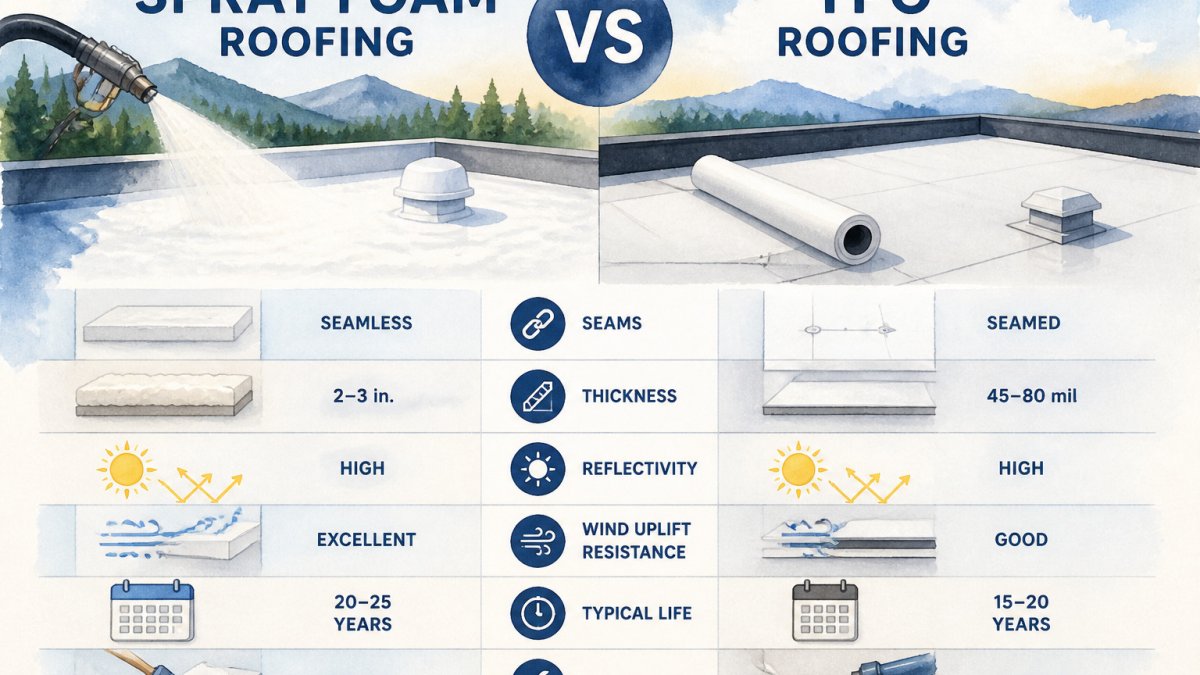
- Spray foam is seamless with no seams, while TPO seams are potential failure points if not properly welded
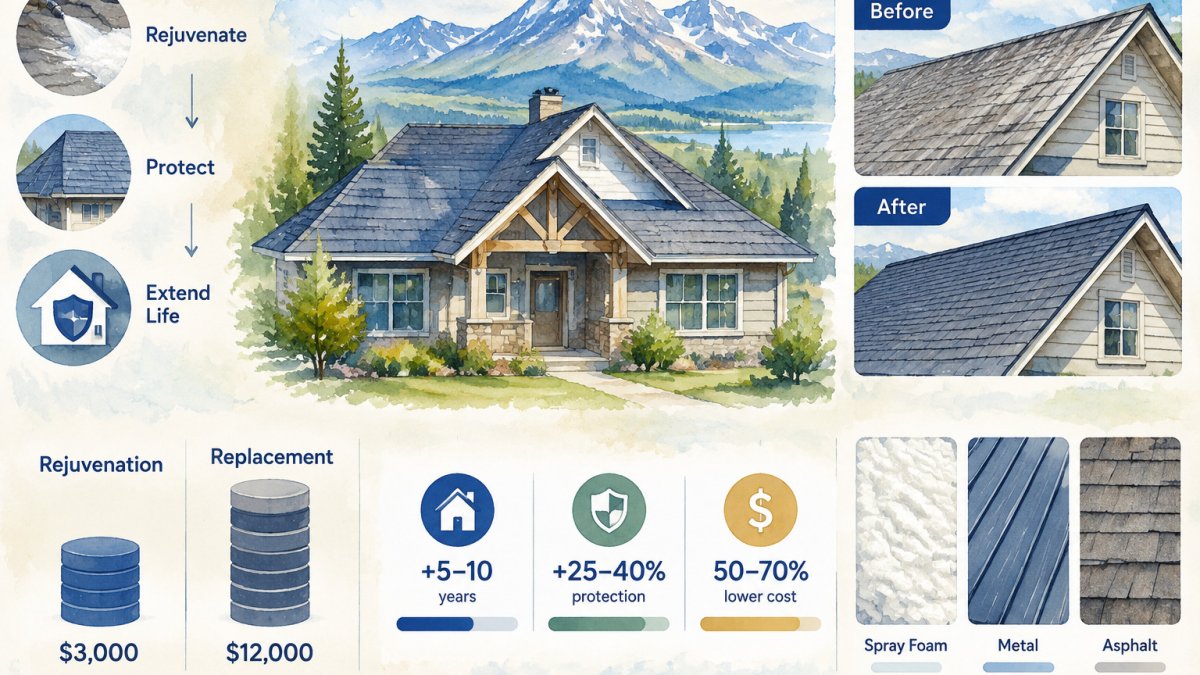
- Spray foam can save property owners up to half the cost of a new roof through restoration
- TPO membrane can become brittle in extreme cold and is not ideal for irregular slopes
Table of Contents
- Spray Foam vs TPO Roofing: Key Differences at a Glance
- How Spray Foam Roofing Works and Its Application
- TPO Roofing Overview and Installation Process
- TPO Roofing Pros and Cons for Your Roof Type
- Spray Foam Roofing Cost and Long-Term Value
- TPO Roof Lifespan, Durability, and Weather Resistance
- Spray Foam Roof Maintenance Requirements and Care
- Which System Fits Your Roof Condition and Climate
- Frequently Asked Questions
Spray Foam vs TPO Roofing: Key Differences at a Glance
Choosing between spray foam and TPO roofing systems is one of the most important decisions you'll make when restoring or upgrading your roof. Both work in fundamentally different ways and suit different situations. The right answer depends on your roof's condition, your climate, and your long-term priorities.
**The choice between spray foam and TPO isn't about which is universally "better." It's about matching the system to your specific roof condition and needs.
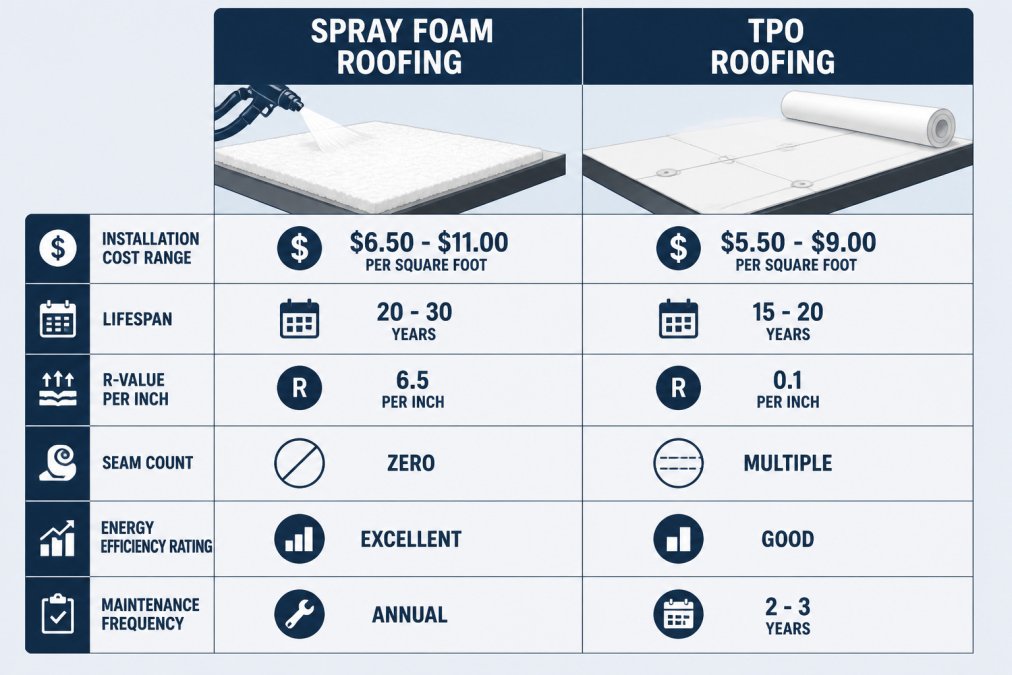
How Spray Foam Roofing Works and Its Application
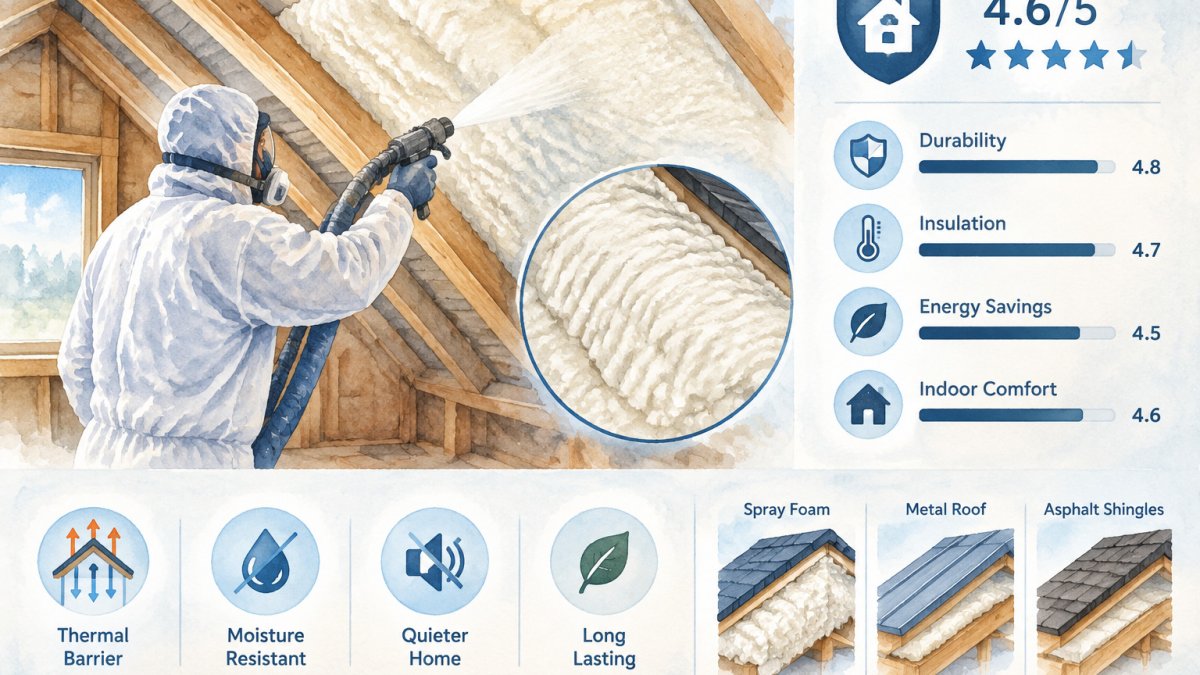
Spray foam roofing begins as two liquid components stored separately. When sprayed, they mix and react, expanding to fill gaps and cure into a rigid foam layer. A protective coating is then applied over the foam to shield it from UV damage and weathering.
West Roofing Systems spray foam versus TPO comparison notes that spray foam performs best on complex roofs with multiple penetrations and uneven slopes.
To learn more about how spray foam systems are installed and what to expect, check our detailed spray foam insulation guide.
TPO Roofing Overview and Installation Process
Vision Roof Services TPO versus spray foam cost analysis found that TPO's lower installation cost advantage can narrow or disappear when additional insulation is required.
TPO Roofing Pros and Cons for Your Roof Type
Pros of TPO:
- Lower upfront installation cost for simple, flat roofs
- Faster installation timeline in ideal conditions
- Built-in UV resistance; no topcoat required
- Proven durability on straightforward roof designs
- Easier to repair if punctured or torn
- Lighter material; less structural load
Cons of TPO:
- Seams are potential failure points if not properly welded
- Poor performance on complex roofs with many penetrations
- Requires additional insulation for thermal improvement
- Membrane can become brittle in extreme cold
- Thermal expansion and contraction can stress seams over time
- Not ideal for roofs with irregular slopes or obstacles
Spray Foam Roofing Cost and Long-Term Value
The value proposition for spray foam becomes clearer when you consider what you're avoiding. Sun Flex Home Improvement can save property owners up to half the cost of a new roof through spray foam restoration.
For detailed pricing information and what drives your specific cost, explore our spray foam roofing cost guide.
TPO Roof Lifespan, Durability, and Weather Resistance
To understand spray foam durability in detail, review our comprehensive durability guide.
Spray Foam Roof Maintenance Requirements and Care
For step-by-step maintenance guidance, see our detailed spray foam roof cleaning and care guide.
Which System Fits Your Roof Condition and Climate
JRH Construction spray foam versus TPO commercial roofing comparison found that SPF outperforms TPO on complex roofs and in climates requiring superior insulation.
Review our guide to spray foam benefits to understand how this system performs in your specific situation.
| System | Best For | Key Advantage | Primary Consideration |
|---|---|---|---|
| Spray Foam | Complex roofs, cold climates, energy efficiency | Seamless, no seams, excellent insulation | Requires regular recoating |
| TPO | Simple flat roofs, budget-conscious, fast installation | Lower upfront cost, straightforward installation | Seams are potential weak points |
Choosing between spray foam and TPO roofing depends on your roof's condition, complexity, climate, and priorities. Sun Flex Home Improvement specializes in spray foam roofing restoration. Get a free estimate and let our team help you make the decision that protects your property for years to come.
Frequently Asked Questions
What is the main difference between spray foam and TPO roofing?
Spray foam roofing is a liquid polyurethane foam sprayed directly onto your existing roof, creating a seamless, monolithic layer that expands and hardens. TPO roofing uses large thermoplastic polyolefin sheets that are rolled out and seamed together. Spray foam adheres to complex roof shapes without seams; TPO requires careful seaming and works best on simple, flat surfaces. Both provide waterproofing and insulation, but their installation methods and performance characteristics differ significantly.
How does spray foam roofing cost compare to TPO over the roof's lifespan?
For a free estimate, contact Sun Flex Home Improvement.
How long does a TPO roof last, and how does that compare to spray foam?
TPO roofing typically lasts 15-20 years with proper maintenance, though some systems reach 25 years. Spray foam roofing can last 30+ years when maintained correctly. TPO's lifespan depends on UV exposure, seam quality, and climate stress; harsh weather accelerates degradation. Spray foam's seamless construction and protective coating offer superior longevity in extreme weather, making it advantageous in regions with heavy hail, high winds, or significant temperature swings.
What maintenance does a spray foam roof require?
Spray foam roofs need periodic inspections for damage, debris removal, and recoating every 10-15 years to maintain UV protection and waterproofing. Minor punctures or cracks can be patched quickly. TPO roofs require seam inspection, membrane cleaning, and occasional re-sealing. Spray foam's seamless design means fewer failure points, reducing maintenance complexity. Sun Flex Home Improvement can outline a maintenance plan specific to your roof's condition during your free assessment.
Which roofing system is better for a complex roof with many penetrations and obstacles?
Spray foam roofing excels on complex roofs with numerous penetrations, vents, pipes, and irregular shapes because it conforms to every contour without seams. TPO requires careful seaming around each obstacle, increasing labor costs and seam failure risk. For roofs with many features, spray foam typically offers faster installation, fewer failure points, and better long-term performance. Simple, flat commercial roofs may favor TPO's lower upfront cost, but complexity shifts the advantage to spray foam.