 comparison
Roof Rejuvenation Cost Benefit Analysis for Montana Homes
Last Updated: November 8, 2026
Quick Summary
Roof rejuvenation is a treatment that restores an existing roof's surface and extends its service life instead of replacing it. Whether it is worth the cost depends on the roof's structural condition and how many years the treatment adds, compared with a full tear-off over the same period.
- Treatments work best on structurally sound roofs showing surface wear, not on decking damage or failing roofs.
- Compare cost per year of added life against the annualized cost of full replacement, using the same time horizon.
- Pricing depends on roof size, pitch, access, shingle condition, coating type, stories and regional labor rates.
- Hail damage and snowmelt leaks at flashing or valleys need assessment, since surface treatments may not fix them.
- Sun Flex Home Improvement offers a free estimate, so request an on-site inspection before deciding.
Table of Contents
- What Roof Rejuvenation Is and How Treatments Work
- Roof Rejuvenation Cost Per Square Foot and What Drives the Price
- Roof Rejuvenation Cost vs. Replacement: A Like-for-Like Lifecycle Comparison
- Lifespan Extension, Return on Investment and Cost Per Year
- Roof Rejuvenation Pros and Cons, Including Hail and Snowmelt Leaks
- Roof Rejuvenation Reviews and How to Check Contractor Evidence
- Deciding Whether to Book a Free Estimate for Your Roof
- Frequently Asked Questions
What Roof Rejuvenation Is and How Treatments Work
Roof rejuvenation is a treatment applied to an existing roof to restore its surface and extend its service life, rather than removing and replacing it.
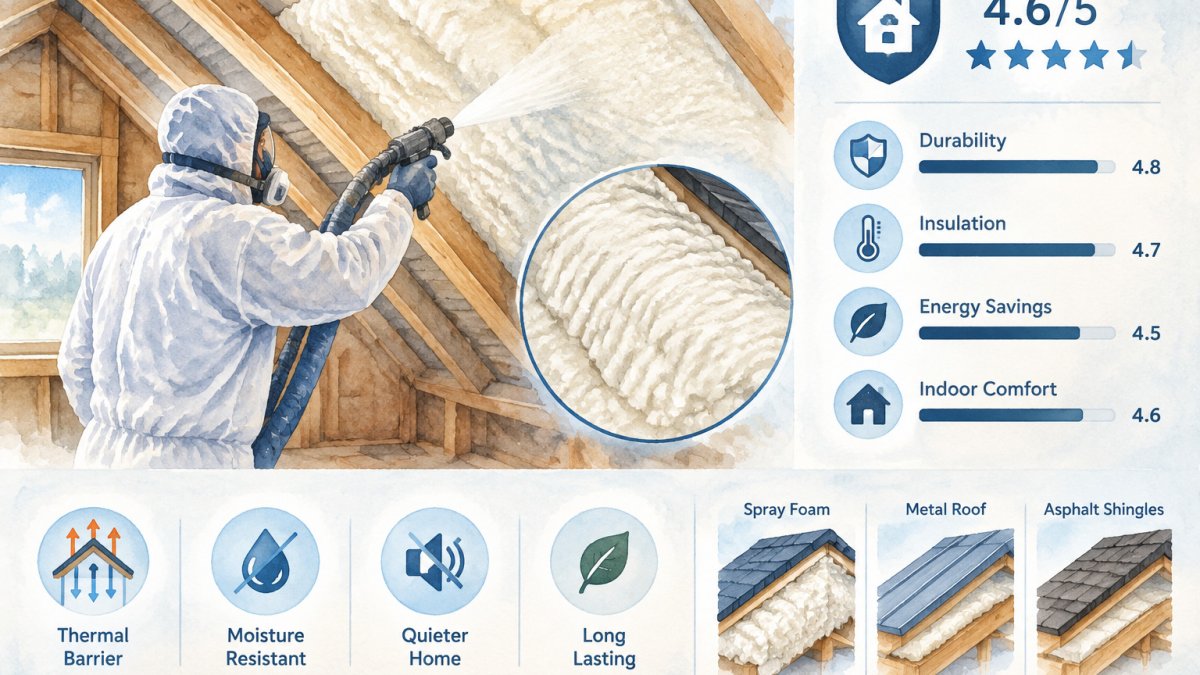
Treatments generally fall into two broad types. Coating-based systems spread a protective layer over the shingles to slow weathering. Spray foam restoration builds a seamless, watertight membrane over the existing surface. Both aim to seal small defects and reduce the water and UV exposure that wears out asphalt shingles.
Treatments work best on roofs that are structurally sound but showing surface wear. They are not a fix for decking damage, widespread rot, or a roof that is already failing.
Roof Rejuvenation Cost Per Square Foot and What Drives the Price
Pricing for rejuvenation is usually expressed per square foot, and the figures vary widely. Pricing depends on roof size, pitch, access, shingle condition and the treatment selected, and Sun Flex Home Improvement has not published per-square-foot figures for its services. For current pricing on your roof, request a free estimate or check the Sun Flex Home Improvement website for a quote.
Several factors commonly move the final number up or down:
- Roof size: Total square footage sets the base cost, though larger jobs often carry a lower per-square-foot rate because setup and mobilization are spread over more area.
- Pitch and access: Steep or complex roofs take more time and safety equipment. A roof that requires scaffolding, staging, or fall-protection systems adds labor hours that show up directly in the per-square-foot price.
- Coating type: Different treatment materials are priced differently, and the choice of system affects the final figure.
- Surface condition: Heavily worn shingles may need extra preparation before any treatment bonds properly. Cleaning, replacing loose tabs, and sealing exposed nail heads add labor before the treatment itself goes on.
- Number of stories and roof complexity: A two-story home with multiple valleys, dormers, and penetrations takes longer to prep and apply than a simple gable roof of the same square footage.
- Regional labor rates: Crew wages and insurance costs vary by market, so the same treatment can cost noticeably more in a high-cost metro than in a rural area.
Roof size, pitch, access and shingle condition
Two roofs of the same square footage can carry very different prices. A low-slope ranch house with open access is far cheaper to treat than a steep, multi-gable home with limited ground access. Shingle condition matters just as much. Cleaning, repairing loose tabs, and sealing exposed nail heads add labor before the treatment itself goes on. Ask any contractor to show how they accounted for these items in their estimate. A useful way to sanity-check a quote is to ask for the square footage they measured, the per-square-foot rate they applied, and a line-item list of prep work. If those three numbers do not reconcile, the estimate is hard to compare against another bid.
Why published price ranges are not a quote
A published per-square-foot range tells you the general market, not what your roof will cost. Local labor rates, seasonal demand, the age of your shingles, and any repairs needed first all change the final figure. Treat published ranges as a starting point for comparison, then request a site-specific estimate. Sun Flex Home Improvement offers a free estimate so you can see a number based on your actual roof.
Watch out: a quote that is dramatically below the local market often signals skipped prep work or a thin coating that will not last, so compare the scope line by line rather than the bottom line alone.
The article names several factors that move the final price of a rejuvenation job.
| Price factor | What it affects | Why it matters |
|---|---|---|
| Roof size | Base cost | Larger jobs often carry a lower per-square-foot rate |
| Pitch and access | Labor hours | Steep or complex roofs need extra time and safety gear |
| Coating type | Material cost | Different treatment systems are priced differently |
| Surface condition | Prep work | Worn shingles need cleaning and repairs first |
| Stories and complexity | Application time | Valleys, dormers and penetrations add labor |
| Regional labor rates | Crew costs | The same treatment can cost more in high-cost markets |
Roof Rejuvenation Cost vs. Replacement: A Like-for-Like Lifecycle Comparison
The fair way to compare these options is over the same time horizon. Comparing a rejuvenation bill today with a replacement bill today tells only part of the story.
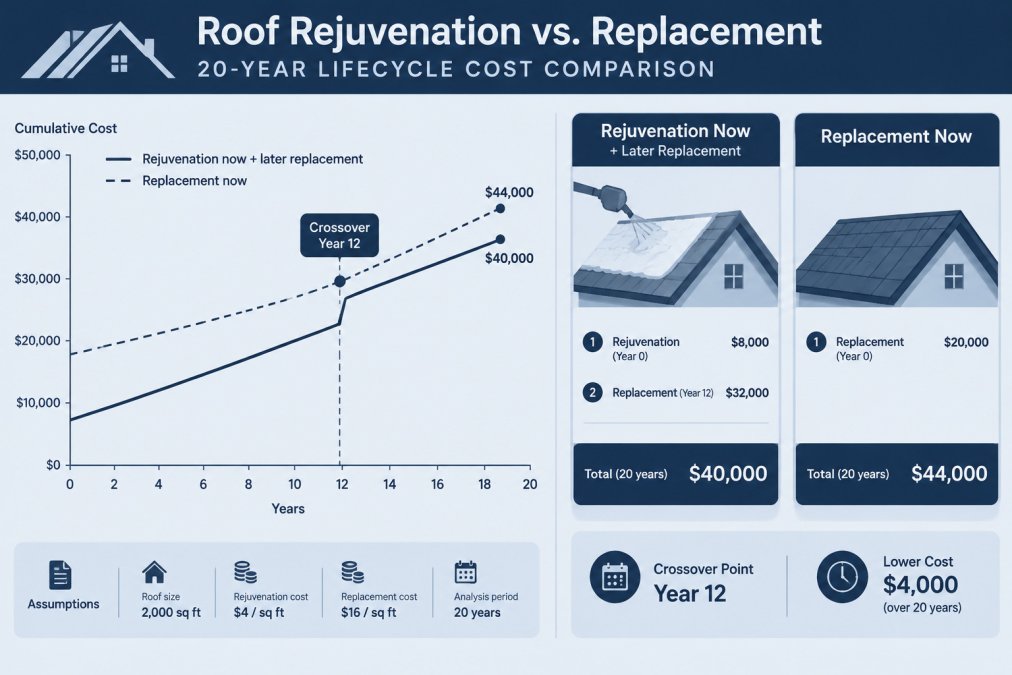
Start by estimating the total cost of each path across the same period. For rejuvenation, add the treatment cost plus the cost of the eventual replacement you will likely still face. For replacement, count the full installation once, along with the years of coverage you gain.
The answer depends on assumptions you should state openly, including how long a treatment lasts, how fast your shingles are aging, and whether inflation in roofing costs continues. Change those assumptions and the crossover moves.
Lifespan Extension, Return on Investment and Cost Per Year
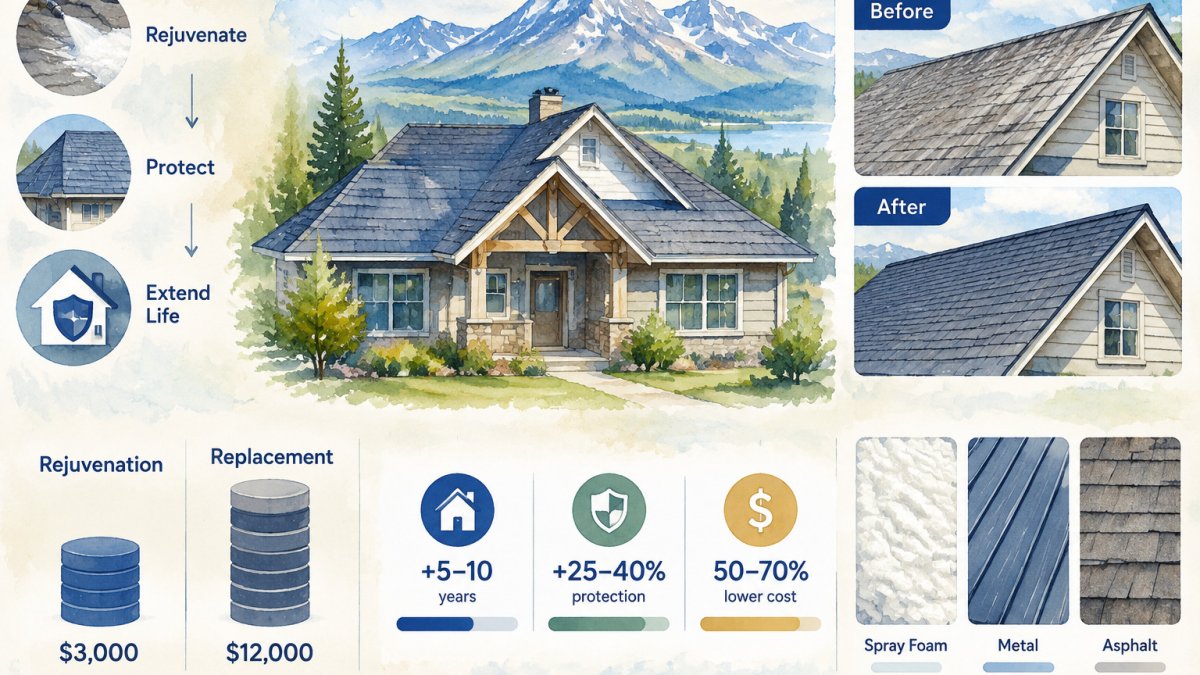
The most useful way to judge a treatment is cost per year of additional service life. Divide the total treatment cost by the number of years it is expected to extend the roof. A $6,000 treatment that adds five years costs $1,200 per year. Compare that figure with the annualized cost of a full replacement, which spreads its higher upfront cost over the full lifespan of the new roof. A $15,000 replacement that lasts 25 years costs $600 per year on a straight-line basis, before financing or inflation. That comparison is the heart of the decision, but it only holds if the lifespan-extension estimate is realistic.
How much life a treatment actually adds
Lifespan extension depends on the treatment type and the roof's starting condition. Lifespan extension depends on the treatment type and the roof's starting condition, and it can vary considerably from roof to roof. A roof already near the end of its service life may see only a few years of benefit, which changes the math entirely. Ask the contractor what evidence supports their lifespan claim: manufacturer testing, field experience on similar roofs, or both. Separate manufacturer claims from independently verified performance where you can, and treat any single number as an assumption to test rather than a guarantee.
Building a simple lifecycle model
A fair comparison uses the same time horizon for both paths and states its assumptions openly. A practical approach is to model twenty years and include these inputs:
- Treatment cost today and any prep or repair work bundled with it.
- Expected years added by the treatment, with a low and high estimate.
- Remaining life of the existing roof if you do nothing, so you know when replacement would otherwise occur.
- Replacement cost at the time you would actually pay it, adjusted for expected inflation in roofing costs.
- Financing cost if either path is financed, since interest changes the true cost per year.
- Maintenance and repair spending along each path, because a treated roof may still need occasional repairs.
Run the model with a low and high lifespan estimate. If the treatment still wins on cost per year across that range, the decision is robust. If it only wins under the most optimistic assumption, the case is weaker than a single savings figure suggests.
Warranty, insurance, and resale effects
Warranty terms belong in the calculation. Ask whether the treatment carries a written warranty, what it covers, how long it runs, and whether it is prorated. A warranty that excludes the most likely failure modes adds little value. Check with your insurer on how a rejuvenated roof is classified, because some carriers treat a treated roof differently from a new one for underwriting and claims purposes.
Watch out: a cost-per-year figure built on a lifespan estimate the contractor cannot support is the most common way this comparison goes wrong, so ask for the basis of the number before you rely on it.
Roof Rejuvenation Pros and Cons, Including Hail and Snowmelt Leaks
Rejuvenation has clear advantages. It costs less upfront than replacement, avoids tear-off debris, and can postpone a large capital expense. For a roof that is structurally sound, it can restore protection against weathering and seal minor surface problems.
It also has real limits. A treatment does not repair damaged decking, fix flashing failures, or make a worn-out roof new. Hail damage is a particular concern in our region. Hail can crack shingles and remove granules in ways a surface treatment may not reverse.
Snowmelt leaks deserve the same scrutiny. If water repeatedly enters during spring thaw, the cause is often at the flashing, valleys, or ice-dam-prone edges rather than across the whole surface.
Roof Rejuvenation Reviews and How to Check Contractor Evidence
Reviews help, but they are only one input. Look for detailed accounts that describe the roof's condition before treatment, the work performed, and how the roof has held up over time. Vague praise tells you little about durability.
Ask every contractor for concrete evidence. Request references from homeowners in your area who had work done in the last few years, and ask to see those roofs if possible. Confirm licensing, insurance, and any accreditation. Sun Flex Home Improvement is a BBB Accredited Business. One satisfied customer wrote, "Sun Flex Home Improvement did an excellent job on our roof.
Be cautious of any contractor who will not put warranty terms in writing or who promises results without first inspecting the roof.
Deciding Whether to Book a Free Estimate for Your Roof
If you are weighing rejuvenation against replacement, the most useful next step is an on-site inspection. Sun Flex Home Improvement offers a free estimate, which lets us check the decking, flashing, and shingle condition before recommending a path.
Bring your roof's age, any past repair records, and a list of problem areas, such as recurring leaks or hail damage. Ask for the cost per year comparison over the period you plan to own the home. With those numbers in hand, you can decide whether restoration is the right call for your property.
Frequently Asked Questions
What is the average cost of roof rejuvenation?
Sun Flex Home Improvement has not published treatment pricing, and costs depend on roof size, pitch, access, shingle age and condition. Pricing is not published here and depends on roof size, pitch, access, shingle age and condition. A free estimate after an on-site inspection gives you a figure based on your actual roof, which you can then compare with replacement quotes line by line.
Is roof rejuvenation worth it?
It can be, when the existing shingles still have service life left and the problem is surface wear, granule loss or minor weathering rather than structural damage or widespread failure. Compare the rejuvenation cost plus any likely later replacement against replacement now, spread over the same number of years. Treatment durability and lifespan gains vary by roof, so ask any contractor for the basis of their estimate and how long they expect the treatment to hold.
Can roof rejuvenation be used on any asphalt shingle roof?
No. Rejuvenation works best on asphalt shingles that are still flexible and have not lost most of their granules. Roofs with curling, cracking, large areas of missing shingles or active leaks often need repair or replacement first. An inspection should confirm eligibility before any treatment is priced, and a contractor who promises results without inspecting the roof is not giving you a sound basis for the decision.
How long can roof rejuvenation extend a shingle roof's life?
Lifespan extension varies by shingle condition, climate and treatment product, so no single number applies to every roof. Spray foam restoration can extend the life of existing roof structures, but the amount of added life depends on the roof's starting condition. Use an inspection and a lifecycle cost model with explicit assumptions to estimate how many additional years you can reasonably expect before replacement becomes necessary.