 comparison
Does a Metal Roof Increase Home Value?
Last Updated: October 30, 2026
Quick Summary
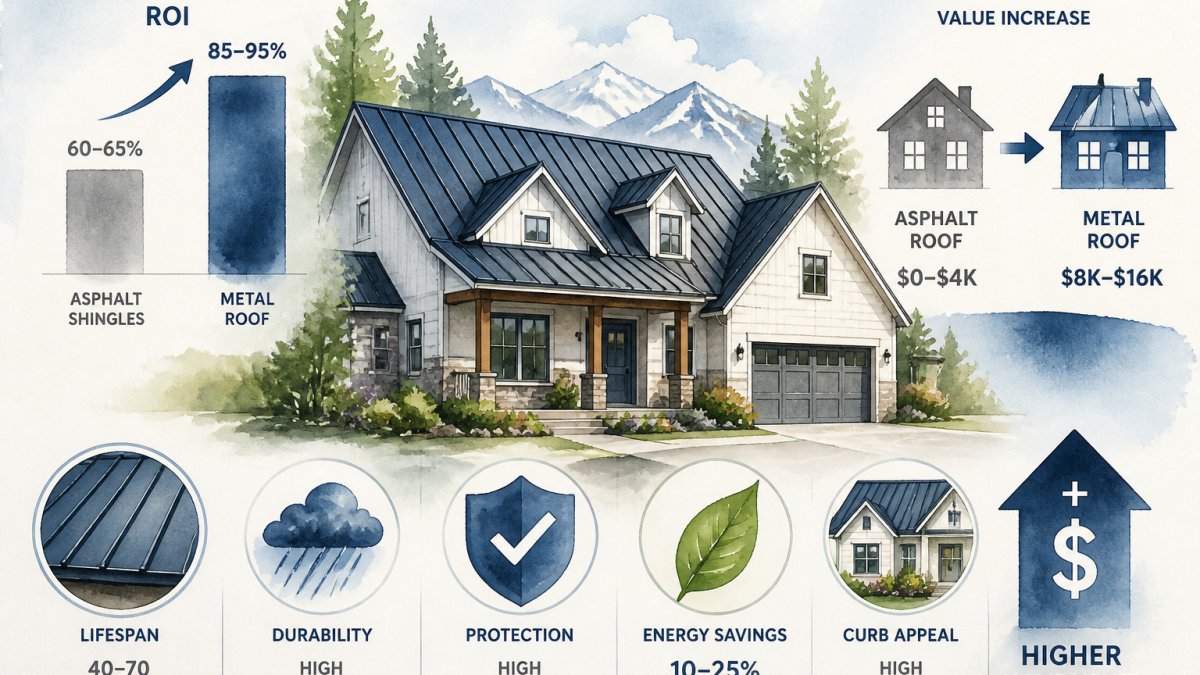
A metal roof can make a home easier to sell and can strengthen its metal roof value, but it does not guarantee a dollar-for-dollar return. Buyers often see a newer, sound roof as removing a major concern during inspection. Whether it pays off depends on your local market, the home's price range, and how long you plan to stay.
- A metal roof removes a major inspection concern for buyers when it is newer and sound.
- Compare metal against asphalt using itemized quotes for the same roof size and scope.
- Metal roofs generally last longer than asphalt, but check the specific product warranty.
- Metal may not pay off if the home is near the end of its useful life or the buyer pool is price-sensitive.
- Keep every invoice, warranty, and inspection record to document the work for buyers and appraisers.
Table of Contents
- Does a Metal Roof Add Value to a Home?
- Metal Roof ROI: What Recovers and What Doesn't
- Metal Roof Cost vs. Asphalt Shingles
- Metal Roof Lifespan Compared With Asphalt
- Best Roof Type for Resale Value
- Energy Savings, Insurance and Maintenance Factors
- When a Metal Roof May Not Pay Off
- Planning Your Roof Decision With a Free Estimate
- Frequently Asked Questions
Does a Metal Roof Add Value to a Home?
Property owners across Montana and Northern Wyoming face heavy snow, hail, and wind, and a roof's condition can shape a sale.
A metal roof is generally a durable material that buyers see as a long-term asset. Most buyers look at roof age and condition during an inspection.
Many homeowners ask whether metal roofing is worth the expense. The honest answer is that it depends on the local market, the home's price range, and how long the owner plans to stay.
Metal Roof ROI: What Recovers and What Doesn't
Return on investment is the most common question about metal roofing, and the most poorly explained. Most articles quote a single percentage without showing where it came from. Understand how these figures are built, then run the math on your own situation.
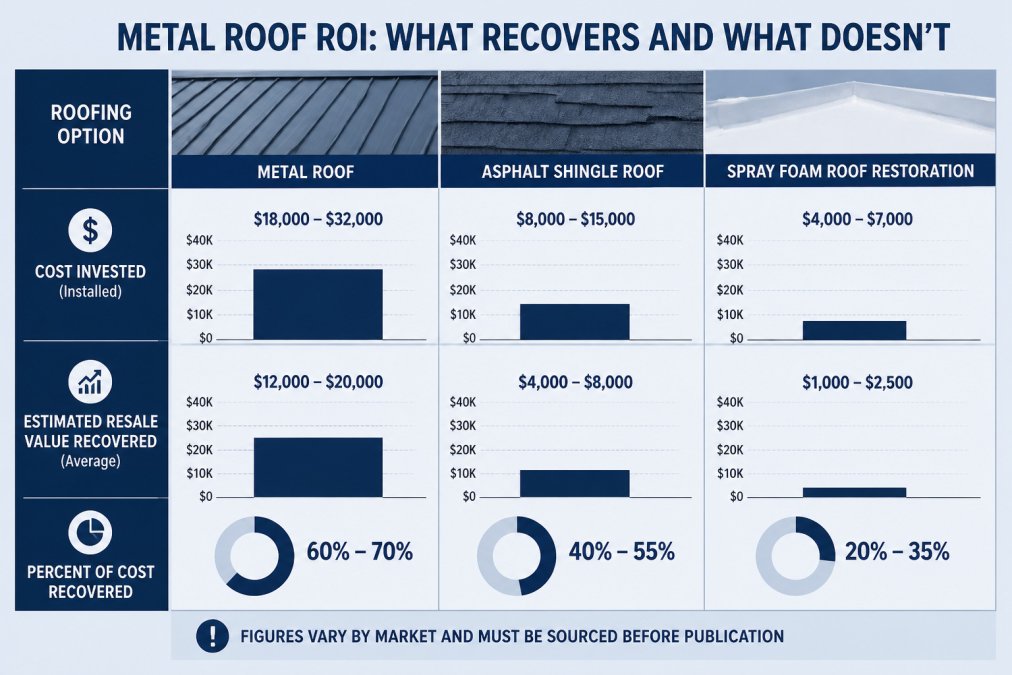
Two different numbers get called 'ROI'
Two ideas are often blurred together:
- Cost recovered, the share of the installation cost you get back when you sell. If a roof costs $30,000 and the home sells for $18,000 more than it would have with the old roof, cost recovered is 60%.
- Value added, the dollar amount the roof lifts the sale price, regardless of what you paid. A roof can add value and still recover less than its cost, and that is normal for most home improvements.
When you see a headline like 'metal roofs return X%,' ask which of these two it measures. Cost-recovery figures compare project cost to resale impact; value-added figures compare sale prices of homes with and without the feature. They are not interchangeable.
Where resale-value figures actually come from
Most published resale-value numbers for roofing are built one of three ways:
- Cost-versus-value studies, trade organizations and remodeling researchers survey contractors and real estate professionals for project cost and perceived resale value, then publish a national or regional ratio. Useful benchmarks, not appraisals.
- Paired-sales or comparable-sales analysis, an analyst compares recent sales of homes with metal roofs against similar homes with asphalt, adjusting for size, age, and condition. Closer to how an appraiser thinks, but the sample is usually small and local.
- Agent and appraiser surveys, real estate professionals estimate how much a feature adds. These capture market perception but are subjective.
Each method has assumptions: roof size, quality tier, whether tear-off is included, and the local market. A figure built on a 30-square roof in a high-cost metro will not transfer to a 15-square roof in a price-sensitive market.
How to run the math on your own home
You do not need a study to get a defensible estimate. A practical sequence:
- Get two itemized quotes, one for metal and one for asphalt, for the same roof size, pitch, and scope, including tear-off, underlayment, and flashing.
- Subtract the asphalt price from the metal price. That difference is your true incremental investment. If asphalt would cost $12,000 and metal $28,000, your incremental cost is $16,000.
- Ask a local agent or appraiser how much metal roofing tends to add in your price band and neighborhood, framed as 'compared with a home that has a new asphalt roof,' not an old one.
- Divide the value added by the incremental cost to estimate cost recovered, then compare that with other upgrades.
This framing matters because the roof you are replacing may have needed replacement anyway. The relevant question is rarely 'does metal pay for itself?' but 'is metal worth the premium over the alternative I would otherwise buy?'
What moves the number up or down
- Roof condition at sale: A new or recently replaced roof shows well; an aging roof drags on inspection negotiations regardless of material.
- Local buyer demand: Some markets pay a premium for metal; others care more about age and condition than material.
- Documentation: Warranty papers, permits, and installation records let a buyer and appraiser trust the work.
The takeaway
Metal roofing can add value and recover part of its cost, but the percentage depends on your market, price band, quality tier, and what you compare it against. Use published figures as benchmarks, run the incremental-cost math on your own quotes, and confirm local expectations with an agent or appraiser near you.
Metal Roof Cost vs. Asphalt Shingles
Metal roofing usually costs more to install than asphalt shingles, and that higher upfront cost is the central trade-off. What matters is the cost per square (100 square feet of roof), what is included in each quote, and how the two materials behave over the life of the roof.
Build the comparison like for like
A fair comparison holds five things constant:
- Roof size and pitch, priced per square, so a 20-square roof and a 40-square roof are not comparable.
- Scope, tear-off, disposal, underlayment, flashing, and ridge and valley details should be in both quotes.
- Quality tier, a premium standing-seam metal roof and a budget asphalt roof are not the same product class.
Ask each contractor for a line-item quote: materials, labor, underlayment, flashing, tear-off and disposal, permits, and warranty. A low bid that omits underlayment or flashing is not cheaper, it is incomplete.
What drives the price of each material
Asphalt shingles are the volume product. Cost is driven mainly by shingle grade (three-tab versus architectural), the number of layers being torn off, roof complexity, and local labor rates. The material itself is inexpensive; most of the price is labor and disposal.
Metal roofing has a wider price range because the product varies more. Cost is driven by:
- System type, standing-seam panels (concealed fasteners, longer panels, specialized labor) generally cost more than exposed-fastener panels or metal shingles.
- Metal and coating, steel with a quality paint system is common; aluminum and copper cost more.
- Gauge and panel width, thicker steel and wider panels change material and installation cost.
The comparison table
| Option | Typical Upfront Cost | Resale Effect | Best For |
|---|---|---|---|
| Standing-seam metal | Highest | Often a selling point where buyers value durability | Long-term owners, harsh weather, simple roof geometry |
| Exposed-fastener metal panels | Mid to high | Moderate; buyers may see it as utilitarian | Outbuildings, budget metal projects, simple roofs |
| Architectural asphalt shingles | Lowest to mid | Standard, widely accepted | Budget-focused projects, complex roofs, short hold periods |
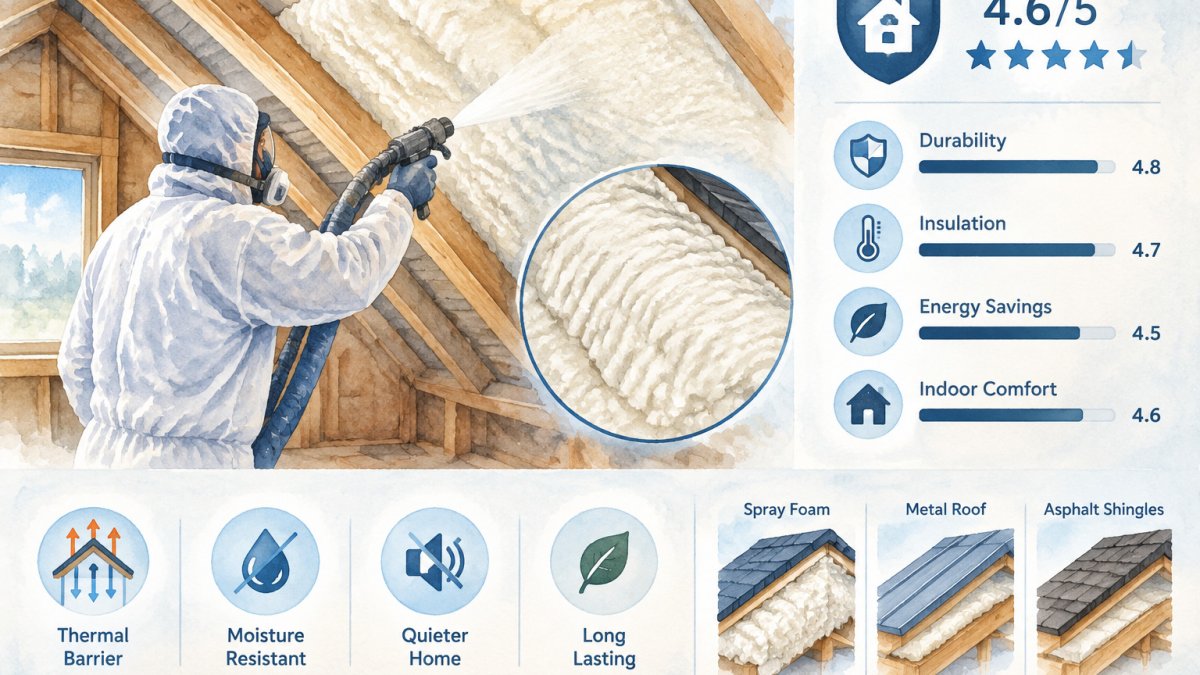
| Spray foam restoration | Varies by scope | Depends on roof condition | Restoring a sound existing roof |
Prices vary too much by region, roof size, and quality tier to publish a single national number, so use the table as a ranking of relative cost, not a quote. Get local itemized bids for your actual roof.
Cost over time, not just at installation
A metal roof's higher upfront price is partly offset by what you do not spend later:
- Replacement cycles, asphalt shingles typically need replacement sooner than metal, so over a long hold you may buy two asphalt roofs for one metal roof.
- Maintenance, metal generally needs less routine maintenance; asphalt needs more attention as granules wear and shingles age.
- Insurance, some carriers offer premium considerations for impact- or wind-rated roofing, but availability and discounts vary. Ask your insurer directly.
Pros and cons in one place
Pros of metal roofing: long service life, low maintenance, good weather resistance, and a potential selling point in markets that value durability.
Cons of metal roofing: higher upfront cost, noise during heavy rain or hail if not properly insulated and installed, possible dent damage from large hail on some panel types, and fewer qualified installers in some areas.
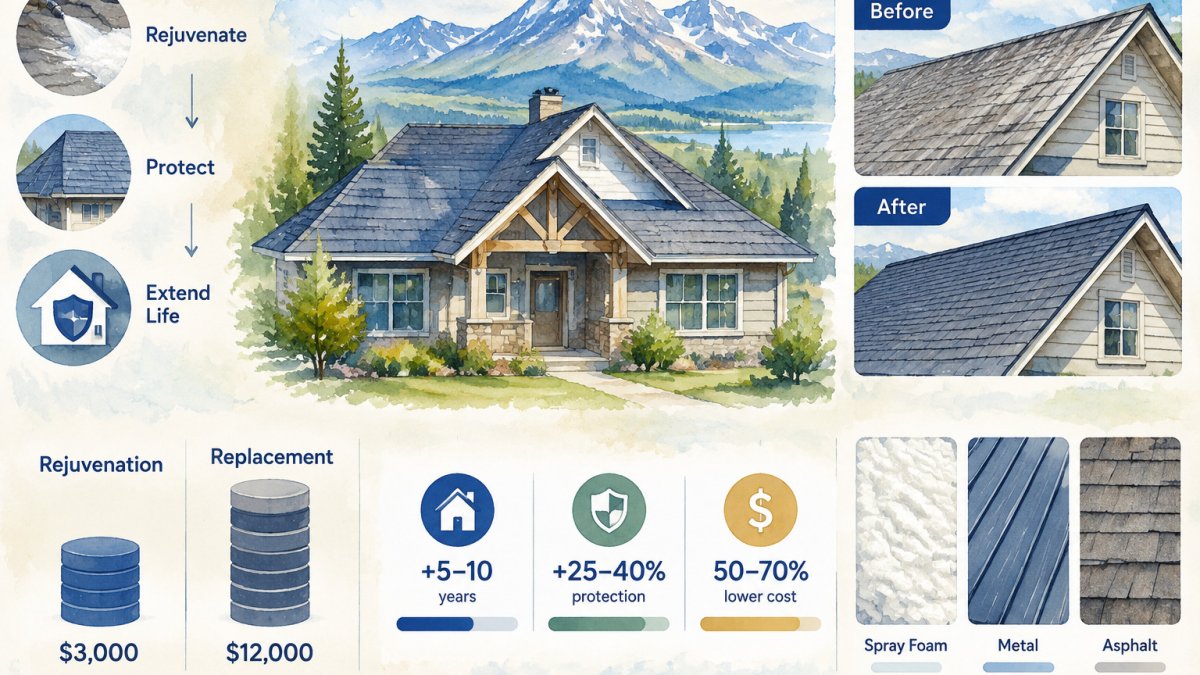
Spray foam roofing restoration can be a cost-effective alternative to full replacement in some situations. Pricing depends on roof size, condition, and scope of work.
Metal Roof Lifespan Compared With Asphalt
Metal roofs generally last longer than asphalt shingles. Many manufacturers rate metal roofing for several decades, while asphalt shingles often need replacement sooner.
Installation quality matters as much as the material. Poor fastening, weak flashing, or incorrect underlayment can shorten a roof's life regardless of the metal chosen.
Metal roofs in high-wind areas need fasteners rated for those loads. If your home faces strong winds, ask your contractor which fastening system they use and how it is tested.
Best Roof Type for Resale Value
No single roof type wins in every market.
Consider the home itself. A metal roof on a modest home in a shingle neighborhood may look out of place.
Ask a local real estate agent what buyers in your area look for.
Quick tip: Keep every invoice, warranty, and inspection record. Buyers and appraisers trust documented work more than verbal assurances.
Energy Savings, Insurance and Maintenance Factors
Energy performance is one reason homeowners consider metal roofing. Some metal roofs reflect solar heat, which can lower cooling demand in warm months.
Insurance may also matter. Metal Roof Insurance Coverage Explained covers how coverage affects premiums and payback.
Maintenance is usually light for metal roofs. Expect periodic inspection, cleaning of debris, and checks on fasteners and sealant. Asphalt roofs generally need more frequent attention as granules wear and shingles age.
When a Metal Roof May Not Pay Off
A metal roof does not always make financial sense.
Financing and permitting also deserve attention. Some lenders and programs treat roofing projects differently, and local permitting rules affect timelines and costs.
Installation quality is another risk. A poorly installed metal roof can leak, fail early, or create noise problems. Choosing an experienced contractor and checking references is part of protecting the investment.
Planning Your Roof Decision With a Free Estimate
Start by documenting your roof's current condition, your plans for the home, and your local market. Then ask two or three contractors for itemized, like-for-like quotes, and ask each what warranty they provide and how they handle post-installation problems.
If you are weighing a repair or restoration against replacement, a professional inspection gives you a clearer picture. Sun Flex Home Improvement offers a free estimate to help property owners in Montana and Northern Wyoming understand their options.
Frequently Asked Questions
Do metal roofs increase home value?
A metal roof can add to a home's appeal and buyer interest, but it rarely returns its full installed cost in resale price. Buyers in snowy, hail-prone or high-wind areas, including much of Montana and Northern Wyoming, often value durability more, so the effect depends on local comparables and the condition of the rest of the house. Ask a local appraiser or agent what similar homes with metal roofs have sold for before counting on a specific gain.
How much does a metal roof cost compared with asphalt shingles?
Metal roofing typically costs more to install than asphalt shingles because material and labor are higher. Exact pricing depends on roof size, pitch, panel type, tear-off requirements and local labor rates, so there is no single figure that applies to every home. Request a written estimate for both options on your actual roof so you can compare the same scope side by side.
How long does a metal roof last?
Metal roofs commonly last several decades, often longer than a standard asphalt shingle roof, when properly installed and maintained. Lifespan depends on the metal type, coating, installation quality and exposure to hail, snow and wind. Asphalt shingles generally need replacement sooner, which is why lifespan is part of the long-term cost comparison.
Can spray foam restoration be a lower-cost option before a full replacement?
For some existing roofs, a spray foam restoration system can seal the surface and extend service life at a lower cost than full replacement, which is one reason Sun Flex Home Improvement offers it as an alternative. Whether it suits your roof depends on the existing structure and its condition. Visit Sun Flex Home Improvement's website or request a free estimate for current pricing and a condition assessment.