 ultimate-guide
Metal Roof Insurance Coverage Explained: 2026 Guide
Table of Contents
- Does Metal Roof Insurance Coverage Exist?
- Metal Roof Insurance Exclusions: What's Not Covered
- Roof Age and Insurance Coverage: When Insurers Deny Claims
- Metal Roof Hail Damage Insurance Claims: Filing and Disputes
- How to File a Roof Insurance Claim: Step-by-Step Process
- Metal Roofs vs. Asphalt Shingles: Insurance Considerations
- Can You Get an Insurance Discount for a Metal Roof?
- Frequently Asked Questions
Last Updated: October 21, 2026
Does Metal Roof Insurance Coverage Exist?
Yes, metal roof insurance coverage exists, but the specifics depend on your policy language, roof condition, and your insurer's underwriting standards. Many homeowners discover this the hard way when filing a claim.
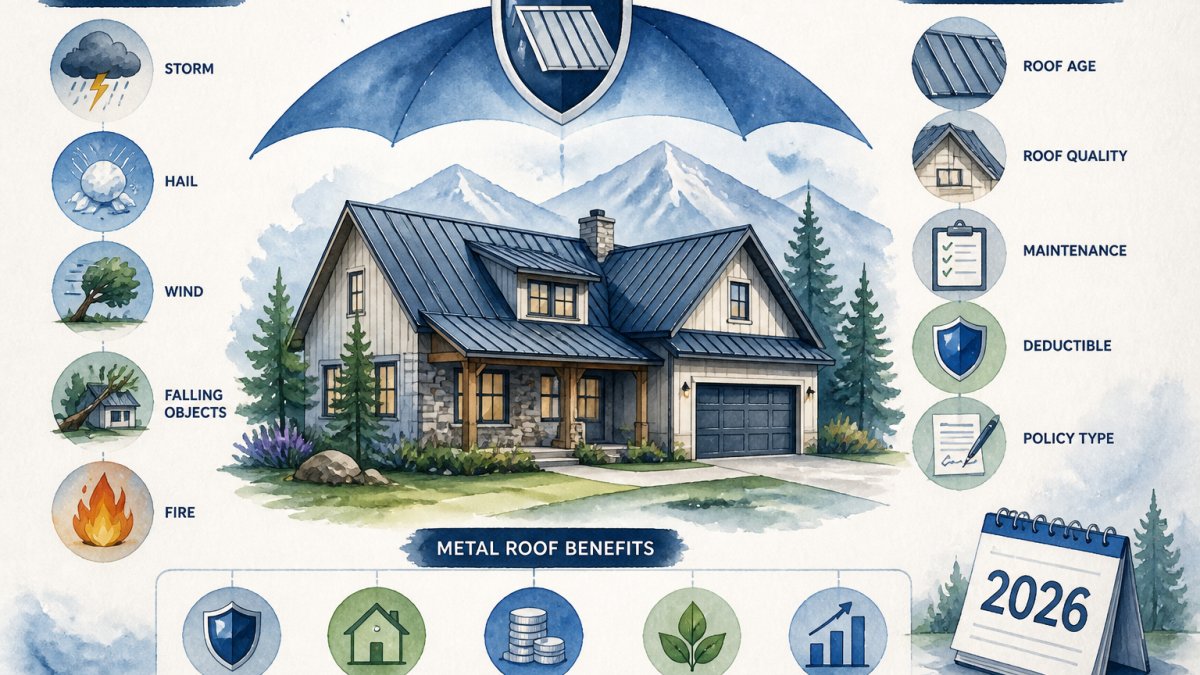
Metal roofs are increasingly viewed favorably by insurers. Standing seam systems offer superior durability and wind resistance versus asphalt shingles, which appeals to carriers wanting to reduce claim frequency. But coverage isn't uniform: some carriers encourage metal roofs with premium discounts, while others impose restrictions based on roof age, installation quality, or damage history.
The most critical factor is understanding what your policy covers before damage occurs. Your policy defines covered perils, exclusions, deductibles, and limits; a metal roof doesn't change these fundamentals, but it changes how insurers assess risk.
Start by reviewing your policy document, especially sections on "roof coverage," "materials exclusions," and "age limitations." Policies written before metal roofing became common may not address it specifically, creating ambiguity insurers often resolve in their favor. Contact your insurer directly and ask whether metal roofs are covered and whether exclusions apply.
Metal Roof Insurance Exclusions: What's Not Covered
Insurance policies exclude specific damage types regardless of roofing material. Metal roof insurance exclusions typically fall into three categories: maintenance-related damage, cosmetic damage, and wear-and-tear deterioration.
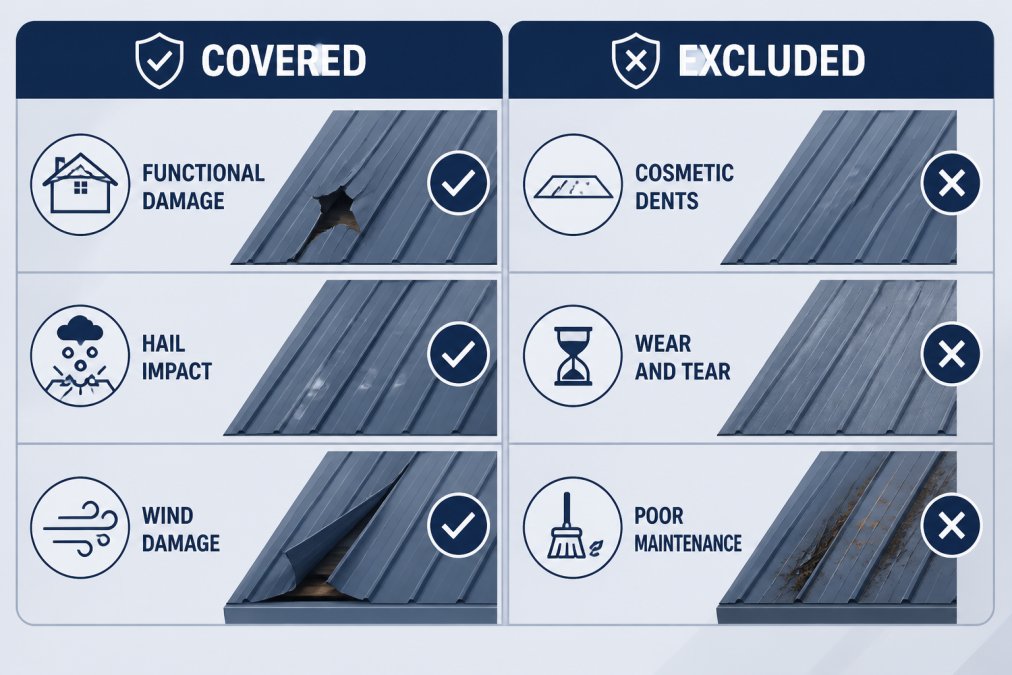
Cosmetic damage is the most common exclusion for metal roofs. A hailstorm or falling branch may dent your roof without affecting water-tightness or structural integrity, and insurers often deny purely cosmetic claims because the roof remains functional.
Poor maintenance is another standard exclusion. If leaks stem from unmaintained fasteners, improperly sealed seams, or debris causing water pooling, the insurer will likely deny the claim. Neglect voids coverage, so inspect regularly, clear gutters, and address minor issues early.
Wear and tear falls outside coverage in virtually all homeowners policies. Metal roofs last 40-50 years or longer, but materials eventually degrade.
Pre-existing damage is another frequent source of denials. If your roof already had damage before the claimed incident, insurers will argue the new damage isn't the direct cause of loss.
Roof Age and Insurance Coverage: When Insurers Deny Claims
Roof age is one of the most significant factors affecting coverage. Many policies include age limitations that restrict or exclude coverage beyond a certain age; understanding these thresholds can prevent claim denials.
Most insurers cover metal roofs up to 20-25 years old without age-related restrictions. Beyond that, coverage often becomes limited or conditional: some require an inspection for roofs older than 15 years, others impose higher deductibles or exclude certain perils, and a few decline to renew policies with roofs over 25-30 years old.
The reason is straightforward: older roofs have higher failure rates and claim frequency, so insurers price that risk accordingly or decline it. An older metal roof is still insurable, but you need to be proactive about finding a willing insurer.
When you file a claim, the adjuster verifies the roof's age and condition via installation records, building permits, and inspection reports. If your roof is near or beyond your insurer's age limit, the adjuster may deny coverage based on age alone, even if the damage is clearly from a covered peril.
Here's where metal roofs have an advantage: a 20-year-old metal roof is often in better condition than a 15-year-old asphalt roof, so insurers may be more willing to cover them at older ages.
Metal Roof Hail Damage Insurance Claims: Filing and Disputes
Hail damage is one of the most common reasons homeowners file roof insurance claims. Metal roofs handle hail differently than asphalt shingles, which affects how insurers evaluate and approve claims.
Metal roofs resist hail penetration better than asphalt shingles. A hailstone that would puncture or crack a shingle typically just dents metal; the metal stays intact, water doesn't enter, and the roof keeps functioning. That's a major advantage in hail-prone regions.
However, this advantage creates disputes. An insurer may argue dents aren't "damage" because the roof is still functional, while you want panels replaced for aesthetic reasons. The insurer refuses, citing the cosmetic-damage exclusion, and your claim gets denied.
To win a hail damage claim on a metal roof, you must prove functional damage, not just cosmetic damage. Functional damage includes:
- Water leaks caused by the hail impact
- Fastener damage that compromises the seal
- Seam separation or misalignment
- Punctures or tears in the metal
- Structural damage to the underlying roof deck
Cosmetic dents alone typically don't qualify. This is frustrating for homeowners who want their roof to look pristine, but it's the standard across the insurance industry.
The solution is documentation and professional assessment. After a hailstorm, hire a roofing contractor to inspect and photograph all damage, specifically identifying functional damage, water infiltration, or compromised seals.
Some homeowners pursue appraisal or mediation if the insurer denies a metal roof hail damage insurance claim they believe is valid.
How to File a Roof Insurance Claim: Step-by-Step Process
Filing a roof insurance claim requires careful documentation, timely notification, and clear communication. Follow these steps to maximize your chances of approval.
Document the Damage Thoroughly
Photograph and document all damage before making repairs. Take photos from multiple angles and include the surrounding area for context: close-ups of dents for hail, torn seams or missing fasteners for wind, and interior water stains, wet insulation, or mold for water damage.
Write detailed notes on what happened, when, and what damage you observed, including date, time, weather conditions, and witnesses. This narrative helps the adjuster understand the sequence of events.
Document pre-existing damage or repairs too. Photos of previous repairs or known issues demonstrate the current damage is new, preventing denials based on age or prior damage.
Contact Your Insurer Immediately
Call your insurer as soon as you discover damage. Most policies require prompt notification, often within 30 days, and delayed reporting can result in denial. Provide the date of loss, a brief damage description, and your policy number.
Your insurer will assign an adjuster and schedule an inspection to assess damage, verify coverage, and estimate repair costs. Be present, point out all damage, answer questions honestly, and provide your documentation.
Work with the Adjuster and Obtain Repair Estimates
Review the adjuster's damage assessment and repair estimate carefully. If you disagree, obtain your own estimate from a licensed roofing contractor, compare the two, and if there are significant differences, provide your contractor's estimate and ask the adjuster to reconsider.
Many metal roof insurance claims involve disputes over whether damage is functional or cosmetic. If your adjuster denies functional damage coverage, ask for a detailed explanation identifying which damage they consider functional versus cosmetic. That clarity helps you decide whether to appeal or pursue appraisal.
Once the claim is approved, you'll receive a settlement offer covering repair costs minus your deductible. Some policies use replacement cost value (RCV), covering full new materials and labor; others use actual cash value (ACV), which accounts for depreciation. Knowing which applies prevents surprises.
Metal Roofs vs. Asphalt Shingles: Insurance Considerations
Insurers treat metal roofs and asphalt shingles differently because of their failure rates, lifespans, and performance characteristics. Understanding these differences helps you make informed roofing and insurance decisions.
Durability and longevity: Metal roofs last 40-50 years versus 15-25 for asphalt shingles. This longer lifespan means fewer replacement claims: a 10-year-old metal roof should remain serviceable another 30 years, while a 10-year-old asphalt roof may need replacement within 5-15.
Wind resistance: Metal roofs, especially standing seam systems, are engineered to withstand high winds without lifting or separating, while asphalt shingles can lift or tear.
Hail performance: Metal roofs resist hail penetration but may dent; asphalt shingles crack or puncture. Insurers prefer metal because dents don't compromise function, while shingle cracks create water infiltration risk.
Maintenance requirements: Metal roofs need less maintenance than asphalt shingles, which require periodic inspection, moss removal, and debris clearing. Metal roofs are largely self-maintaining, giving insurers fewer reasons to deny claims for poor maintenance.
Insurance premiums: Many insurers offer metal roof discounts of 10-25%, depending on the system and your location. Some actively promote metal roofs with premium reductions, others remain neutral, and a few older insurers lack familiarity and offer none.
Can You Get an Insurance Discount for a Metal Roof?
Yes, many insurers offer discounts for metal roofs, but availability, size, and conditions vary significantly. Understanding how to access them can substantially reduce your insurance costs.
Why insurers offer discounts: Metal roofs reduce claim frequency and severity through greater durability, wind and hail resistance, and lower maintenance.
Discount availability: Not all insurers offer metal roof discounts; larger national insurers typically do, while regional or local insurers may not.
Discount size: Metal roof discounts typically range from 10-25% off your annual premium, depending on underwriting guidelines, location, roofing system, and roof age and condition.
Documentation required: To claim a metal roof discount, provide proof your roof is metal, typically including:
- A copy of your roofing contractor's invoice or receipt
- Photos of the installed metal roof
- A roof certification or warranty from the roofing manufacturer
- A professional roof inspection report confirming metal roofing materials
Some insurers require a physical inspection before approving the discount; others accept documentation. Contact your insurer for their specific requirements.
Timing: Install the metal roof before requesting the discount. Some insurers apply discounts prospectively at your next renewal, others retroactively if you notify them shortly after installation.
Combining discounts: Metal roof discounts often combine with others, such as bundling home and auto, security systems, or a claims-free history.
Factor in potential savings: over 20 years, a 15% premium discount can offset a significant portion of installation cost.
Metal roof insurance coverage is real, but it requires understanding your policy, documenting damage carefully, and working effectively with your insurer.
Frequently Asked Questions
Does homeowners insurance cover metal roof damage?
Most homeowners insurance policies cover metal roof damage from covered perils like hail, wind, and storms. However, coverage depends on your specific policy terms, the roof's age, its condition, and the type of damage. Cosmetic damage such as dents typically is not covered, while functional damage that affects the roof's ability to protect your home usually is. Review your policy or contact your insurer to confirm what your metal roof insurance coverage includes.
How does roof age affect insurance coverage for a metal roof?
Roof age significantly impacts insurance coverage. Insurers assess roof age and condition during underwriting to determine risk. A roof nearing the end of its lifespan may face higher deductibles, reduced coverage limits, or claim denial.
What metal roof damage is typically excluded from insurance?
Metal roof insurance exclusions commonly include cosmetic damage (dents, paint fading), wear and tear, poor maintenance, and damage from deferred repairs. Damage from improper installation or pre-existing conditions is also excluded. Gradual deterioration, rust from lack of maintenance, and damage caused by failure to perform routine repairs typically fall outside coverage. Always review your policy exclusions and maintain your roof to preserve coverage eligibility.
How do I file an insurance claim for metal roof damage?
Start by documenting all damage with photos and videos from multiple angles. Contact your insurer within the timeframe specified in your policy, usually within 30-60 days. Provide a detailed description of what happened, when, and how the damage occurred. Your insurer will assign a claim adjuster who will inspect the roof. Obtain repair estimates from qualified contractors and submit them with your claim. Be prepared to answer questions about roof age, maintenance history, and previous repairs.
Will insurance pay for hail damage to a metal roof?
Yes, most homeowners insurance policies cover hail damage to metal roofs when the damage is functional rather than cosmetic. Metal roofs typically resist hail better than asphalt shingles, but severe hail can cause dents that affect water drainage or structural integrity. Your deductible applies, and the insurer may use actual cash value (which accounts for depreciation) rather than replacement cost. Document hail damage immediately and file a claim promptly to avoid disputes.
Can a metal roof qualify for a homeowners insurance discount?
Some insurers offer discounts for metal roofs because they are more durable and resistant to damage than asphalt shingles. Discounts typically range from 5-15%, though availability varies by insurer and region. Metal roofs have longer lifespans, better wind resistance, and lower maintenance needs, which reduce insurer risk. Contact your agent to ask about metal roof discounts on your policy. Not all insurers offer them, so shopping around may reveal better rates.