 how-to
How to Hire a Metal Roofing Contractor: 2026 Guide
Table of Contents
- How to Find and Shortlist Metal Roofing Contractors
- Verify Licensing, Insurance, and Local Code Compliance
- Questions to Ask a Metal Roofing Contractor Before Hiring
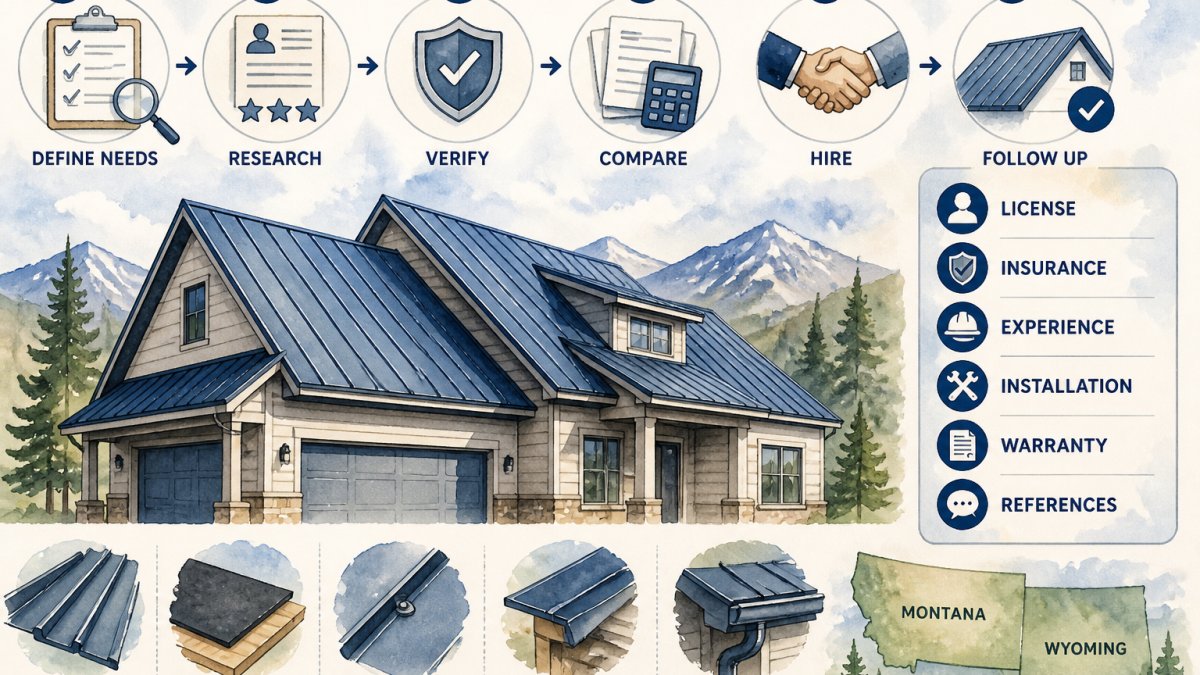
- Metal Roofing Contractor Checklist: What to Evaluate
- How to Compare Metal Roof Installation Cost and Bids
- Metal Roof Warranty Questions and Contract Terms
- Review References, Past Work, and Contractor Reputation
- Finalize Your Contract and Plan Installation
- Frequently Asked Questions
Last Updated: October 19, 2026
How to Find and Shortlist Metal Roofing Contractors
Learning how to hire a metal roofing contractor starts with knowing where to look. Begin by asking friends, neighbors, and local business owners for referrals. Personal recommendations carry weight because they come from people who've seen the work firsthand. Check online directories, the Better Business Bureau, and contractor review sites.
When you're ready to narrow your list, aim for three to five contractors to interview. This gives you enough options to compare without overwhelming yourself. Homeowners who gather multiple perspectives make better decisions about their roofing investment.
Research each contractor's background before reaching out. Visit their website, read their reviews, and note how long they've been in business. A contractor with 25+ years of experience has seen how different metal roofing systems hold up over time. Ask whether they work on residential and commercial projects, or if they specialize in one. Some contractors focus on specific metal roofing types, standing seam, metal panels, or corrugated systems, so verify they handle your preferred option.
Verify Licensing, Insurance, and Local Code Compliance
Before you hire anyone, confirm they're properly licensed and insured. This protects both you and the contractor.
Check licensing requirements. Every state has different rules. Most states require roofing contractors to hold a valid license. Call your state's licensing board or visit their website to verify a contractor's license status. Confirm the license is current and has no disciplinary history. An active license means the contractor has met training standards and passed exams specific to roofing work.
Verify insurance coverage. Ask the contractor for proof of general liability insurance and workers' compensation insurance. General liability covers damage to your property during the job. Workers' compensation protects their crew if someone gets injured on your roof. Request a certificate of insurance and confirm the coverage amounts are adequate.
Understand local building codes. Metal roof installation must meet local building codes and zoning requirements. Your contractor should know these rules inside and out. Ask them to explain what codes apply to your project. Proper metal roofing installation includes flashing, underlayment, ventilation, and fastening methods that comply with code, not shortcuts that save time.
Questions to Ask a Metal Roofing Contractor Before Hiring
Asking the right questions is crucial when learning how to hire a metal roofing contractor, as it reveals whether they understand metal roofing systems and your specific needs.
Experience with metal roofing: Ask how many metal roof installations they've completed in the last three years. Request examples of standing seam, metal panels, or whatever system you're considering.
Installation methods and materials: Ask which fastening systems they use and why. Different metal roofing systems require different approaches. Ask about underlayment options, ventilation strategy, and how they handle roof penetrations like vents and chimneys. Their answers should be specific, not vague.
Timeline and scheduling: How long will the job take? When can they start? Will weather delays affect the schedule? A clear timeline helps you plan around the disruption.
Warranty details: Ask what they guarantee and for how long. Does the warranty cover workmanship only, or does it include material defects? Can you transfer the warranty if you sell the property? We'll cover warranty questions more deeply in a later section.
Communication plan: How will they keep you updated? Who's your main contact if problems arise? Regular communication prevents surprises.
Metal Roofing Contractor Checklist: What to Evaluate
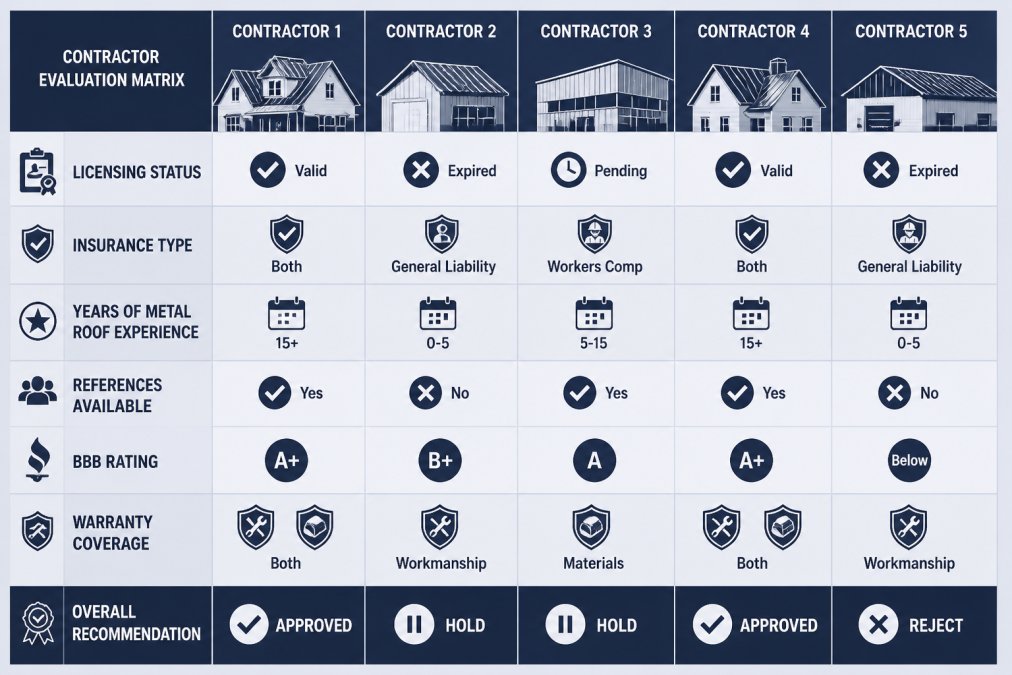
Use this checklist to compare contractors systematically. Rate each contractor across key criteria so you can make an informed decision.
| Evaluation Criteria | What to Check | Red Flags |
|---|---|---|
| Licensing | Valid state license, no violations | Expired license, disciplinary history |
| Insurance | General liability + workers' comp | No proof, coverage too low |
| Metal roof experience | 5+ years, multiple project types | Limited experience, all asphalt background |
| References | At least 3 local projects, contact info | Refuses to provide, vague references |
| BBB rating | A+ or A rating, few complaints | B rating or lower, unresolved complaints |
| Warranty | Written warranty, clear terms | Verbal only, vague coverage |
| Communication | Responsive, clear explanations | Slow replies, evasive answers |
Score each contractor on a simple scale: 1 (fails), 2 (acceptable), 3 (strong). Add up the scores. Contractors scoring 18+ deserve serious consideration. Those below 15 should be eliminated.
How to Compare Metal Roof Installation Cost and Bids
Getting multiple bids is essential. But comparing them requires more than looking at the total price.
Request written estimates from at least three contractors. A written estimate protects you, it documents what they'll do and what it costs. Verbal estimates are easy to misremember or dispute later.
Line-by-Line Bid Comparison
Break down each estimate into components so you can compare apples to apples.
A complete bid should include:
- Labor costs, installation hours and hourly rate, or flat labor fee
- Materials, metal panels or standing seam, fasteners, flashing, underlayment
- Roof deck work, repairs, reinforcement, or replacement of damaged decking
- Permits and inspections, who pays for these, and how much
- Cleanup and disposal, removal of old roofing, debris hauling
- Warranty, what's covered, for how long, and any exclusions
Line-by-line comparison reveals where contractors differ. One might charge more for labor but less for materials. Another might include roof deck repair; a third might quote it separately. Understanding these differences helps you make an informed choice.
Red Flags in Estimates and Proposals
Watch for warning signs in the estimate itself.
Vague line items. An estimate that says "labor" without specifying hours or rates is unclear. You can't compare it fairly to other bids. Ask for specifics.
No warranty mentioned. If the estimate doesn't address warranty at all, the contractor may not stand behind their work. A professional always includes warranty terms.
Pressure to decide quickly. A contractor who pushes you to sign immediately is pressuring you for a reason. Take your time. Compare all bids. A good contractor won't rush you.
Cash-only payment. Legitimate contractors accept checks or credit cards. Cash-only arrangements raise questions about licensing and taxes.
No permit mention. A bid that doesn't mention permits or inspections might mean the contractor plans to skip them. That's a serious problem. Unpermitted work can affect your home's resale value and insurance coverage.
Unusually low price. Metal roofing installation requires skill and quality materials. Unrealistic pricing usually means corners will be cut.
Metal Roof Warranty Questions and Contract Terms
Warranty protects your investment. Understand what's covered before you sign.
Ask these warranty questions:
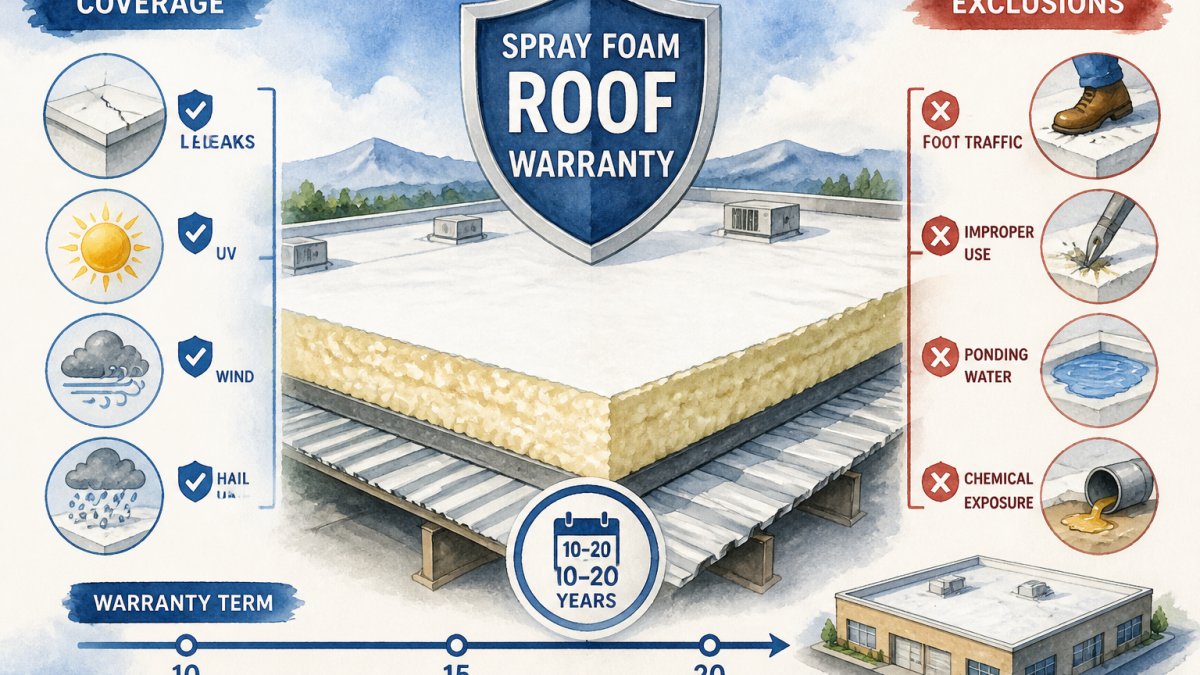
What does the warranty cover? Workmanship warranties cover installation defects. Material warranties cover defects in the metal panels themselves. Some contractors offer both; others offer only one. Know which you're getting.
How long does it last? Longer is better, but make sure you understand what each covers.
What's excluded? Most warranties exclude damage from storms, improper maintenance, or modifications you make after installation. Read the exclusions carefully.
Can you transfer it? If you sell your home, can the new owner claim the warranty? Some warranties are non-transferable. This affects your home's resale appeal.
How do you file a claim? Ask the contractor to explain the claims process. Do you contact them, or the manufacturer? What documentation do you need? A contractor who explains this clearly is organized and professional.
Get all warranty terms in writing. Don't rely on verbal promises. Include warranty details in your final contract.
Review References, Past Work, and Contractor Reputation
References and past work reveal how a contractor actually performs.
Ask for at least three references. Request contact information for homeowners who had metal roofs installed in the last two years. Call these references. Ask:
- Was the work completed on schedule?
- Did the contractor communicate well?
- Is the roof performing as promised?
- Any issues since installation?
- Would you hire them again?
Request a portfolio. Ask the contractor to show photos or videos of past metal roof projects. Look for clean installation, proper flashing, and neat fastening patterns. Poor workmanship shows.
Check online reviews. Visit the Better Business Bureau, Google Reviews, and Yelp. Look for patterns in feedback. One negative review might be an outlier. Multiple complaints about the same issue, missed deadlines, poor communication, leaks, signal a real problem.
Visit past projects if possible. If you live near a contractor's previous job, ask permission to see it in person. Seeing finished work tells you more than photos.
Finalize Your Contract and Plan Installation
Once you've chosen your contractor, a written contract protects both of you.
Your contract should include:
- Scope of work, exactly what will be done, including materials, roof prep, flashing, underlayment, and cleanup
- Timeline, start date, expected completion date, and any weather-related contingencies
- Payment terms, total cost, deposit amount, payment schedule (e.g., 50% down, 50% at completion)
- Change order process, how unexpected issues will be handled and billed
- Warranty terms, workmanship and material coverage, duration, and claim process
- Insurance and licensing, confirmation that the contractor carries required insurance and holds a valid license
- Permits and inspections, who obtains permits and schedules inspections
Review the contract carefully before signing. Ask questions about anything unclear. A professional contractor welcomes questions and will explain every term.
Discuss the installation timeline and expectations. When will they start? How long will the work take? Will they work during weekdays only, or weekends too? What happens if weather delays the job? What's your role, can you be present during installation, or should you stay away?
Ask about post-installation expectations. After they finish, what maintenance does your new metal roof need? How often should you inspect it? What's covered under warranty, and what's your responsibility?
Choosing the right metal roofing contractor takes time, but the effort pays off in a roof that protects your property for decades.
Hiring a metal roofing contractor is one of the most important decisions you'll make for your property. The contractor you choose will determine whether your roof performs reliably for 30+ years or develops problems within a few years. Start by verifying licensing, insurance, and local code knowledge.
Frequently Asked Questions
What qualifications should a metal roofing contractor have?
A qualified metal roofing contractor must hold a valid roofing license issued by your state, carry general liability and workers' compensation insurance, have verifiable experience installing metal roof systems (standing seam, metal panels, or similar), and maintain current knowledge of local building codes and manufacturer specifications. Request proof of licensing and insurance before moving forward. Ask how many metal roof installations they've completed in the past three years, experience with metal systems specifically matters more than general roofing work.
How do I compare metal roofing contractor bids?
Request written estimates from three to five contractors that itemize materials, labor, permits, and timeline. Compare line by line: metal panel type and gauge, fastener specifications, underlayment and flashing details, ventilation approach, and cleanup responsibility. Watch for vague language like 'standard materials', push for exact product names. Check whether warranty is included and who covers it. The lowest bid isn't always best; evaluate the scope of work and contractor reputation alongside price.
What should a metal roof warranty cover?
A metal roof warranty typically covers two components: the manufacturer's warranty on materials and the contractor's workmanship warranty on installation. Clarify who honors each warranty, you'll contact the manufacturer for material defects and the contractor for installation issues like leaks or fastener failure. Ask whether the warranty transfers if you sell the property. Get all warranty terms in writing before signing the contract, including what is and isn't covered (weather damage, rust, normal wear).
How do I verify a metal roofing contractor's license and insurance?
Request a copy of the contractor's roofing license and verify it directly with your state's licensing board or contractor registry. Ask for proof of current general liability insurance and workers' compensation coverage. Contact the insurance company listed on their certificate to confirm active coverage, don't rely on copies alone. Check the Better Business Bureau for accreditation and complaint history. For local contractors, verify compliance with your county or municipal building department requirements.