 comparison
Spray Foam vs Metal Roofing: Cost, Lifespan & Performance
Table of Contents
- Spray Foam Roofing vs Metal Roofing: Quick Comparison
- How Spray Foam Roofing Works
- How Metal Roofing Works
- Spray Foam Over Metal Roof: Installation and Compatibility
- Spray Foam Roofing Cost vs Metal Roofing Cost
- Spray Foam Roof Lifespan and Durability
- Spray Foam Roof Maintenance and Care Requirements
- Energy Efficiency and Weather Performance
- Frequently Asked Questions
Last Updated: October 18, 2026
Spray Foam Roofing vs Metal Roofing: Quick Comparison
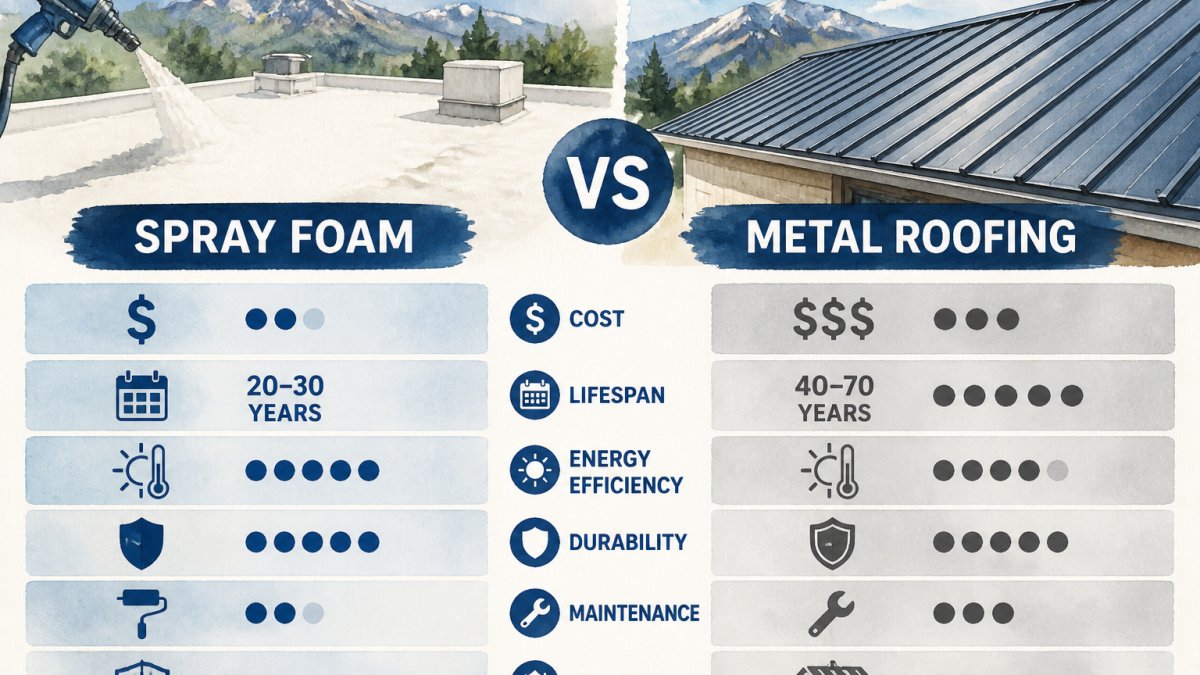
When comparing spray foam vs metal roofing, spray foam is a seamless, monolithic membrane sprayed directly onto an existing roof structure, while metal roofing consists of interlocking metal panels installed over a substrate. Both deliver durable protection but differ significantly in installation method, cost structure, lifespan, and suitability for different building types and climates.
At Sun Flex Home Improvement, we've spent over 25 years helping property owners across Montana and Northern Wyoming choose between these two systems. The decision between spray foam versus metal roofing often comes down to roof condition, budget, and long-term maintenance tolerance.
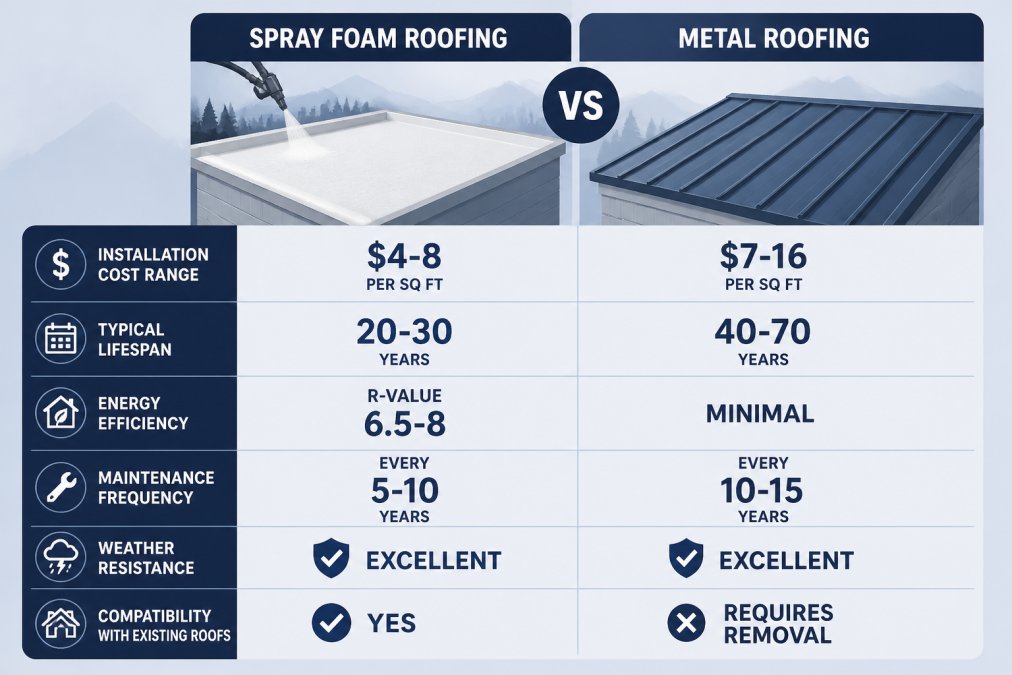
| Feature | Spray Foam Roofing | Metal Roofing |
|---|---|---|
| Installation Cost | $4-$8 per sq ft | $7-$16 per sq ft |
| Typical Lifespan | 20-30 years | 40-70 years |
| Energy Efficiency | High (R-6.5 to R-8) | Minimal insulation |
| Maintenance | Every 5-10 years | Every 10-15 years |
| Can Install Over Existing Roof | Yes | Typically requires removal |
| Weather Resistance | Excellent waterproofing | Excellent durability |
| Best For | Restoration, energy savings | New construction, longevity |
How Spray Foam Roofing Works
Spray polyurethane foam roofing creates a seamless, monolithic membrane by applying liquid foam directly to your existing roof substrate. The foam expands and hardens into a continuous protective layer without seams or joints, eliminating the weak points where water typically infiltrates traditional roofing systems.
A specialized spray rig mixes and atomizes two-part polyurethane components. Technicians spray the foam in layers, typically 1.5 to 2 inches thick, building insulation and waterproofing in a single operation. Once cured, the foam is topped with a protective coating, usually polyurethane or acrylic elastomer, that shields it from UV damage and weather exposure.
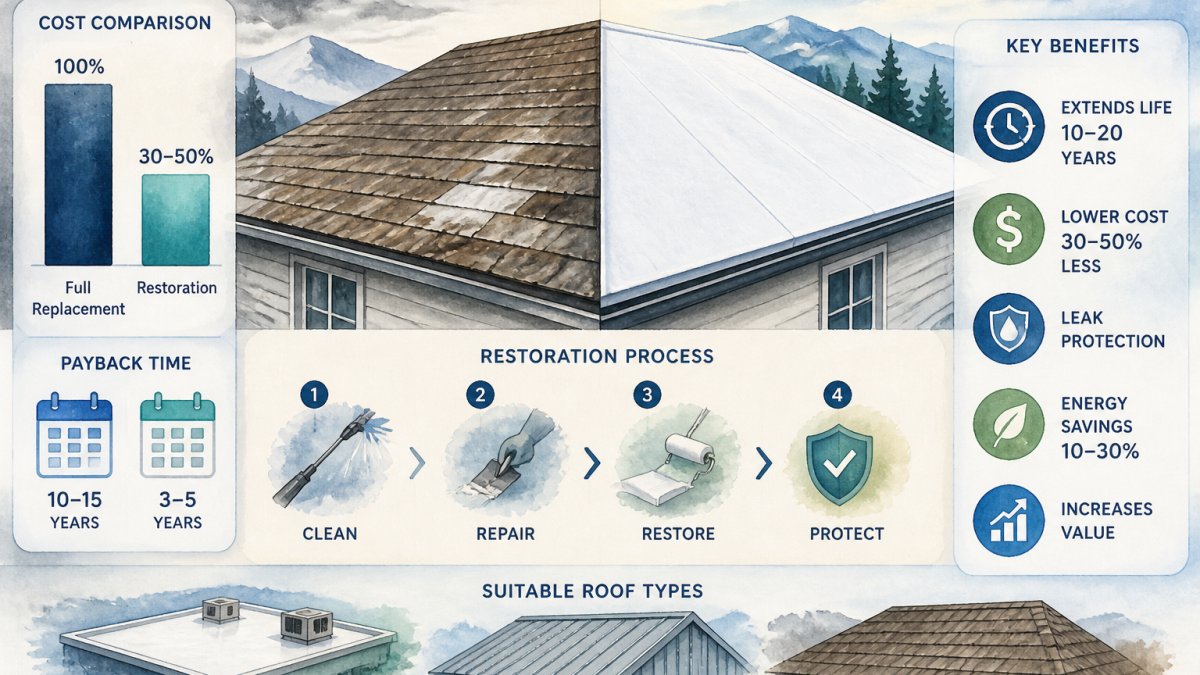
Spray foam roofing is particularly effective for existing roofs because it conforms to irregular surfaces, fills gaps around penetrations, covers fasteners, and bridges minor structural imperfections without removing the existing roof. For owners facing expensive full replacement, this extends roof life significantly while improving thermal performance. The closed-cell structure provides both insulation and moisture control, reducing heat transfer and condensation risk compared to metal roofing alone.
How Metal Roofing Works
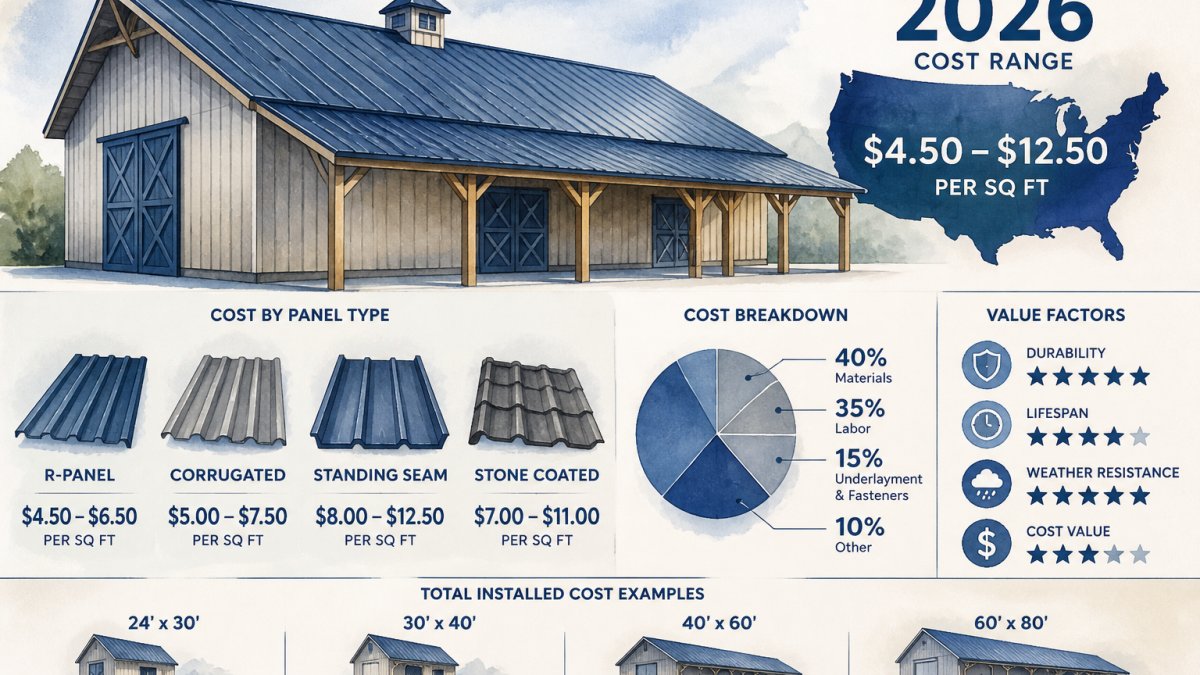
Metal roofing systems consist of interlocking panels, typically steel, aluminum, or copper, fastened over a structural substrate and underlayment. Standing-seam metal roofing, the most common commercial variant, features vertical panels with raised seams that overlap and lock together. Corrugated metal roofing, popular for agricultural and industrial buildings, uses wavy sheets that also interlock along seams.
Metal roofing relies on panel design and seam integrity to shed water and resist wind uplift, depending on proper installation of seams, fasteners, and flashing. Installation typically requires removing the existing roof to the structural deck, installing new underlayment, and securing panels with specialized fasteners, adding time and labor cost compared to spray foam restoration.
Metal roofing's durability comes from the material itself: steel and aluminum resist rust and corrosion when properly coated, and copper develops a protective patina. Metal panels reflect solar radiation, reducing heat absorption and cooling costs in warm climates. However, metal roofing provides minimal insulation on its own; thermal performance depends on the underlayment or insulation beneath the panels.
Spray Foam Over Metal Roof: Installation and Compatibility
One of the most practical applications in the spray foam versus metal roofing comparison is applying spray foam directly over an existing metal roof, addressing a common problem: metal roofs with compromised seams, fastener corrosion, or minor leaks that don't justify full replacement.
Spray foam can be applied directly to a metal roof without removing the panels. The foam adheres to the metal substrate, covers exposed fasteners and leaking seams, and creates a new, unified waterproofing membrane over the aging metal structure.
The process begins with cleaning the metal roof surface to remove debris, algae, and loose coatings, then sealing existing leaks and penetrations. Spray foam is applied in layers to the desired thickness, typically 1.5 to 2 inches. Once cured, a protective coating provides UV protection and extends the membrane's service life.
This approach works particularly well for agricultural buildings, warehouses, and commercial structures with older standing-seam or corrugated metal roofs, and for owners who invested in metal roofing decades ago and now face deteriorating seams or fasteners.
However, spray foam over metal has limitations. If the underlying metal is severely corroded or structurally compromised, foam alone won't address the deterioration; panels must be sound enough to support the weight of the foam and coating.
Spray Foam Roofing Cost vs Metal Roofing Cost
Comparing spray foam roofing and metal roofing costs requires understanding what you're purchasing: a restoration versus a replacement.
Spray foam roofing restoration costs vary with roof complexity, accessibility, foam thickness, and coating system.
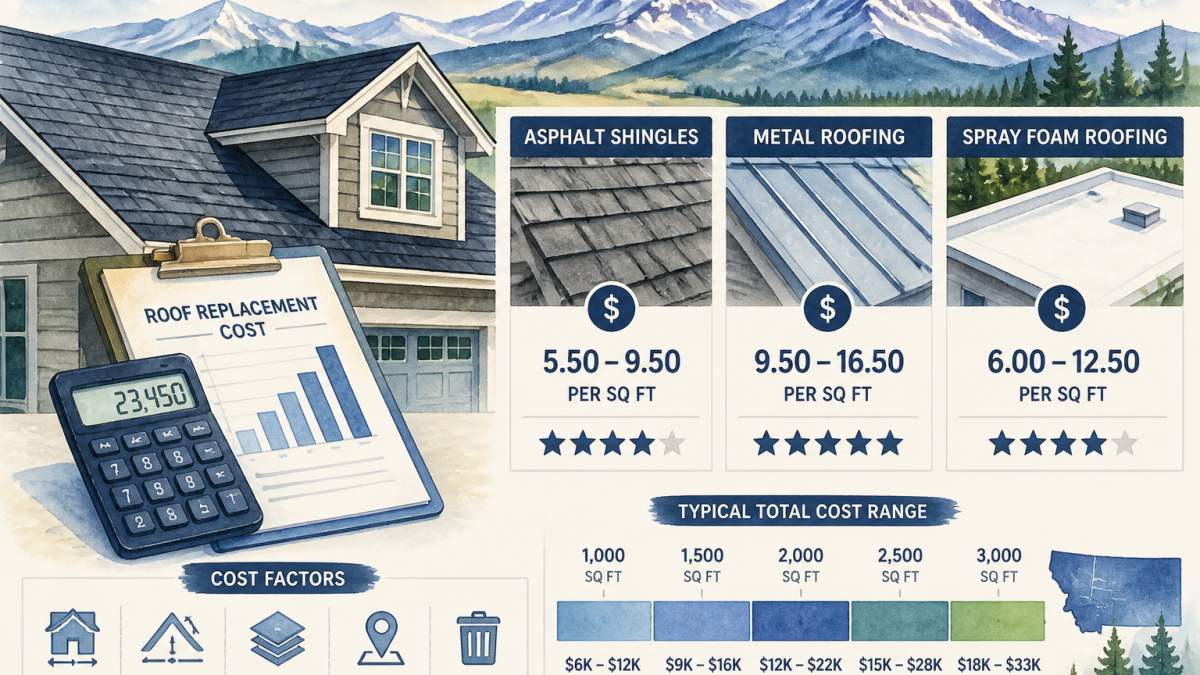
New metal roofing installation costs vary depending on metal type (steel, aluminum, copper), panel profile, and regional labor rates. This reflects removing the existing roof, preparing the deck, installing underlayment, and securing new panels.
The cost advantage of spray foam restoration becomes clear in like-for-like scenarios. If your existing roof is structurally sound but showing age, spray foam restoration can be a cost-effective alternative to a complete metal roof replacement. However, if the structure requires repair or the building needs a very long service life, new metal roofing may offer better long-term value despite the higher initial investment.
Pricing also depends on the protective coating over spray foam: basic acrylic costs less than premium polyurethane or silicone systems with enhanced durability and UV protection. Metal roofing pricing varies with material choice, steel is most economical, while copper commands a premium for aesthetics and longevity.
Spray Foam Roof Lifespan and Durability
The typical lifespan of spray polyurethane foam roofing ranges from 20 to 30 years when properly maintained, assuming the protective coating remains intact and the foam receives periodic recoating as the surface weathers and loses UV protection.
Spray foam itself is extremely durable: the polyurethane resists moisture infiltration, thermal cycling, and UV exposure when protected by a quality topcoat, and the seamless membrane eliminates seams and joints where water traditionally enters.
Durability also depends on the closed-cell foam's ability to resist moisture and maintain adhesion to the substrate. Quality installation, proper surface preparation, correct foam thickness, and adequate coating directly impact performance; poor installation or inadequate coating can reduce effective lifespan to 15 years or less.
Metal roofing systems typically last 40 to 70 years depending on metal type and environmental exposure. Standing-seam steel in harsh climates (salt spray, extreme temperature swings) may last 40 to 50 years, while aluminum and copper often exceed 50.
For property owners in Montana and Northern Wyoming facing freeze-thaw cycles, hail storms, and intense UV exposure, this durability difference matters. Spray foam works well as a mid-life restoration that extends an aging roof by 15 to 20 years; metal roofing is the choice for long-term protection that outlasts decades of regional weather extremes.
Spray Foam Roof Maintenance and Care Requirements
Spray foam roofing requires more active maintenance than metal roofing. The primary task is inspecting and recoating the protective membrane every 5 to 10 years, depending on climate, UV exposure, and coating type.
Regular inspections should identify areas where the coating has worn thin, cracks have developed, or the foam has been damaged by foot traffic or weather.
Debris removal is also important: leaves, branches, and dirt trap moisture against the foam and accelerate coating degradation. Keeping gutters and drains clear prevents standing water, which can penetrate minor coating cracks and compromise moisture resistance.
Foot traffic should be minimized on spray foam roofs. The foam is softer than metal or tile, and repeated walking can compress the surface and create depressions where water pools. If roof access is necessary, plywood walkways distribute weight and reduce localized damage.
Metal roofing requires far less active maintenance: annual inspections for loose fasteners, debris accumulation, and flashing integrity are sufficient.
The maintenance burden of spray foam roofing is a key trade-off. Owners who want a "set it and forget it" roof system will find metal roofing more appealing; those comfortable with periodic maintenance and recoating can achieve significant cost savings through spray foam restoration.
Energy Efficiency and Weather Performance
Spray foam roofing delivers superior thermal insulation compared to metal roofing alone. Closed-cell polyurethane foam typically provides an R-value of 6.5 to 8 per inch; a 1.5-inch layer achieves R-10 to R-12.
Metal roofing provides minimal insulation on its own, bare metal has essentially no R-value. However, it reflects solar radiation, reducing heat absorption compared to dark asphalt or single-ply membranes.
For commercial buildings with high cooling demands, warehouses, data centers, manufacturing facilities, spray foam's insulation value translates to measurable utility savings, particularly in warm climates or buildings with significant interior heat generation.
In Montana and Northern Wyoming, where heating costs dominate, spray foam's insulation value helps reduce winter heating expenses.
Both systems excel at weather performance but in different ways. Spray foam's seamless, monolithic membrane provides exceptional waterproofing, no seams or joints where water can infiltrate.
Metal roofing's weather resistance depends on proper seam installation and flashing design. When installed correctly, standing-seam metal sheds water effectively and resists wind uplift better than most alternatives.
Both systems handle hail differently. Metal roofing can dent under severe hail, a cosmetic issue that doesn't affect performance but may concern owners.
Choosing between spray foam roofing and metal roofing depends on your situation.
Sun Flex Home Improvement helps property owners across Montana and Northern Wyoming evaluate both options based on their roof condition, budget, and long-term goals. Our team provides detailed inspections, cost comparisons, and honest recommendations. Get started with a free estimate and let's find the right roofing solution for your property.
Frequently Asked Questions
Can spray foam be applied over a metal roof?
Yes, spray foam roofing can be applied directly over an existing metal roof. The spray polyurethane foam adheres to the metal substrate and covers seams, fasteners, and other penetrations that typically cause leaks in metal roofing systems. This approach eliminates the need for a complete roof replacement, making it a cost-effective restoration option for metal roofs showing wear.
How long does a spray foam roof last compared with a metal roof?
Spray foam roofing typically lasts 20-30 years with proper maintenance, while metal roofing can last 40-70 years depending on the type and climate. However, spray foam can extend the life of an existing metal roof by decades without full replacement. Both systems significantly outlast traditional asphalt shingles when maintained properly in harsh weather conditions.
Is spray foam roofing better than metal roofing for energy efficiency?
Spray foam roofing generally provides superior energy efficiency due to its seamless membrane and high R-value insulation properties, which reduce heat transfer. Metal roofing reflects heat but offers less insulation without additional insulation layers. For properties in cold climates where heating costs are significant, spray foam's thermal performance typically delivers greater energy savings and utility bill reductions.
Does spray foam roofing need regular maintenance?
Spray foam roofs require periodic inspection and maintenance, typically annually or after severe weather. Maintenance includes checking for cracks, recoating the protective layer every 10-15 years, and clearing debris. This is different from metal roof maintenance but more involved than some alternatives. Regular upkeep protects the waterproofing membrane and extends the system's lifespan significantly.
What are the main disadvantages of spray foam roofing?
Spray foam roofing has several limitations: it requires skilled installation by trained contractors, the protective coating can degrade under UV exposure without proper recoating, it may be damaged by foot traffic or hail in severe storms, and it requires ongoing maintenance. Additionally, if repairs are needed, matching the original foam can be challenging. Metal roofing offers superior hail resistance and requires less maintenance in comparison.