 ultimate-guide
Is Spray Foam Roofing Waterproof? A Complete Guide
Table of Contents
- Is Spray Foam Roofing Waterproof? The Short Answer
- How Spray Polyurethane Foam Creates a Monolithic Barrier
- The Critical Role of Protective Top Coats in Waterproofing
- Spray Foam Roofing Pros and Cons for Waterproofing
- How Long Does Spray Foam Roofing Last as a Waterproof System
- Spray Foam Roof Coating Maintenance to Preserve Waterproofing
- Common Waterproofing Failures and How to Prevent Them
- Frequently Asked Questions
Last Updated: September 20, 2026
Is Spray Foam Roofing Waterproof? The Short Answer
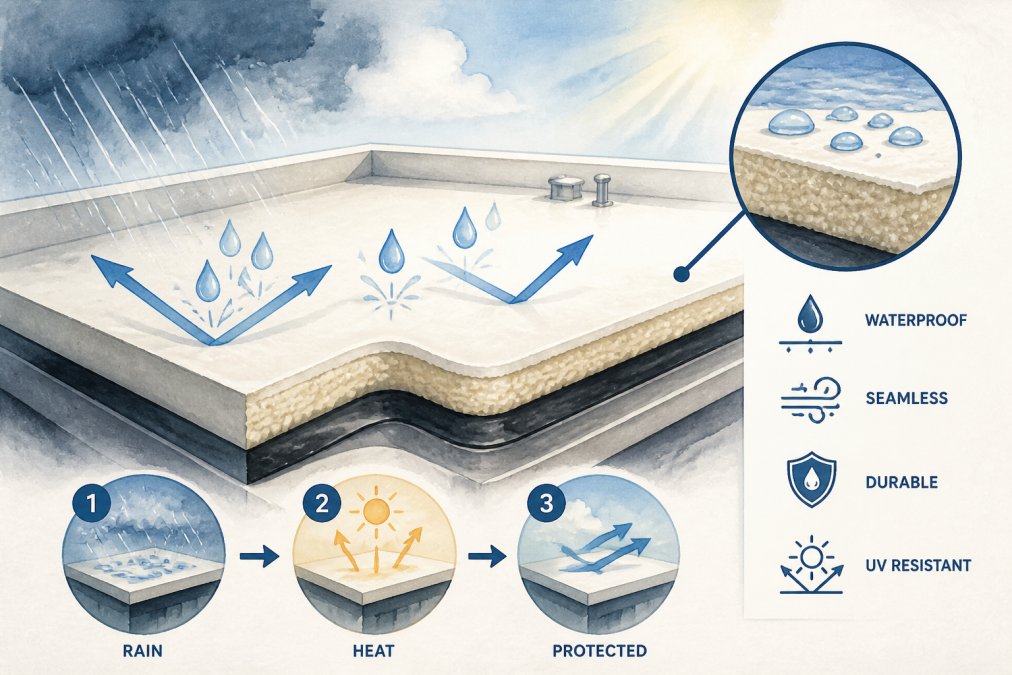
Yes, spray foam roofing is waterproof when properly installed and maintained with a protective top coat. The spray polyurethane foam creates a seamless barrier that prevents water penetration, but durability depends entirely on the elastomeric or silicone coating applied over it. Without this protective layer, the foam degrades under UV exposure and loses its waterproofing capability within months. At Sun Flex Home Improvement, we've learned that the coating isn't optional, it's the difference between a watertight roof and a failed restoration.
How Spray Polyurethane Foam Creates a Monolithic Barrier
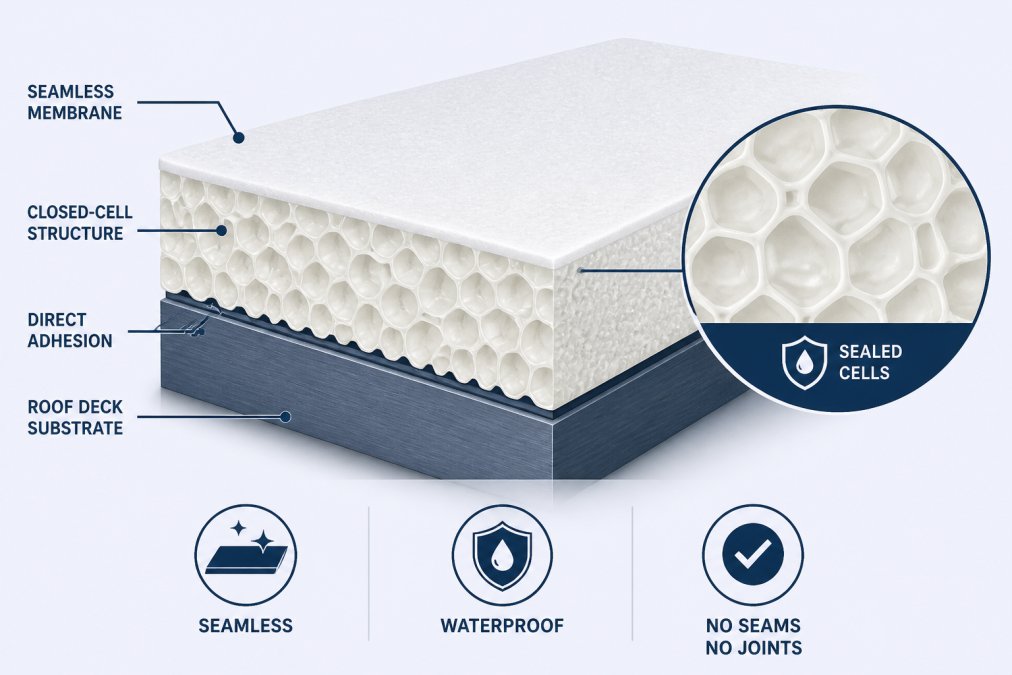
Spray polyurethane foam creates a continuous, seamless membrane across your roof deck without the overlapping seams and fasteners that plague traditional roofing. The closed-cell foam adheres directly to the substrate, forming a unified barrier with no weak points where water can infiltrate.
Closed-cell polyurethane foam contains millions of sealed gas-filled cells, making it inherently hydrophobic. When properly applied, it bonds to your existing substrate, asphalt shingles, metal, concrete, or wood, creating the substrate adhesion critical for long-term performance and eliminating flashing complications and seam failures.
A spray foam application can deliver significant R-value, reducing thermal bridging and minimizing stress from thermal cycling, which indirectly supports the waterproofing membrane.
The foam alone is not fully waterproof long-term; it's susceptible to UV degradation, moisture vapor transmission, and physical damage. The protective top coat is non-negotiable.
The Critical Role of Protective Top Coats in Waterproofing
The protective top coat is the actual waterproofing barrier, shielding the foam from UV rays, weather, and mechanical damage. Without it, your spray foam roofing waterproof system fails.
Acrylic coatings are water-based and environmentally friendly. Silicone coatings offer durability and maintain elasticity, making them suitable for harsh climates with extreme temperatures, heavy precipitation, ponding water, or freeze-thaw cycles.
Coating thickness matters significantly for adequate UV protection and durability. The coating must flex with the substrate as it expands and contracts with temperature changes, or it will crack and fail under thermal stress.
Spray Foam Roofing Pros and Cons for Waterproofing
Pros:
The monolithic barrier eliminates seams, the primary failure points in conventional roofing, and fasteners that penetrate the membrane.
Spray foam conforms to roof irregularities, sealing corners, valleys, and penetrations without special flashing.
Slope correction is straightforward; foam can be applied thicker in low spots to create proper drainage slopes.
Cons:
The protective top coat requires ongoing maintenance. Acrylic coatings degrade faster in harsh climates and need reapplication more frequently. Neglected maintenance accelerates UV degradation.
Installation quality directly affects waterproofing performance. Poor substrate preparation, incomplete adhesion, or improper foam application compromises the monolithic barrier.
Blistering occurs when moisture becomes trapped between the foam and substrate, typically from improper substrate drying. Blisters indicate compromised waterproofing integrity.
Delamination occurs when the foam separates from the substrate due to poor adhesion or substrate movement. Water then migrates between layers and the waterproofing system fails.
How Long Does Spray Foam Roofing Last as a Waterproof System
The lifespan of a spray foam roofing waterproof system depends primarily on the top coat's durability, climate exposure, and maintenance frequency. With proper care, a spray foam roof can remain waterproof for an extended period.
Lifespan by Coating Type
Acrylic-coated systems require periodic recoating to extend the system's waterproofing capability.
Silicone-coated systems offer extended durability. In regions with extreme weather, heavy snow, freeze-thaw cycles, or intense UV exposure, silicone is often recommended.
Climate-Specific Performance and Longevity
Long-Term Cost-Benefit Analysis: 25-Year Ownership Scenario
Substrate Condition and Structural Longevity
The roof substrate's condition directly affects the foam system's longevity. Water damage, rot, structural movement, or delamination underneath the foam will compromise the waterproofing system and reduce its effective lifespan by 5-10 years or more. A thorough pre-installation inspection is critical to identify soft spots, rot, rust, corrosion, cracks, moisture damage, and structural movement.
Maintenance Impact on Longevity
Maintenance directly extends the roof's life. A neglected system lasts 10-15 years; a well-maintained system lasts 20-30 years. Maintenance can extend the roof's life.
Realistic Lifespan Expectations by Scenario
Property owners should plan for recoating or replacement as part of their long-term maintenance strategy, with the understanding that proper maintenance can extend the roof's lifespan.
Spray Foam Roof Coating Maintenance to Preserve Waterproofing
Inspect your roof twice yearly for coating damage, exposed foam, debris, and water infiltration signs. Clean annually with a soft-bristle brush or low-pressure washing to remove debris, algae, and dirt. Address damage immediately, small repairs are inexpensive; water penetration leads to expensive restoration. Recoat acrylic and silicone systems periodically. Monitor flashing and penetrations to ensure they're intact and properly caulked.
Common Waterproofing Failures and How to Prevent Them
UV Degradation and Coating Chalking
UV degradation causes the coating to thin, chalk, or lose elasticity. Early signs include white or gray powdery residue, color fading, and loss of gloss. Perform a chalk test by rubbing a dark cloth across the surface; white powder transfer indicates chalking. Minor chalking can be addressed with a fresh elastomeric coat. Extensive chalking or exposed foam requires removal and full recoating. Prevent by ensuring adequate coating thickness and maintaining a recoating schedule.
Blistering and Moisture Entrapment
Blisters are bubble-like formations between the foam and substrate, caused by moisture or gas trapped during curing. Small blisters may not leak immediately, but they indicate compromised adhesion and will eventually rupture.
Diagnosis: Walk the roof surface and feel for soft spots or areas that flex under foot traffic. Tap suspected blisters with a rubber mallet; a hollow sound indicates internal separation.
Repair approach: Small isolated blisters can be injected with polyurethane sealant or epoxy. Larger blisters or clusters require cutting out the affected foam section, drying the substrate thoroughly, and re-foaming and recoating. Repair costs vary depending on the extent of the damage.
Prevention: Thoroughly dry the substrate before foam application using moisture meters to verify substrate moisture content is below 16%. Ensure the roof deck is free of standing water. Schedule installation during dry weather and allow adequate curing time.
Delamination and Loss of Substrate Adhesion
Delamination occurs when the foam loses adhesion to the substrate and separates, creating a void where water migrates between layers. This is a catastrophic failure mode.
Diagnosis: Delamination often begins at roof edges or transitions. Walk the perimeter and listen for hollow sounds when tapping the foam. Press firmly on suspect areas; if the foam flexes excessively, adhesion may be compromised.
Repair approach: Localized delamination can sometimes be re-adhered using injection of polyurethane adhesive under pressure. Extensive delamination requires removal of the affected foam section, substrate inspection and repair, and re-application of foam and coating. Costs vary depending on the affected areas.
Prevention: Proper substrate preparation is non-negotiable. Clean the substrate to remove dust, debris, and contaminants. Profile concrete or metal substrates as needed. Use primers recommended by the foam manufacturer if the substrate is incompatible. Avoid applying foam over substrates that move, flex, or are structurally unsound.
Ponding Water and Accelerated Coating Failure
Ponding water (standing water remaining on the roof for more than 48 hours after rainfall) accelerates coating degradation. Coatings exposed to ponding water fail 2-3 years earlier than properly drained areas.
Diagnosis: Visual inspection after rain reveals areas where water collects. Check the roof slope with a level; areas with less than 1/4 inch per 12 inches of slope are prone to ponding.
Repair approach: Eliminate ponding by re-sloping the foam application in low areas. This requires removing the coating and foam, building up the substrate or applying thicker foam to create proper slope, and recoating. Alternatively, install internal or external drainage systems. Slope correction can be performed.
Prevention: Design the foam application to eliminate low spots during initial installation. Use laser levels or slope guides to verify proper slope as foam is applied.
Flashing and Penetration Failures
Flashing failures at roof penetrations and transitions allow water to bypass the monolithic barrier. These areas often fail first due to greater movement, thermal stress, and exposure.
Diagnosis: Inspect all flashing and penetrations during routine maintenance. Look for gaps, cracks, separation from the foam, or missing caulk. Water stains on interior ceilings near penetrations indicate active leaks.
Repair approach: Minor gaps or cracks can be re-caulked with elastomeric sealant. Separated flashing requires removal, substrate cleaning, and re-installation with proper sealant. Deteriorated rubber boots or metal flashing must be replaced. Costs vary depending on the type of repair needed.
Prevention: Ensure flashing is sealed correctly during installation with elastomeric caulk compatible with the top coat. Inspect flashing twice yearly and re-caulk as needed. Plan for periodic flashing replacement.
Inadequate Recoating and Deferred Maintenance
Many property owners delay recoating to save money, only to face accelerated foam degradation and waterproofing failure. Skipping or delaying recoating can reduce the roof's remaining lifespan.
Diagnosis: Track the age of your last recoating.
Frequently Asked Questions
Is spray foam roofing completely waterproof without a protective coating?
Spray polyurethane foam itself is hydrophobic and resists water absorption, but it is not completely waterproof on its own. The closed-cell foam structure sheds water effectively, but UV rays degrade the foam surface over time, creating vulnerabilities. A protective elastomeric or silicone coating is essential to create a true waterproof system and extend the life of the foam. This top coat acts as the actual waterproofing membrane while the foam provides insulation and structural support.
How long does spray foam roofing last as a waterproof solution?
With proper maintenance and a quality protective coating, spray foam roofing can last for an extended period. The foam itself is durable, but the coating requires periodic inspection and recoating to maintain waterproofing integrity. Regular maintenance extends the system's life significantly compared to traditional roofing, making it a cost-effective restoration option for property owners looking to avoid full replacement.
What maintenance is needed to keep spray foam roofing waterproof?
Spray foam roof coating maintenance includes annual inspections for blistering, delamination, or UV damage; clearing debris and ponding water; and periodic recoating of the elastomeric or silicone surface. Early detection of cracks or coating failure prevents water infiltration into the foam substrate. Minor repairs are far less expensive than replacing the entire roof, which is why regular maintenance is critical to preserving the waterproofing barrier.
Can spray foam roofing handle harsh weather like hail and high winds?
Spray foam roofing with a protective coating is designed to withstand hurricane-force winds and severe weather when properly installed. The seamless, monolithic nature of the system provides excellent resistance to wind uplift. However, large hail impact can damage the protective coating, which may allow water infiltration if not repaired promptly. The foam's insulative properties and thermal resistance also help the roof maintain integrity under temperature extremes common in harsh climates.