 comparison
Is Roof Restoration Worth It? A 2026 Guide
Table of Contents
- When Roof Restoration Makes Financial Sense
- Roof Restoration Cost vs. Replacement: What You Actually Pay
- Roof Restoration vs. Replacement: Which Option Fits Your Situation
- Signs a Roof Needs Replacement Instead of Restoration
- What Roof Restoration Actually Does and Doesn't Fix
- Warranty, Insurance, and Building Code Considerations
- Frequently Asked Questions
Last Updated: October 11, 2026
When Roof Restoration Makes Financial Sense
Roof restoration applies protective coatings or treatments to extend roof lifespan without full replacement. At Sun Flex Home Improvement, we've helped hundreds of property owners across Montana and Northern Wyoming assess whether roof restoration worth the investment. The decision depends on your roof's condition, age, materials, and existing damage.
The core question: can your roof be saved, or has it deteriorated beyond repair? Most roofs show warning signs years in advance. Catching them early makes restoration cost-effective. But if your roof has significant structural damage, active water intrusion, or widespread granule loss, restoration alone won't solve the problem.
A professional roof inspection reveals whether restoration is viable. Without one, you're guessing, and guessing usually costs more in the long run.
Roof Restoration Cost vs. Replacement: What You Actually Pay
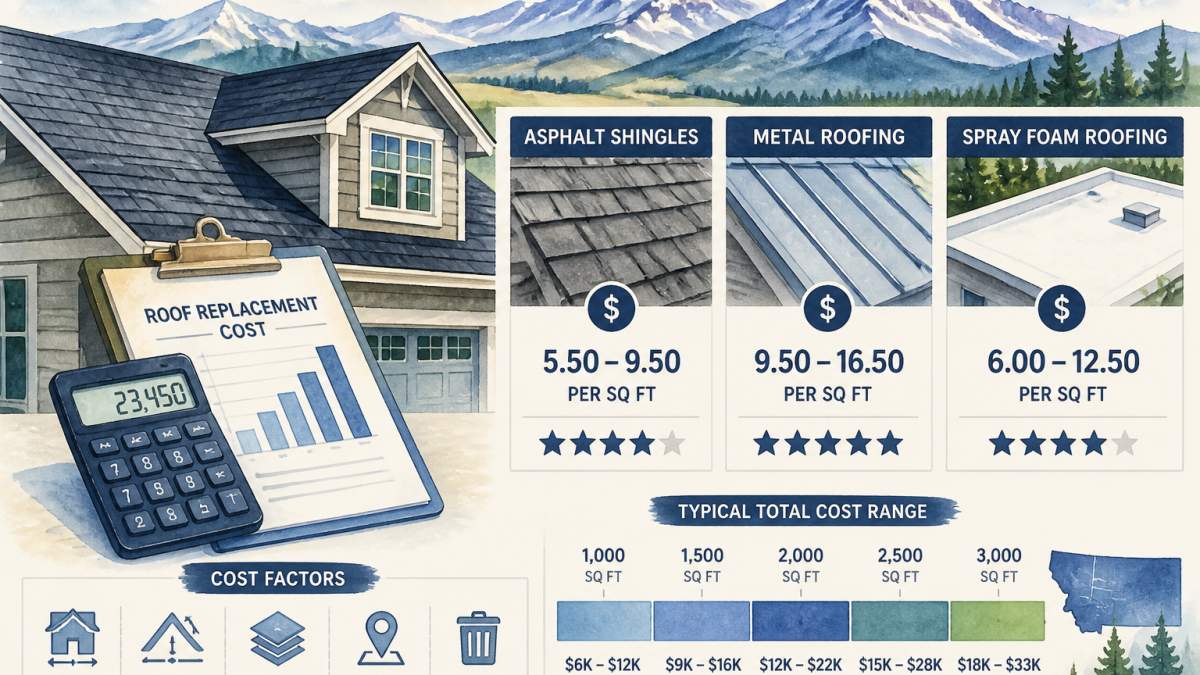
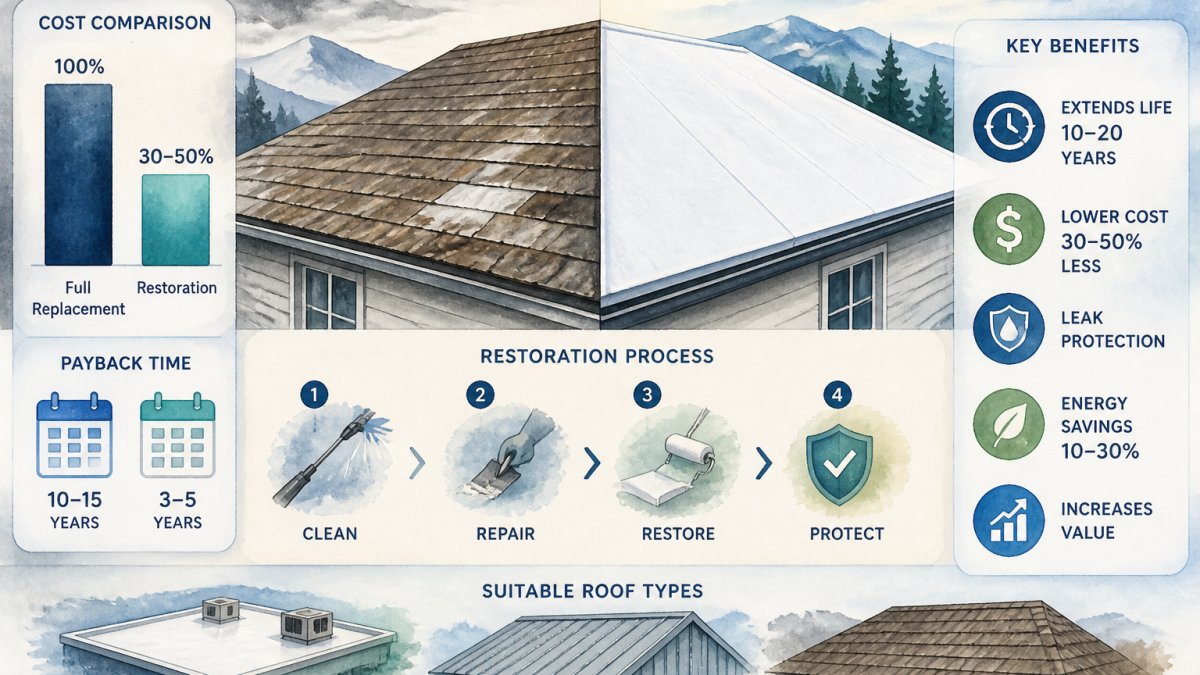
The financial comparison between restoration and replacement requires looking at full lifecycle costs, not just upfront investment. Restoration typically costs a fraction of replacement, but exact savings depend on roof size, materials, age, and local labor rates.
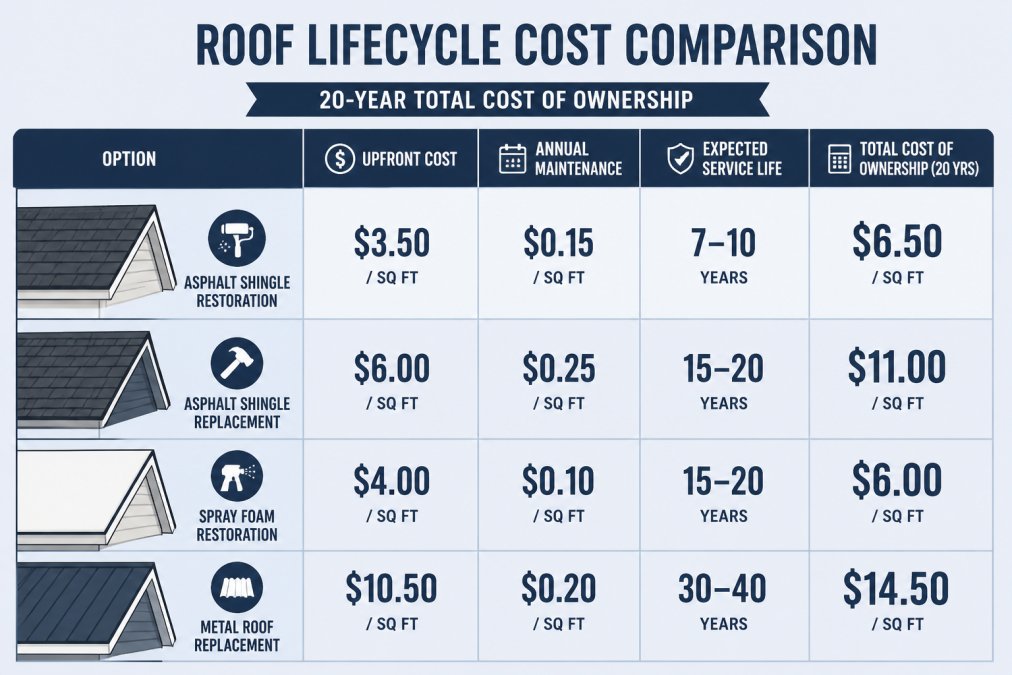
Maintenance is key. Regular inspections and minor repairs extend restoration lifespan significantly. Debris removal, seal checks, and early damage repair add years of effectiveness.
Roof Restoration vs. Replacement: Which Option Fits Your Situation
The choice depends on assessing your roof's condition, material type, age, and financial and timeline constraints. Use this framework to evaluate your specific situation.
Step 1: Get a professional roof inspection and condition assessment.
Before comparing costs, hire a licensed roofing contractor for a detailed inspection documenting:
- Structural integrity: Rot, sagging, soft decking, or interior water stains indicate damage beyond restoration's scope.
- Active leaks: Localized leaks are repairable before restoration; widespread leaks suggest systemic failure.
- Granule loss and shingle condition: Significant loss or curling indicates shingle failure, not just surface wear.
- Flashing, seals, and penetrations: Damaged flashing, deteriorated caulk, and failed boots must be repaired before restoration.
- Remaining useful life: Estimate how many years the roof would last if restored versus replaced.
Request a written report with photographs to baseline restoration versus replacement costs and timelines.
Step 2: Evaluate roof material and climate suitability.
Not all treatments work equally on all roof types:
- Asphalt shingles: Fluid-applied coatings and spray foam are effective on sound roofs, sealing cracks and extending life 10-15 years. Unsuitable if shingles are curling, blistering, or losing granules rapidly.
- Metal roofing: Already durable and reflective; coatings may not justify cost unless metal is rusting or seams failing.
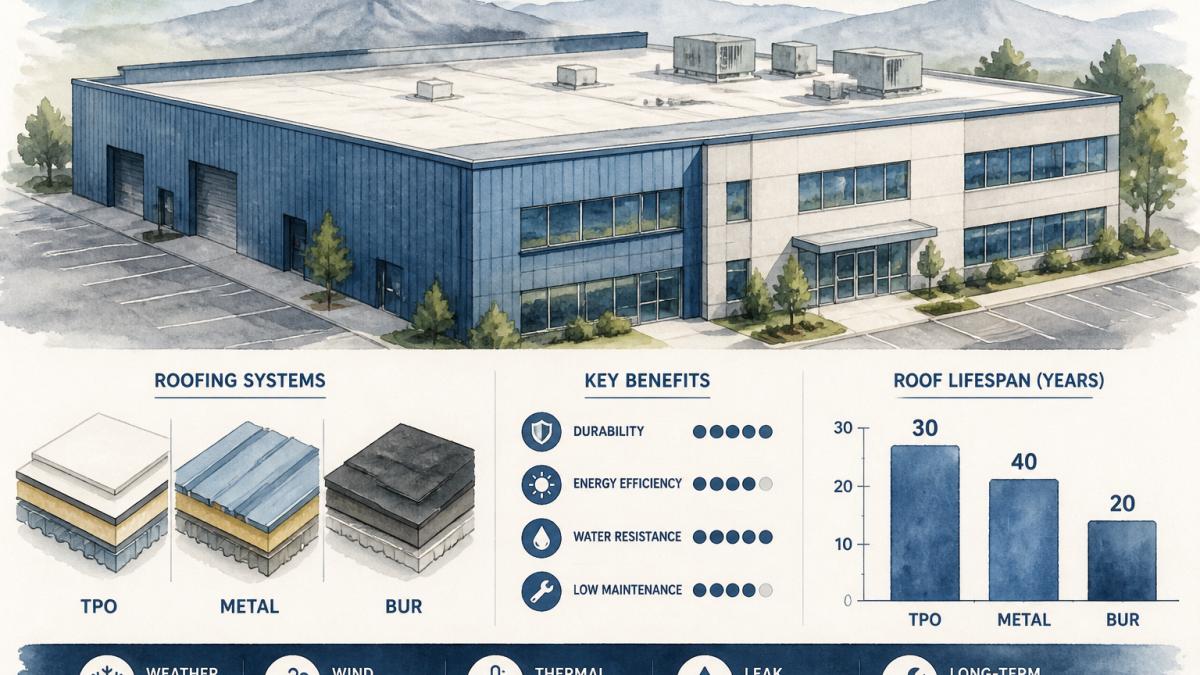
- Flat or low-slope roofs: Spray foam and liquid-applied membranes eliminate seams and handle ponding, extending life 15-20 years on commercial properties.
- Tile or slate: Repaired or replaced individually; restoration is not applicable.
Climate affects suitability. Freeze-thaw cycles, hail, and intense UV degrade treatments faster. Spray foam handles thermal movement well in temperature-swing areas. Reflective coatings reduce cooling costs in hot, dry climates. In heavy snow areas, ensure treatments don't trap moisture causing ice buildup.
Step 3: Assess your timeline and budget constraints.
Use this decision matrix:
| Scenario | Better Choice | Reason |
|---|---|---|
| Roof is 10-18 years old, structurally sound, few active leaks, and you plan to own the property 10+ more years | Restoration | Extends life at lower upfront cost; you benefit from the full extended service life. |
| Roof is 20-25 years old, showing moderate wear and damage, and you plan to sell within 5 years | Restoration | Defers replacement past your ownership; buyer inherits the decision. |
| Roof is 25+ years old, deteriorating across most of the surface, or has multiple structural problems | Replacement | Restoration will not extend life significantly; replacement is more reliable and may qualify for insurance or warranty coverage. |
| Budget does not accommodate replacement now, but roof is failing | Temporary repair + planned replacement | Restoration on a failing roof is a poor investment; temporary repairs (patching, sealing) buy time for budget planning. |
| Roof is sound but you are uncertain about remaining life | Restoration | Buys 10-15 years while you plan for future replacement; lower financial risk than replacement. |
| Building codes or insurance policy requires replacement | Replacement | Compliance is non-negotiable; restoration may not be recognized by insurers or code officials. |
Step 4: Verify warranty, insurance, and code compliance.
Before committing, ask your contractor and insurer:
- Warranty: Does the product carry a manufacturer's warranty covering labor and materials? What is the period (typically 5-10 years)? Is replacement covered if the underlying roof fails during warranty?
- Insurance: Will your policy recognize and cover the restoration method? Some require traditional replacement for roofs above a certain age. Request written approval before work.
- Building codes: Is the treatment compliant with local codes? A contractor familiar with local requirements can confirm.
- Contractor guarantee: Does the contractor guarantee labor beyond the product warranty? For how long?
Step 5: Compare lifecycle cost, not just upfront price.
Model the full cost of ownership:
- Upfront cost
- Annual maintenance
- Expected service life extension or remaining service life
- Total cost over your ownership period
- Cost per year
This reveals whether the cheaper upfront option delivers better value over time.
Signs a Roof Needs Replacement Instead of Restoration
Certain conditions make restoration impossible or ineffective. Recognizing these warning signs prevents you from investing in a treatment that won't solve the underlying problem.
Structural damage is the clearest indicator. Soft or rotted decking, visible sagging, or interior water stains indicate damage beyond coating repair. Restoration treats the surface; it doesn't repair structural failure.
Widespread granule loss on asphalt shingles means the shingles are deteriorating. Coating over them hides the problem temporarily but doesn't stop deterioration.
Multiple active leaks that recur despite patching suggest systemic failure. A few localized leaks can be sealed before restoration; dozens mean the roof has failed.
Incompatible materials matter. Some treatments work only on specific roof types. Wrong treatment wastes money and may damage the roof.
Age combined with damage pushes toward replacement. A 28-year-old roof with moderate damage is near end-of-life; extending it 5 years rarely makes financial sense.
What Roof Restoration Actually Does and Doesn't Fix
What restoration does: Creates a seamless, waterproof barrier. Improves energy efficiency. Seals minor cracks and weak points. Extends structurally sound roofs 10-15 years. Protects against weather, UV, and minor impacts.
What restoration doesn't do: Repair structural damage, rot, or sagging. Fix leaks from unaddressed flashing or penetration failures. Stop granule loss (only slows it). Replace missing shingles or repair large holes. Comply with violated building codes. Satisfy insurance replacement mandates.
The critical point: restoration is a protective measure for roofs that are fundamentally sound. It's not a repair tool for roofs that have already failed.
Warranty, Insurance, and Building Code Considerations
Before committing, verify alignment with warranty obligations, insurance coverage, and local building codes.
Warranties on restoration products typically cover the coating, not the underlying roof. If the existing roof fails during warranty, restoration won't cover replacement. Some policies require replacement rather than restoration for roofs above a certain age.
Building codes vary by jurisdiction. Some areas have specific requirements for roof systems or materials. A contractor familiar with local codes can confirm compliance.
Insurance claims: If restoring after damage, confirm your insurance covers the restoration method. Some carriers prefer traditional replacement; others accept modern treatments. Get written approval before work to prevent claim denial.
At Sun Flex Home Improvement, we help navigate these requirements, verifying compliance and coordinating with insurance carriers.
Deciding whether roof restoration is worth it comes down to honest assessment of your roof's condition and your financial situation. A professional inspection from a qualified contractor reveals whether your roof can be restored or must be replaced. Sun Flex Home Improvement offers free estimates and comprehensive roof assessments.
Frequently Asked Questions
Do roof restorations really work, or are they just a temporary fix?
Roof restoration works when applied to roofs with sound structural integrity and minor damage. Spray foam and fluid-applied coatings create a watertight barrier that can extend roof lifespan by 10-15 years. However, they cannot fix structural damage, rotted wood, or severe leaks from existing holes. A professional roof inspection determines whether your roof is a candidate. Restoration fails when the underlying damage is too extensive, which is why assessment before treatment is critical.
How much does roof restoration cost compared to a full replacement?
Roof restoration can potentially save property owners up to half the replacement expense. The exact savings depend on roof size, material type, and damage extent. Spray foam restoration and fluid-applied coatings are the most common approaches. For specific pricing on your property, contact a professional contractor for an estimate and inspection. Costs vary based on local labor rates and material choices.
How long does roof restoration last before I need to replace the roof?
Roof restoration typically extends roof lifespan by 10-15 years when applied to suitable candidates. The longevity depends on climate conditions, maintenance, and the original roof's remaining useful life. Harsh weather, hail, and UV exposure can reduce this timeline. Regular maintenance and inspections help maximize the restored roof's performance. Restoration is not permanent; it delays full replacement rather than eliminating it.
What problems can spray foam restoration not fix?
Spray foam restoration cannot repair structural damage, rotted decking, compromised framing, or active leaks from holes or severe damage. It cannot address granule loss on asphalt shingles or restore shingles that have curled or separated. Restoration works best on roofs with minor surface damage and good underlying structure. If your roof has multiple active leaks, previous patch jobs, or visible rot, replacement is the safer choice. A professional inspection identifies whether your roof qualifies for restoration.