 comparison
Cost of Roof Replacement in Montana: 2026 Guide
Table of Contents
- What Homeowners Pay for Roof Replacement in Montana
- Asphalt Shingle Roof Replacement Cost Breakdown
- Metal Roof Replacement Cost vs. Other Materials
- Roof Replacement Cost Per Square Foot Explained
- Roof Repair vs. Replacement Cost: When to Choose Each
- Factors That Drive Your Final Roof Replacement Bill
- Why Spray Foam Restoration Costs Less Than Full Replacement
- Frequently Asked Questions
Last Updated: October 8, 2026
What Homeowners Pay for Roof Replacement in Montana
The cost of roof replacement in Montana varies significantly based on material, roof size, and local labor rates. The cost for a complete roof replacement varies considerably depending on your specific circumstances and material choice.
Understanding what drives these costs helps you make an informed decision about whether full replacement is necessary. According to Excel Roofing's Montana roofing price guide, a 20-square asphalt roof in Billings or Bozeman ranges from $11,460 to $23,520, while metal roofing estimates climb to $25,000 to $32,340 for the same size. These figures reflect 2026 material and labor costs specific to Montana's climate and regional contractor rates.
At Sun Flex Home Improvement, we've helped hundreds of property owners understand their roofing options. Our 25 years of experience in Montana and Northern Wyoming shows that many homeowners assume full replacement is their only path forward. That's not always true. Before committing to a complete roof replacement, you should understand the cost breakdown, compare materials, and explore whether restoration might extend your roof's life at a fraction of the replacement cost.
Asphalt Shingle Roof Replacement Cost Breakdown
Asphalt shingles remain the most affordable roofing material in Montana, which is why they're the most common choice for residential properties. The cost of roof replacement using asphalt shingles varies depending on shingle quality, labor complexity, and whether your existing roof requires tear-off.
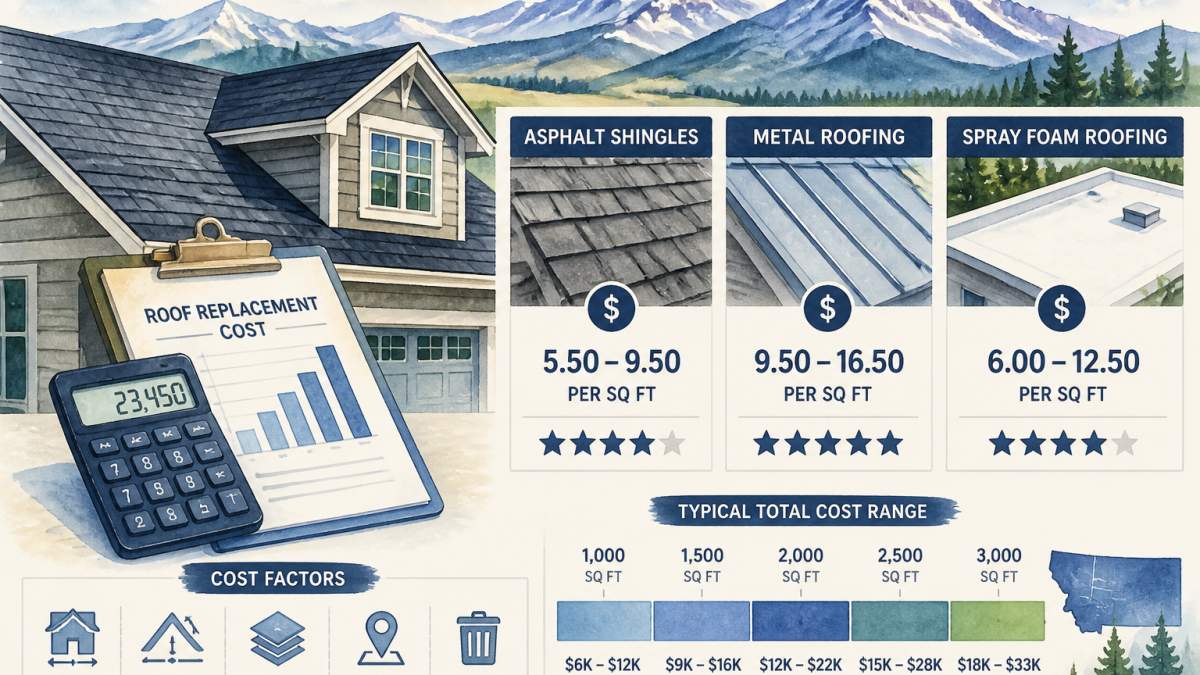
For a typical 2,000-square-foot roof (roughly 20 squares), you're looking at a total investment that reflects both materials and labor. RoofCostData's Montana cost reference reports estimated ranges of $8,200 to $12,100 for architectural shingle roofs across tracked Montana cities. The variation within that range depends on your roof's slope, the number of existing layers, and local labor availability.
What most homeowners miss: the tear-off cost. If your existing roof has multiple layers or requires structural repairs underneath, that adds $1,000 to $3,000 to your final bill. A single-layer tear-off costs less than removing two or three aged layers before installing new shingles. This is where getting a site-specific estimate matters, online calculators can't see what's under your current roof.
Metal Roof Replacement Cost vs. Other Materials
Metal roofing costs significantly more upfront than asphalt but offers durability advantages that justify the investment for many Montana property owners. According to Excel Roofing's material comparison, metal roofing estimates range from $25,000 to $32,340 for a 20-square roof in Montana locations.
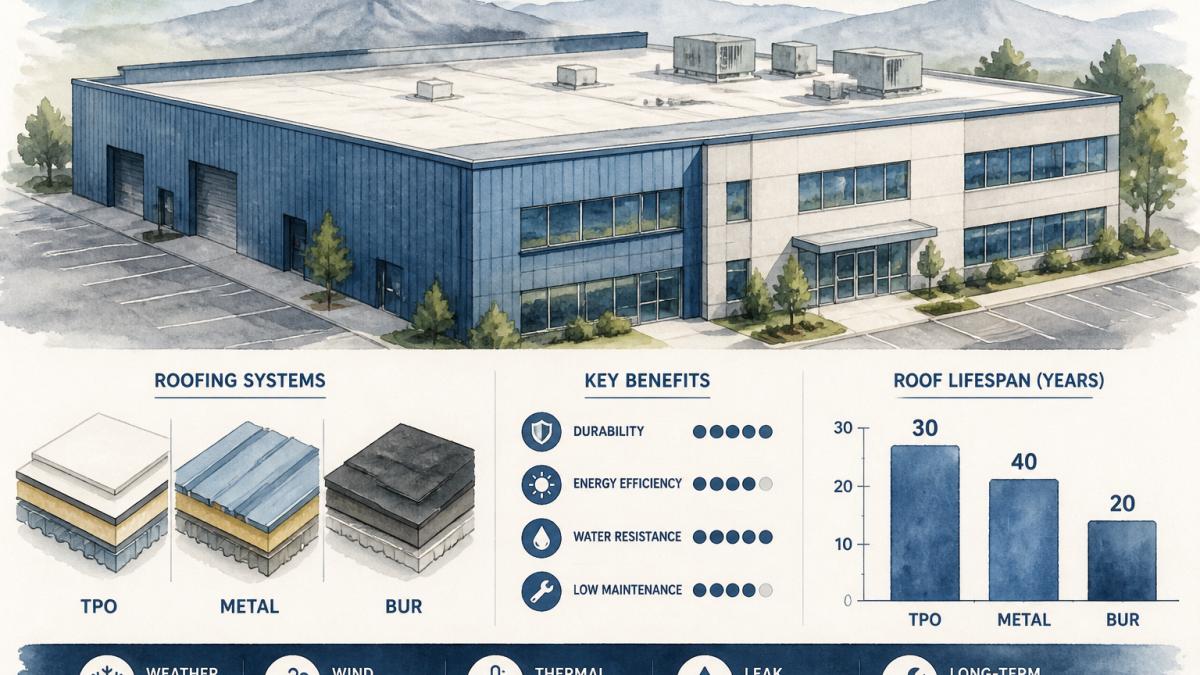
The cost of roof replacement using metal typically runs higher per square foot installed compared to asphalt. That's a significant premium. However, metal roofs last 40-70 years versus asphalt's 15-25 years, making the per-year cost competitive over the long term.
Metal's real advantage in Montana: hail resistance and snow shedding. Our region's severe weather, hail storms, heavy snow loads, and ice dams, takes a toll on traditional asphalt. Metal roofing handles impact better and sheds snow more efficiently, reducing the risk of roof damage and ice dam formation.
Synthetic roofing materials (composite shingles designed to mimic slate or wood) occupy a middle ground. Research from Excel Roofing's synthetic roofing estimates shows costs between $39,200 and $45,080 for a 20-square roof. These materials offer aesthetic appeal and durability closer to metal, but they're less common in Montana due to cost and limited contractor familiarity.
Roof Replacement Cost Per Square Foot Explained
Understanding the cost of roof replacement per square foot helps you compare quotes accurately and spot pricing outliers. One "square" in roofing terminology equals 100 square feet, so a 2,000-square-foot roof is 20 squares.
Most Montana contractors price roofing by the square, not by total square footage. This matters because a steep roof costs more to install than a low-slope roof, the same material on a steeper pitch requires more labor, safety equipment, and time. A 6/12 pitch (6 inches of rise per 12 inches of run) costs more than a 4/12 pitch.
Complexity also affects per-square pricing. A simple, rectangular roof with minimal penetrations (chimneys, vents, skylights) costs less per square than a roof with multiple valleys, dormers, or complex angles. A contractor quoting $450 per square on a straightforward roof might quote $550 per square on a complex design, both are reasonable.
When comparing quotes, ensure all contractors are pricing the same scope: materials, labor, tear-off, disposal, and any structural repairs. A quote that seems $2,000 cheaper might exclude tear-off or assume minimal repairs. Ask each contractor to itemize their estimate so you're comparing apples to apples.
Roof Repair vs. Replacement Cost: When to Choose Each
The decision between roof repair and full replacement hinges on your roof's age, damage extent, and how much life remains. This is where many homeowners face pressure to replace when repair would suffice, or conversely, patch problems that will recur within months.
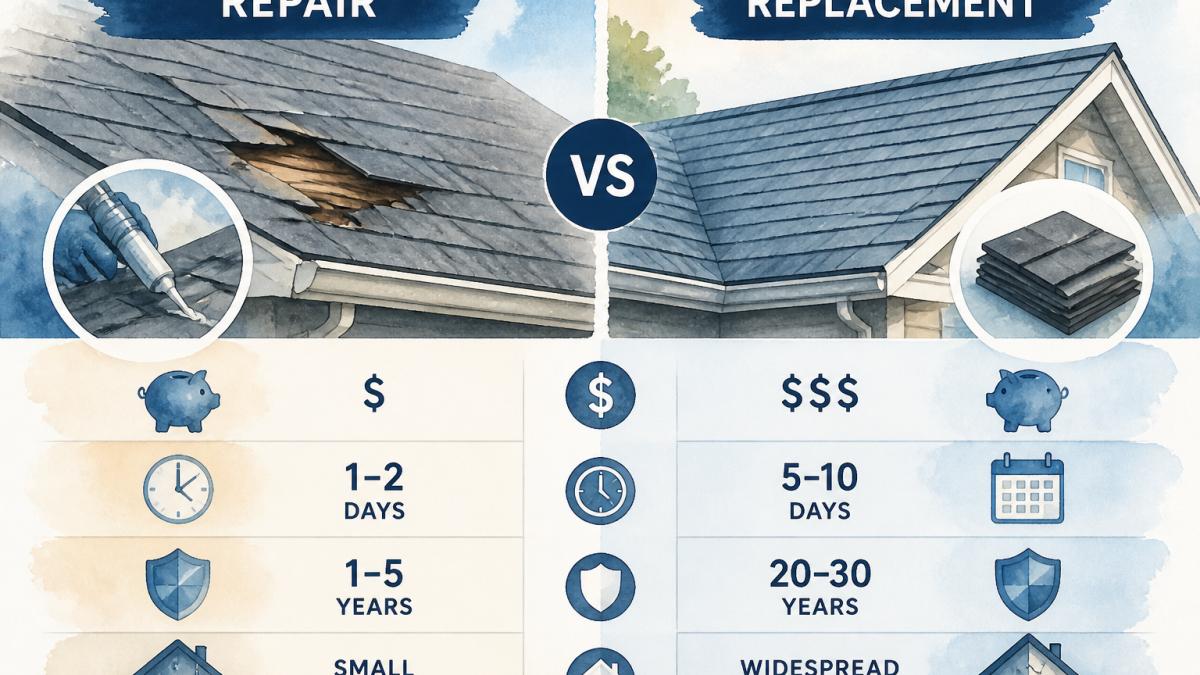
A roof repair typically involves costs for leak fixes, flashing replacement, or shingle repairs. If your roof is under 15 years old and the damage is localized, repair often makes sense. A single leak, a few missing shingles, or damaged flashing can be addressed without replacing the entire roof.
Full replacement becomes the right choice when: your roof is 20+ years old, damage covers more than 30% of the roof, or you're experiencing recurring leaks despite multiple repairs. Patching a roof that's already near the end of its lifespan is throwing money away, you'll be back up there in a year or two.
The cost of roof replacement versus repair isn't just about the immediate expense. Consider how long you plan to stay in your home. If you're selling within 5 years, a $12,000 replacement might not pay back in resale value. If you're staying long-term, replacement protects your investment and eliminates the stress of recurring problems.
Factors That Drive Your Final Roof Replacement Bill
Your final cost depends on multiple variables that compound. Understanding each factor helps you anticipate your actual expense and identify where you might find savings.
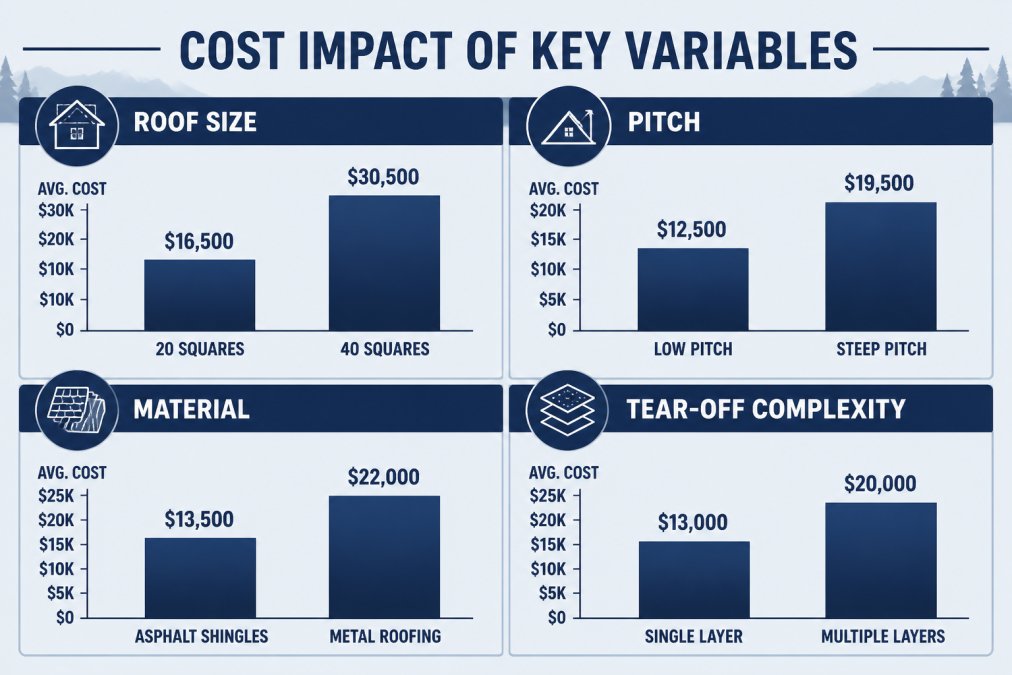
Roof size is the primary driver. A 1,500-square-foot roof costs significantly less than a 3,000-square-foot roof, even at the same per-square price. Measure your roof's square footage carefully, many homeowners estimate wrong.
Pitch and complexity add labor costs. A steep pitch requires more safety equipment and takes longer to install. Multiple valleys, dormers, and roof penetrations (chimneys, vents, skylights) increase complexity and labor hours.
Existing damage and structural issues underneath the roof surface can add $1,000 to $5,000 or more. Rotted decking, damaged trusses, or inadequate ventilation must be addressed during replacement. You won't know the full scope until the old roof comes off.
Material choice is the most visible cost variable. Asphalt shingles cost the least; metal costs significantly more; synthetic and specialty materials cost the most.
Local labor rates vary by region. Contractors in Billings and Great Falls command different rates than those in smaller towns. Seasonal demand also affects pricing, spring and early summer are peak roofing season, and prices are higher.
Tear-off requirements depend on how many layers currently exist and local building codes. Some jurisdictions allow two layers maximum; others require complete tear-off. Removing multiple layers adds $1,000 to $3,000.
Why Spray Foam Restoration Costs Less Than Full Replacement
Spray foam roofing restoration is a legitimate alternative to full replacement that can save property owners up to half the cost of a new roof. This approach makes sense for property owners facing a large replacement bill but whose existing roof structure is still sound.
Spray foam restoration involves cleaning your existing roof, identifying problem areas, and applying a seamless foam coating that creates a watertight barrier. The foam adheres directly to your current roof surface, whether asphalt shingles, metal, or concrete. Once cured, it's sealed with a protective coating that reflects UV rays and extends the roof's life by 15-20 years.
The cost of roof replacement through spray foam restoration depends on roof size and condition. A heavily damaged roof with multiple leak points requires more prep work and foam application. A roof with isolated problem areas costs less. Most spray foam projects are a cost-effective alternative to full replacement with new material.
The real advantage: you avoid the labor-intensive tear-off, disposal, and structural inspection costs. Your existing roof structure stays in place, reducing project duration from 3-5 days to 1-2 days. This means less disruption to your property and faster return to normal use.
At Sun Flex Home Improvement, we've restored hundreds of roofs across Montana and Northern Wyoming that contractors elsewhere recommended replacing. A roof that's structurally sound but showing age, leaks, or weathering often responds well to foam restoration. We conduct a thorough inspection to determine whether restoration is viable or whether replacement is genuinely necessary.
The cost of roof replacement in Montana varies depending on the material and complexity. Before committing to full replacement, have a qualified contractor evaluate whether spray foam restoration or targeted repair might solve your problem at lower cost. At Sun Flex Home Improvement, we offer free estimates that identify the most cost-effective solution for your specific roof condition. Contact us today to discuss your roofing needs and get a clear picture of your options.
Frequently Asked Questions
What is the average cost of a roof replacement in Montana?
Roof replacement costs in Montana vary depending on size, material, and complexity. Your actual cost depends on your specific roof dimensions, pitch, condition, and local labor rates. Request a free estimate from a local contractor to get an accurate figure for your property.
How much does roof replacement cost per square foot in Montana?
Asphalt shingle roofing typically has a per-square cost (100 square feet). Metal roofing is more expensive at higher per-square rates due to material and installation complexity. The per-square-foot cost also includes labor, which varies by contractor experience, roof pitch, and whether existing material must be torn off. Always request itemized quotes that break down material and labor separately to understand what you're paying for.
When should I repair my roof instead of replacing it?
Repair your roof if damage is isolated (a few missing shingles, small leaks), the roof is less than 15 years old, and the total repair cost is under 25% of replacement cost. If your roof leaks every spring, requires multiple repairs in short periods, or is over 20 years old, replacement is usually more cost-effective long-term. Spray foam restoration offers a middle option: it seals existing damage and extends roof life without full replacement, often costing up to 50% less than replacement while adding years of protection.
Is metal roofing worth the extra cost compared to asphalt shingles?
Metal roofing costs more upfront than asphalt shingles but lasts significantly longer. Metal resists hail, wind, and snow better, requires less maintenance, and often qualifies for insurance discounts in regions with severe weather. If you plan to stay in your home long-term or want maximum durability against Montana's harsh winters and hail, the higher initial cost is offset by longevity and reduced repair expenses. For shorter ownership timelines, asphalt remains the more economical choice.
What makes spray foam roofing a cheaper alternative to full replacement?
Spray foam restoration applies a protective coating directly over your existing roof structure, eliminating the labor-intensive and costly tear-off process. This approach can save property owners up to 50% compared to full replacement while extending roof life. It creates a seamless, waterproof barrier that seals leaks and improves energy efficiency without replacing sound roof decking. It's ideal for roofs with isolated damage or aging but structurally sound systems, making it a practical middle ground between repair and replacement.