 ultimate-guide
How to Extend Roof Life: 2026 Guide
Table of Contents
- Signs Your Roof Needs Attention Before Full Replacement
- Understanding Roof Rejuvenation Products and Treatments
- Professional Inspection Schedules to Extend Roof Life
- Preventative Maintenance: Cleaning, Gutters, and Debris Removal
- Cost of Roof Restoration vs. Replacement: Making the Right Choice
- Frequently Asked Questions
Last Updated: September 18, 2026
Signs Your Roof Needs Attention Before Full Replacement
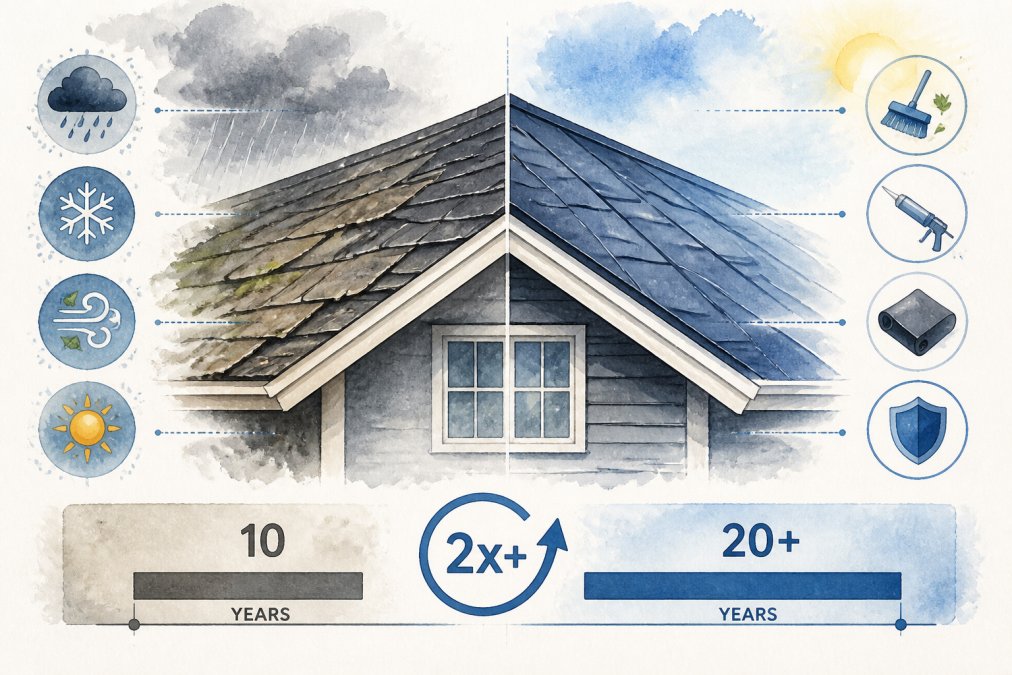
Your roof doesn't fail overnight. It deteriorates in stages, and catching those early warning signs can help you extend roof life and save thousands in unnecessary replacement costs. The key is knowing what to look for before small problems become structural failures.
Curling or buckling shingles are among the first visible indicators that your roof's service life is declining. This happens when asphalt shingles lose their flexibility due to UV degradation and thermal cycling, the constant expansion and contraction from temperature swings. If you notice shingles that look wavy or edges that are peeling upward, your roof is already experiencing material fatigue.
Granule loss is another critical sign. Asphalt shingles are covered with granules that protect the underlying asphalt from UV damage. When you see granules accumulating in your gutters or notice bare spots on shingles where the underlying material shows through, the protective barrier is compromised. This accelerates deterioration.
Water stains on your ceiling or attic indicate that your roof's moisture barrier has failed. Leaks don't always come from obvious holes, they often develop along seams, at flashing points, or where fasteners have loosened. If you're seeing evidence of moisture penetration, your roof needs professional assessment immediately.
Understanding Roof Rejuvenation Products and Treatments
Roof rejuvenation is fundamentally different from roof replacement. Rather than tearing off and rebuilding, rejuvenation treatments restore flexibility and durability to existing roofing materials, extending their service life by years. The most effective approaches involve spray foam roofing systems, which create a seamless, flexible membrane that bonds to your existing roof structure.
Spray foam roofing works by applying a polyurethane foam layer directly over your existing asphalt shingles or metal roof. This foam expands to fill gaps, seal seams, and create a monolithic barrier. Once cured, it's topped with a protective coating that reflects UV rays and resists weather damage. The result is a roof that maintains flexibility during thermal cycling rather than becoming brittle and prone to cracking.
The advantages of this approach are substantial. Unlike traditional patching, spray foam eliminates individual failure points by creating one continuous protective layer. It improves energy efficiency by adding insulation value, typically R-6 to R-8 per inch of foam thickness. For property owners in harsh climates, this means measurable savings on heating and cooling costs throughout the year.
Roof coatings are another rejuvenation option, though less comprehensive than foam systems. These are elastomeric products applied as a liquid that cures into a flexible membrane. They work well for addressing specific problem areas but don't provide the same level of structural reinforcement as foam systems. Coatings are best used for targeted repairs rather than whole-roof restoration.
Professional Inspection Schedules to Extend Roof Life
A structured inspection schedule is the foundation of any roof preservation strategy. Most property owners wait until problems are visible, which means damage has already progressed. Preventative assessment catches issues while they're still manageable.
A bi-annual inspection, spring and fall, is the industry standard for residential and commercial roofs. Spring inspections identify winter damage: ice dam issues, wind damage, and water penetration points. Fall inspections prepare your roof for winter by clearing debris, checking fastener integrity, and ensuring proper drainage.
During a professional inspection, a qualified technician examines not just the visible roof surface but also the structural components underneath. They assess shingle condition, check flashing integrity around penetrations, evaluate attic ventilation, and inspect the moisture barrier. They document findings with photos and provide a detailed report with prioritized recommendations.
What makes professional assessment valuable is the expertise in distinguishing between cosmetic wear and functional failure. A homeowner might see a few missing granules and assume replacement is necessary. A professional recognizes that minor granule loss is normal aging and doesn't yet require intervention. This distinction prevents premature and expensive decisions.
For commercial properties, inspections should be more frequent, quarterly or after significant weather events. The cost of roof failure on a commercial building (business interruption, water damage to inventory, liability exposure) far exceeds the cost of regular assessment. We recommend that property managers establish a documented inspection protocol with photos and dated records. This creates accountability and provides evidence for insurance claims if damage occurs.
Preventative Maintenance: Cleaning, Gutters, and Debris Removal
Preventative maintenance doesn't require expensive treatments or specialized equipment. It's about consistent, basic care that prevents small problems from cascading into major failures. The three pillars are gutter maintenance, debris removal, and proper drainage.
Gutters and downspouts are your roof's first line of defense against water damage. When gutters clog with leaves, pine needles, and debris, water backs up under the shingles and infiltrates the decking. This leads to rot, mold, and structural compromise. Cleaning gutters twice yearly, spring and fall, is non-negotiable. If you have trees overhanging your roof, increase frequency to quarterly.
Debris accumulation on the roof itself creates moisture traps. Leaves, branches, and moss retain moisture against the shingles, accelerating deterioration. Gentle roof cleaning removes this debris without damaging the shingles. Pressure washing is tempting but risky, high-pressure water can dislodge granules and force water under shingles. Low-pressure or manual cleaning is safer.
Proper attic ventilation is often overlooked but critical for roof longevity. Without adequate airflow, heat and moisture accumulate in the attic space. This causes shingles to age faster, reduces insulation efficiency, and creates conditions for mold growth. Check that your soffit vents are clear and ridge vents are unobstructed. Insulation should not block airflow, it should be kept back from vents.
Fastener maintenance is another detail that matters. Roofing nails and screws loosen over time due to thermal expansion and contraction. Loose fasteners allow water infiltration and reduce structural integrity. A professional can identify and re-secure loose fasteners before they cause problems.
Cost of Roof Restoration vs. Replacement: Making the Right Choice
The financial comparison between restoration and replacement is where many property owners make their decision. Understanding the true cost of each option requires looking beyond the initial price tag.
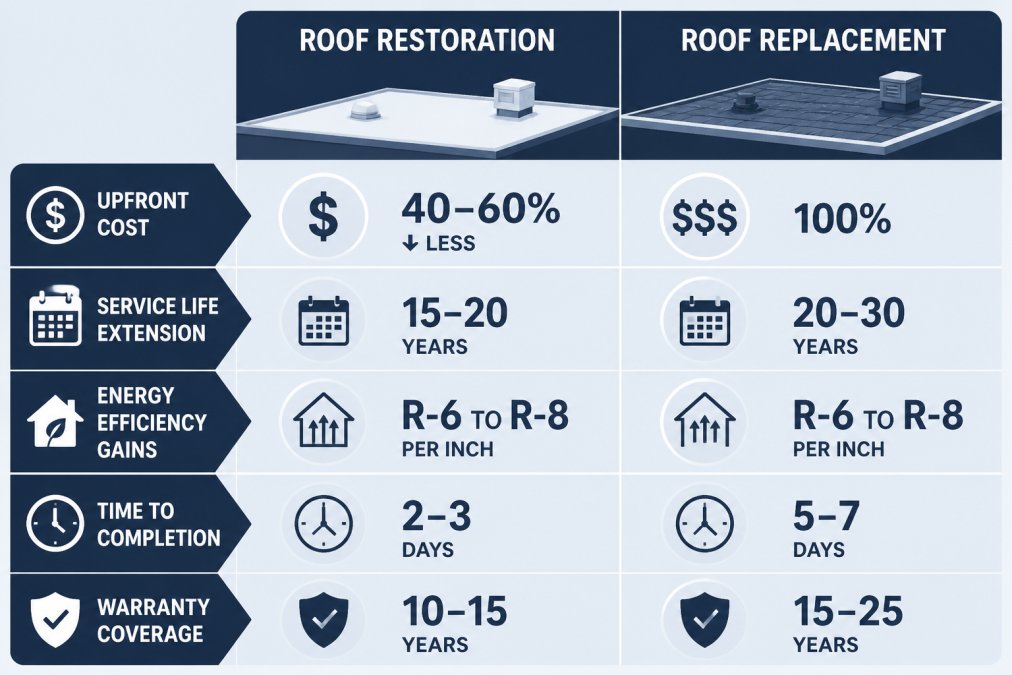
A full roof replacement typically costs between $8,000 and $25,000 for a residential property, depending on size, complexity, and materials. This includes removal of the old roof, disposal, new materials, labor, and permits. The timeline is 3-5 days of disruption. For commercial properties, costs scale significantly higher, $30,000 to $100,000+ depending on building size and roof complexity.
Roof restoration through spray foam systems typically costs 40-60% less than full replacement. The exact price depends on your roof's current condition, square footage, and the foam thickness applied. Because the existing roof stays in place, there's no disposal cost and minimal disruption. The process takes 2-3 days rather than a week.
(/affordable-roof-replacement-alternatives) generates significant waste. The average residential roof removal produces 5-10 tons of material that ends up in landfills. Spray foam restoration eliminates this waste by keeping the existing roof in place. For environmentally conscious property owners, this is a meaningful benefit.Frequently Asked Questions
What can I spray on my roof to extend its life?
Spray foam coatings and roof rejuvenation products create a protective barrier that seals cracks, prevents water infiltration, and restores flexibility to aging asphalt shingles. These treatments extend service life by 10-15 years without full replacement. The specific product depends on your roof material, climate exposure, and structural condition. A professional assessment determines whether spray foam, liquid coatings, or other rejuvenation products suit your situation best.
How often should I have a professional roof inspection?
A bi-annual inspection schedule, typically in spring and fall, catches damage from thermal cycling, UV degradation, and weather events before they become costly repairs. After severe storms or hail, schedule an immediate inspection. Properties in harsh climates should inspect more frequently. Professional inspections assess shingle granule loss, seam integrity, fastener condition, and moisture barriers. Early detection prevents small issues from compromising structural integrity and extends your roof's overall lifespan.
Is roof rejuvenation worth the cost compared to replacement?
Roof restoration costs roughly 40-60% less than replacement while extending service life significantly. The cost-benefit analysis favors restoration when your roof has 5-10 years remaining and shows aging but no structural damage. Restoration improves energy efficiency, restores the moisture barrier, and preserves your home equity. However, if your roof is near end-of-life or has extensive structural issues, replacement may be the more cost-effective long-term choice. Get a professional assessment to determine which option suits your property.
Will spray foam roofing hold up in harsh winter climates with hail and heavy snow?
Spray foam and rejuvenation coatings perform well in severe climates when properly applied and maintained. These systems provide flexibility to handle thermal cycling, the repeated expansion and contraction from temperature swings, without cracking. They create a seamless, watertight barrier against snow melt infiltration and ice dam damage. However, hail impact resistance depends on coating thickness and the underlying roof condition. Proper attic ventilation and insulation work alongside coating systems to prevent ice dams and extend durability in harsh weather regions.