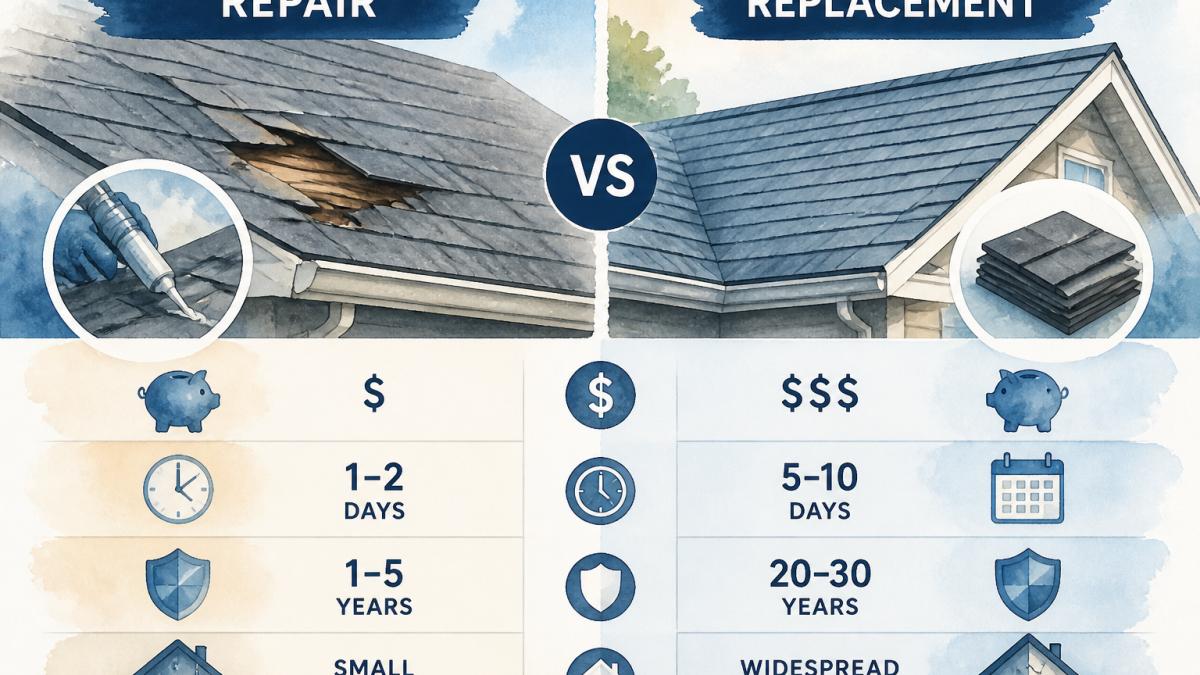
 comparison
Roof Leak Repair vs Replacement: A 2026 Guide
Table of Contents
- Roof Leak Repair vs Replacement: Quick Comparison
- Signs You Need a New Roof
- When Repair Is the Right Choice
- When Full Replacement Becomes Necessary
- Average Cost of Roof Repair vs Replacement
- Affordable Roof Replacement Alternatives
- Key Factors Influencing Your Decision
- How Professional Roof Inspection Informs the Decision
- Frequently Asked Questions
Last Updated: September 28, 2026
Roof Leak Repair vs Replacement: Quick Comparison
When your roof leaks, the critical question is whether to repair or replace, a decision that determines whether you spend hundreds or tens of thousands of dollars. At Sun Flex Home Improvement, we've helped property owners across Montana and Northern Wyoming navigate this choice. The answer depends on three factors: roof age, damage extent, and material type.
Some leaks are quick fixes that buy you years; others signal complete system failure requiring replacement. Professional assessment clarifies which path is right.
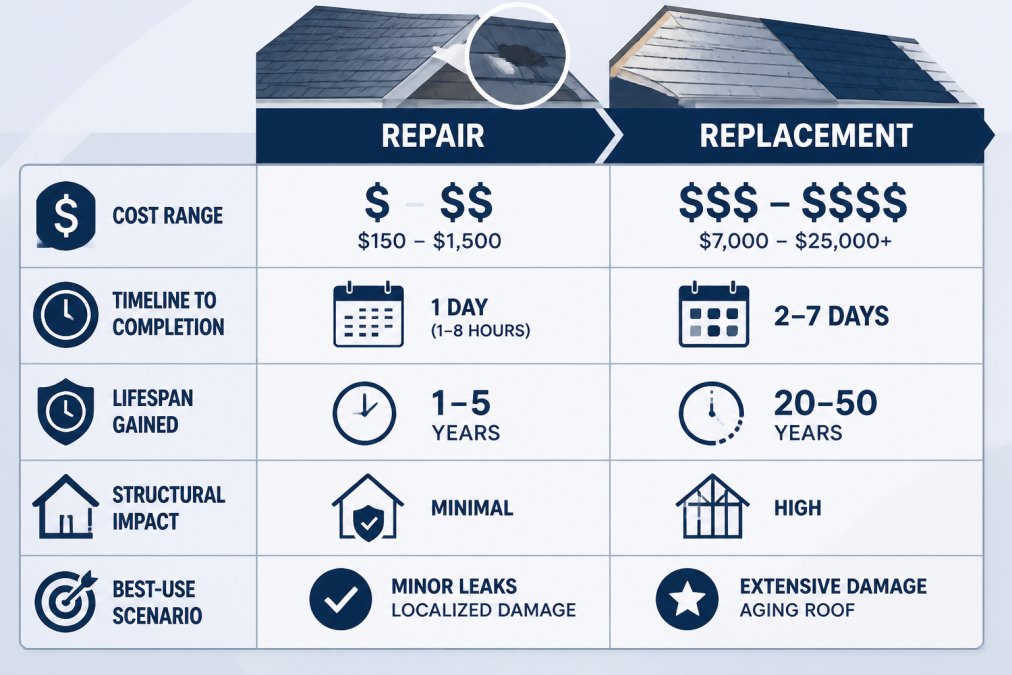
A 15-year-old asphalt roof with one isolated leak is a repair candidate. A 20-year-old roof with multiple leaks, curling shingles, and granule loss signals replacement. The cost and longevity differences are dramatic.
Signs You Need a New Roof
Your roof needs replacement when damage exceeds what localized repair can address, a matter of structural integrity and water infiltration risk, not cosmetics.
Widespread damage across multiple areas is the clearest sign. Multiple leaks, shingles failing in patches, or water stains in different attic sections indicate the roof decking, underlayment, or flashing has deteriorated beyond what isolated repairs can address.
Roof age matters significantly. Asphalt shingles last 15-20 years, metal roofs 40-50 years, wood shakes 20-30 years. At or past these thresholds with active leaks, replacement is usually more cost-effective than repair, which extends lifespan by only a few years.
Visible structural deterioration signals replacement time. Sagging roof lines, soft decking, or visible rot around vents indicate water has compromised structural elements and your entire roof system's integrity.
Multiple previous repairs suggest systematic failure. Patching the same area twice or fixing leaks in three spots within two years means you're delaying the inevitable, not solving the problem.
When Repair Is the Right Choice
Roof leak repair makes financial and practical sense when damage is localized, your roof still has years of life remaining, and the underlying structure is sound.
Isolated damage and limited leaks
A single leak from a specific event (storm damage, fallen branch, failed vent) is a repair candidate if the rest of your roof is sound. Repair addresses the problem without replacing functioning systems.
Isolated damage affects one area, a section of shingles, single vent, or run of flashing, with water infiltration contained to that spot. Targeted repair restores full functionality at a fraction of replacement cost.
Early detection matters: catching leaks within days or weeks contains damage. Extended exposure spreads damage beyond the visible leak point, affecting decking and structural elements.
Roof age and structural integrity
If your roof is 10-15 years old and structurally sound, repair is logical for isolated problems. You extend an asset with 5-10 years remaining, recovering repair costs through continued protection.
Check for soft decking, mold, rot, or sagging lines. Have a professional inspect the attic for water stains and deterioration. If the structure is solid and roof is mid-life, repair is economical.
Material matters: metal roofs and wood shakes hold value longer than asphalt. A 25-year-old metal roof with one failed seam is worth repairing; a 25-year-old asphalt roof is near end-of-life and replacement is more sensible.
When Full Replacement Becomes Necessary
Replacement is the right call when repair costs approach 50% or more of replacement cost, when your roof is at or past its expected lifespan, or when damage is too widespread for targeted fixes to be effective.
Widespread damage and multiple failures
Multiple leaks, shingles failing in several locations, and compromised flashing in different places indicate your entire roof system is deteriorating. Underlying conditions (age, weather exposure, poor ventilation, inadequate underlayment) affect the whole roof.
Patching individual failures leaves root causes unaddressed, leading to repeated repairs, escalating costs, and catastrophic failure risk. Replacement eliminates the problem and provides fresh warranties on materials and labor.
Widespread damage suggests water infiltration beyond visible leak points. Trapped moisture causes mold, rot, and insulation deterioration, hidden costs that compound quickly.
Age thresholds for common roofing materials
Asphalt shingles: 15-20 year lifespan. Beyond year 20, replacement is typically more economical than repair. Shingles become brittle, lose granules, and curl, conditions that accelerate failure across the entire roof surface.
Metal roofing: 40-50 year lifespan. Metal roofs rarely need replacement for age alone. Repairs on metal roofs (seam failures, fastener issues, minor denting) are cost-effective even at 30+ years.
Wood shakes: 20-30 year lifespan. Wood deteriorates from moisture exposure and UV damage. Beyond 25 years, replacement prevents widespread rot and structural compromise.
Composite/architectural shingles: 20-25 year lifespan. These premium asphalt products last longer than standard shingles but follow similar deterioration patterns.
If your roof is at or past these thresholds and experiencing leaks, replacement eliminates the age variable and provides decades of protection going forward.
Average Cost of Roof Repair vs Replacement
Roof repair costs for localized damage range from a few hundred dollars for simple patching to several thousand for complex work. Single leak repair: $300-$1,000. Extensive localized work: $2,000-$5,000.
Roof replacement costs depend on size, material, and labor rates. Asphalt shingle replacement: $8,000-$20,000. Metal roofing: $15,000-$35,000. Replacement is a substantial investment.
If repair costs exceed 50% of replacement cost, replacement becomes more attractive. Spending heavily on a roof near end-of-life doesn't make economic sense.
Sun Flex Home Improvement offers alternatives that bridge this gap, allowing property owners to extend roof life without full replacement investment.
Affordable Roof Replacement Alternatives
When repair alone isn't sufficient but full replacement feels financially out of reach, restoration solutions can extend your roof's life significantly while improving performance.
Spray foam roofing restoration
Spray foam roofing applies a seamless, waterproof foam layer over your existing roof structure. This approach addresses the core problem, water infiltration, without removing and replacing the entire roof system. The foam creates a watertight barrier, restores structural integrity to compromised areas, and improves thermal performance.
Spray foam restoration is particularly effective for roofs with widespread minor damage, deteriorated flashing, or areas where water is penetrating through existing materials. Instead of replacing 20+ squares of roofing, you're applying a protective coating that seals the entire surface.
The advantage: spray foam can save property owners up to half the cost of a new roof while extending the functional life of the existing structure by 15-20 years. Sun Flex Home Improvement specializes in spray foam restoration, applying this solution to residential and commercial properties across Montana and Northern Wyoming.
Shingle rejuvenation treatments
The process takes less than a day and costs significantly less than repair or replacement. It's most effective as a preventative measure, applied before major damage occurs, it extends the roof's useful life and delays the larger investment.
Professional patching and localized repairs
For roofs with isolated damage, professional patching using quality materials (premium shingles, flashing tape, sealants) addresses the leak while maintaining the integrity of surrounding areas. Professional contractors use techniques and materials designed for durability, not temporary fixes.
Localized repair combined with preventative maintenance (regular inspections, debris removal, gutter cleaning) can extend a roof's life significantly, delaying replacement by 5-10 years.
Key Factors Influencing Your Decision
The repair vs replacement decision isn't binary, it depends on how multiple factors interact. Understanding these variables helps frame the choice clearly.
Roof age and remaining lifespan
Your roof's age is the single most important variable. A 10-year-old roof with a 15-20 year lifespan has significant remaining life, repair is economical. A 22-year-old asphalt roof is near or past end-of-life, replacement is the better investment.
Calculate remaining lifespan by material type and current condition.
Extent of water infiltration and damage severity
Single leak in one location? Repair candidate. Water stains in multiple attic areas suggesting months or years of undetected infiltration? Replacement is necessary. The extent of water damage determines how much structural work lies ahead.
Long-term ROI and home value impact
Repair extends your roof's life but doesn't reset the age clock. You'll face replacement within 5-10 years regardless. Replacement provides 15-20 years of protection and increases home value. The ROI calculation: does the repair cost justify the years of additional life, or would replacement provide better long-term value?
Insurance coverage and warranty considerations
Check your homeowner's insurance policy. Some policies cover leak damage but not roof failure due to age. Some require roof replacement at a certain age. Understanding your coverage helps frame the financial decision.
How Professional Roof Inspection Informs the Decision
A professional roof inspection is the single most important step before committing to repair or replacement. Visual inspection from the ground misses critical details, the condition of underlayment, flashing integrity, decking deterioration, and water damage progression.
Frequently Asked Questions
Can you patch a roof instead of replacing it?
Yes, patching works for isolated leaks and minor damage. Targeted repairs to flashing, shingles, and vents can extend your roof's life 2-3 years at a fraction of replacement cost. However, if damage is widespread, covers more than 30% of the roof surface, or your roof is nearing the end of its lifespan, patching becomes temporary, a full replacement will be necessary within a few years.
What are the signs you need a new roof rather than just repairs?
Replace your roof if you see multiple leaks across different areas, widespread shingle curling or granule loss, sagging roof deck, water stains on interior ceilings in several rooms, or if your roof is over 20 years old (asphalt shingles) or 30+ years old (metal). A professional roof inspection can confirm whether repairs will hold or replacement is the only viable option.
How much does roof leak repair typically cost compared to replacement?
Professional roof repairs for isolated leaks typically range from $300 to $1,000, depending on complexity and access. Full roof replacement costs significantly more and varies by material, size, and labor. Affordable alternatives like spray foam restoration can save up to 50% versus replacement while extending roof life and improving energy efficiency.
Will homeowners insurance cover a roof leak repair or replacement?
Insurance coverage depends on the cause of the leak. Sudden damage from storms, hail, or fallen trees is usually covered. Leaks from age, wear, poor maintenance, or lack of ventilation are typically not covered. Review your policy and contact your insurer immediately after discovering a leak. Document the damage with photos and get a professional assessment to support any claim.