 ultimate-guide
Roof Restoration for Montana Homes: 2026 Guide
Table of Contents
- What Roof Restoration Means for Montana Homes
- Signs Your Roof Needs Restoration
- Spray Foam Roofing Benefits for Harsh Climates
- Affordable Roof Replacement Alternatives That Last
- Roofing Materials That Perform in High-Altitude UV
- Insurance Claims and Warranties for Roof Restoration
- Conclusion
- Frequently Asked Questions
Last Updated: October 2, 2026
What Roof Restoration Means for Montana Homes
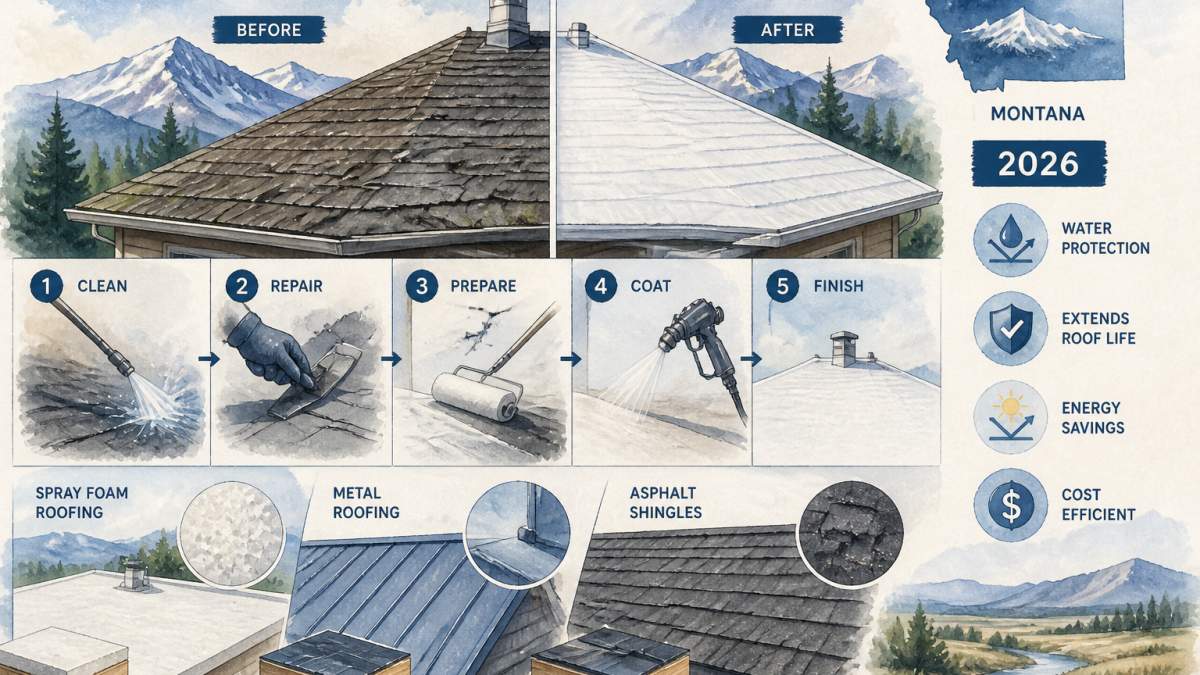
Roof restoration for Montana homes is the process of repairing and reinforcing an existing roof structure instead of tearing it off and starting over. At Sun Flex Home Improvement, we've spent more than 25 years restoring roofs across Montana and Northern Wyoming, and the same pattern shows up again and again: homeowners are quoted a full replacement when a restoration would have held for another decade or more.
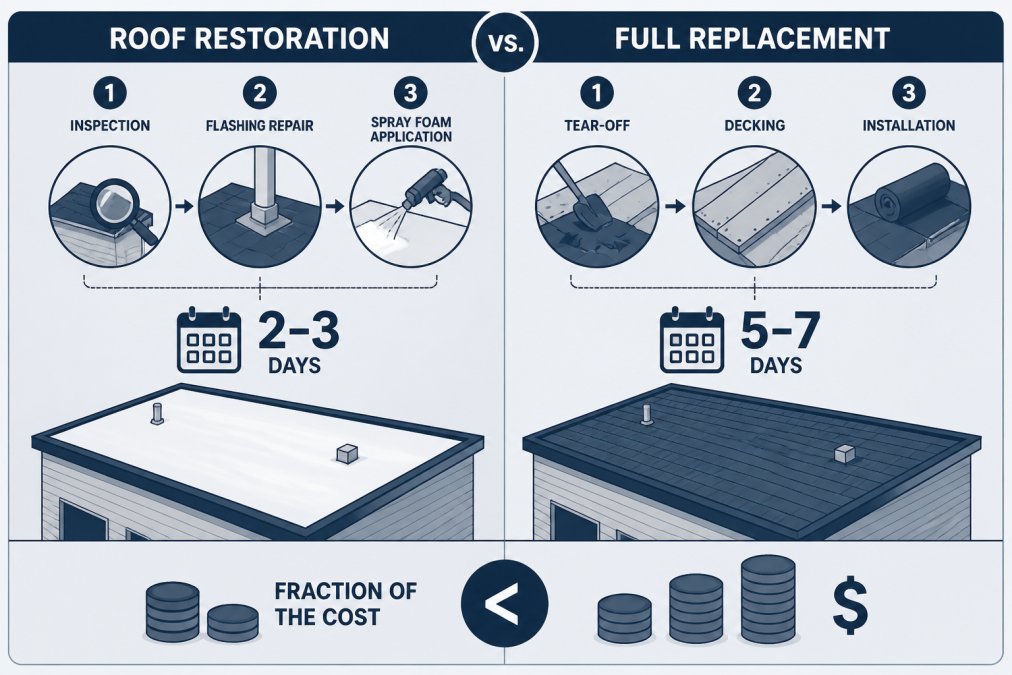
Restoration vs. Full Replacement: Key Differences
Restoration works on top of the existing structure. Replacement removes it.
The practical difference comes down to three things:
- Cost: restoration generally costs a fraction of replacement because you're not paying for tear-off and disposal
- Time: most restoration projects finish in days, not weeks
- Disruption: no dumpsters in the driveway, no exposed decking if weather turns
Signs Your Roof Needs Restoration
The clearest signs your roof needs restoration are curling or granule loss on asphalt shingles, recurring leaks in the same spot, damaged flashing, and ice damming at the eaves each spring. Any one of these warrants a professional roof inspection before the next winter.
Watch for these indicators:
- Shingles that look worn, cracked, or lose granules when you rub them
- Water stains on ceiling or attic decking after snowmelt
- Ice dams forming along the same eaves every year
- Visible rust or separation at flashing and vents
- Granules collecting in gutters
Spray Foam Roofing Benefits for Harsh Climates
Spray foam roofing benefits start with one property that matters most in this region: it forms a single, seamless, watertight barrier with no seams for water to exploit. That's the whole point. But the reason it matters here specifically comes down to how this climate attacks a roof, and most roofing guides never explain the mechanism.
Where spray foam earns its reputation here:
- Snow load: closed-cell spray foam adds only a few pounds per square foot to the deck, far less than a second layer of asphalt shingles, which can add several pounds per square foot on its own. That matters because ground snow loads across much of the region run high enough that structural engineers design roof framing around them, and every added pound eats into that margin.
- Ice damming: a seamless surface leaves water nowhere to pool and back up under the roofing. Shingle courses create the exact ledges that dammed water climbs.
- Hail: the elastomeric topcoat absorbs impact that would crack or bruise asphalt shingles. Bruised shingles lose granules at the impact point and fail there first.
- Energy efficiency: foam insulates as it seals, which shows up on heating bills in a way shingles never will.
How Spray Foam Handles Snow Load and Ice Damming
Ice damming happens when heat escapes through the roof, melts snow at the surface, and the meltwater refreezes at the cold eaves. The refrozen water backs up under shingles and into the house. It's a heat-loss problem disguised as a roofing problem, and it's why the same eaves dam up every single spring.
What the Coating Actually Does
The foam is the insulation and the seamless membrane. The coating is what keeps the foam alive. Uncoated spray foam degrades under UV exposure within months, it chalks, yellows, and breaks down. A UV-rated acrylic or silicone coating is the sacrificial layer that takes the sun damage so the foam underneath doesn't.
Affordable Roof Replacement Alternatives That Last
Affordable roof replacement alternatives are restoration systems that extend the life of a sound roof rather than replacing it. The most durable option for harsh climates is spray foam applied over existing decking, followed by a protective coating that can be reapplied as it wears.
| Option | Best For | Relative Cost | Lifespan Expectation | Climate Fit |
|---|---|---|---|---|
| Spray foam restoration | Leaking, sound-deck roofs in harsh climates | Lowest upfront | Long, with recoatable coating | Excellent, seamless, insulates, sheds ice dams |
| Standing seam metal | New builds and full replacements | High | Very long | Strong, reflects UV, sheds snow, but needs wind-rated fastening |
| Modified asphalt shingles | Budget replacements | Moderate | Shortest of the three | Fair, better UV resistance than standard, still vulnerable to ice damming |
| Roof coating only | Mild wear, no active leaks | Low | Short, needs frequent recoats | Situational, maintenance move, not a restoration |
Why Cost Per Year Beats Sticker Price
A replacement quote looks simple because it's one number. Restoration math is more honest because it spreads cost across service life. If a restoration costs roughly a third of a replacement and delivers half the years before the next major decision, the annual cost is lower, and you avoided a tear-off, a landfill load, and the risk of exposed decking during a weather window.
Matching the Alternative to the Problem
The right alternative depends on what's actually failing. A roof losing granules to UV needs a UV-rated coating system. A roof damming ice at the eaves needs insulation and a seamless surface. A roof with soft decking needs structural repair before any surface system goes on. The mistake is treating all three as the same problem and buying the same solution.
Roofing Materials That Perform in High-Altitude UV
High-altitude UV is the quiet killer of roofing in this region. The sun here is stronger than at sea level, and it breaks down asphalt binders faster than most shingle warranties account for. Materials that perform well at lower elevations can fail years early up here.
What holds up:
- Spray foam with a UV-rated coating: the coating is the sacrificial layer; when it wears, you recoat it rather than replace the roof
- Standing seam metal: reflects UV and sheds snow, but costs more upfront and needs proper fastening for wind
- Modified asphalt shingles: better UV resistance than standard shingles, though still the shortest-lived option of the three
Insurance Claims and Warranties for Roof Restoration
Insurance claim navigation is where many homeowners leave money on the table. Storm damage and hail damage are often covered, but the claim depends on documenting the damage before it's repaired, not after.
The sequence matters:
- Document the damage with photos and dates
- File the claim before any work begins
- Get the adjuster's assessment in writing
- Keep every receipt and inspection report
Conclusion
The hardest part of roof restoration isn't the work. It's trusting the assessment. Three contractors can look at the same roof and give you three different answers, and the homeowner is left guessing which one is honest.
Frequently Asked Questions
What is the 25% rule for roofing?
The 25% rule is a common guideline used by roofing contractors to decide between repair and replacement. If damage affects more than 25% of your roof's total surface area, replacement is often recommended over repair. For Montana homes dealing with snow load and ice damming, this threshold helps determine whether restoration can still deliver reliable protection or if a full replacement is the safer investment.
How much does a new roof cost in Montana?
Roof replacement costs in Montana vary based on roof size, pitch, material, and labor. Asphalt shingle roofs typically cost less than metal or spray foam systems, but pricing depends on your specific project scope. Sun Flex Home Improvement offers free estimates so you can get an accurate number for your property without guessing. Restoration can save property owners up to half the cost of a new roof.
Does roof rejuvenation actually work?
Roof rejuvenation works best on roofs that are structurally sound but showing surface-level aging, such as minor cracking or granule loss. It is not a solution for active leaks, soft spots, or widespread damage. For Montana homes facing snow load and ice damming, spray foam restoration creates a watertight barrier that addresses problem areas and extends roof life. A professional inspection determines whether restoration or replacement is the right path.
What are the benefits of spray foam roofing for residential properties?
Spray foam roofing offers several benefits for residential properties in harsh climates. It creates a seamless, watertight barrier that seals leaks and prevents ice damming. The insulation properties improve energy efficiency, reducing heating and cooling costs. Spray foam also adds structural integrity and handles hail impact better than many traditional materials. For Montana homeowners, it extends roof longevity without the cost of full replacement.
How do I know if my roof needs restoration or replacement?
Signs your roof needs restoration include curling shingles, minor flashing damage, granule loss, and small leaks that have not spread. If the roof deck is structurally sound and damage covers less than 25% of the surface, restoration is often viable. Widespread sagging, multiple leaks, or damage exceeding 25% usually point to replacement. A free roof inspection gives you a clear answer.
Can spray foam roofing handle hail damage in Northern Wyoming?
Spray foam roofing handles hail impact better than many traditional materials because its flexible surface absorbs energy instead of cracking or shattering. After a hail storm, the foam can often be repaired with a new protective coating rather than a full tear-off. This makes it a practical choice for Northern Wyoming properties that face brutal hail storms regularly.
Will roof restoration improve my energy bills?
Roof restoration with spray foam adds insulation that reduces heat transfer through your roof. Commercial and residential property owners often see noticeable energy savings because the roof no longer leaks conditioned air. The exact savings depend on your building's current insulation, HVAC system, and local utility rates. Spray foam creates a sealed barrier that keeps heated air inside during winter and blocks heat gain in summer.
What happens if the spray foam restoration fails?
Sun Flex Home Improvement stands behind its work with a roofing warranty. If the spray foam restoration does not perform as expected, the warranty covers repairs. Spray foam is a durable system that, when installed correctly, lasts for decades. The key is proper surface preparation and application by an experienced team. Ask for warranty details and references from recent projects in your area before committing.