 how-to
Can You Restore a Roof With Hail Damage?
Table of Contents
- How Hail Damages a Roof and What You're Up Against
- Signs of Hail Damage on a Roof: What to Look For
- Roof Inspection After Hailstorm: A Safe Homeowner Checklist
- Roof Repair vs. Replacement After Hail Damage: Making the Right Call
- Restoration Methods That Actually Work for Hail-Damaged Roofs
- How Long a Roof Lasts After Hail Damage: Real Expectations
- Insurance Claims and Documentation for Hail Damage
- Frequently Asked Questions
Last Updated: October 17, 2026
How Hail Damages a Roof and What You're Up Against
When hail hits your roof, it doesn't just bounce off. Each stone impacts with force, and depending on size and velocity, it can crack shingles, dent metal panels, bruise asphalt, and puncture underlayment.
At Sun Flex Home Improvement, we've inspected many roofs after hailstorms across Montana and Northern Wyoming. What we've learned is that hail damage comes in layers. The granules on asphalt shingles get knocked loose, exposing the mat underneath. Metal roofing dents and creases. Flashing around chimneys and vents gets compromised. Gutters collect debris and develop holes.
The real challenge is that not all hail damage is visible immediately. Small bruises and hairline cracks don't leak on day one. But they create weak points where water can pool, freeze, and expand during freeze-thaw cycles. By spring, you've got problems.
Here's what matters: the size of the hail, the age of your roof, and the materials used all determine how badly your roof suffers. A roof that's already 15 years old takes more damage from the same hail strike than a 5-year-old roof.
Signs of Hail Damage on a Roof: What to Look For
The first sign of hail damage is often damage to soft materials. Look for dents in gutters, dings on siding, and marks on air conditioning units. If those are damaged, your roof likely is too.
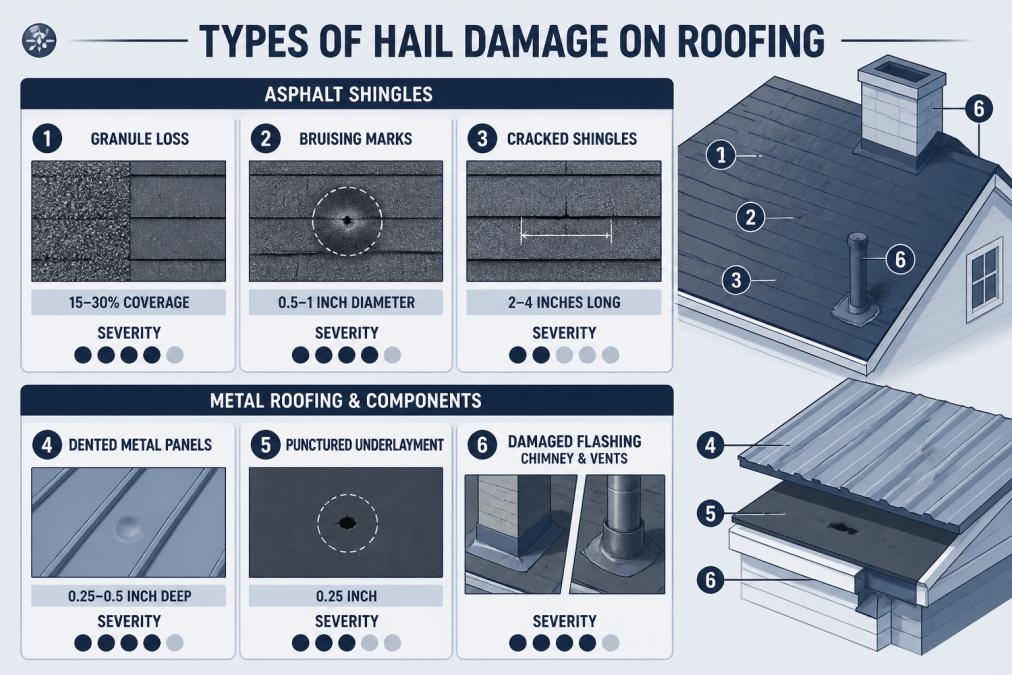
For asphalt shingles, the telltale signs are:
- Bruising: Dark spots or discolored areas where the granules have been knocked off
- Cracking: Visible splits or fractures in the shingle surface
- Granule loss: Excessive granules in gutters after a hailstorm (collect them and compare to before-and-after)
- Exposed mat: Where granules are missing, the underlying fiberglass mat shows through
For metal roofing, look for dents, creases, and paint damage. Even small dents can trap water and lead to rust.
Flashing damage is critical because it's where water gets in. Check around chimneys, vents, and skylights. Bent or separated flashing means water will follow.
Underlayment damage is harder to spot from the ground, but it's serious. If hail punctures through shingles and into the underlayment, water can get trapped between layers and cause rot.
Roof Inspection After Hailstorm: A Safe Homeowner Checklist
Don't climb on your roof immediately after a hailstorm. Wait for stable weather and dry conditions. When you're ready, use this checklist to assess the damage safely from the ground and lower sections.
What You'll Need:
- Binoculars
- Flashlight
- Notebook
- Camera or smartphone
- Ladder (for ground-level inspection only)
- Measuring tape
Step 1: Inspect Soft Materials First (5 minutes)
Check gutters, downspouts, siding, and air conditioning units for dents and dings. These are easy to spot and confirm that hail hit your area with force. Take photos.
Step 2: Use Binoculars to Scan the Roof (10 minutes)
From the ground, scan the roof surface with binoculars. Look for dark spots, discoloration, missing granules, visible cracks, and areas where shingles appear lifted or curled.
Step 3: Check Gutters for Granules (5 minutes)
Scoop out gutter debris and look for an unusual amount of granules. Fresh granule loss after a hailstorm is a strong indicator of roof damage.
Step 4: Inspect Lower Sections Safely (10 minutes)
Using a ladder, safely inspect the lower edge of the roof, flashing around vents, and any accessible areas. Look at the underside of gutters for punctures.
Step 5: Document Everything (5 minutes)
Take clear photos and notes of all damage. Include the date, time of day, and weather conditions. This documentation is essential for insurance claims.
When to Call a Professional:
If you find any of these, contact a roofing contractor immediately:
- Punctures or holes in the roof
- Lifted or curled shingles
- Visible cracks or splits
- Damaged flashing
- Water stains inside the attic or on ceilings
Roof Repair vs. Replacement After Hail Damage: Making the Right Call
This is the question that separates smart decisions from expensive mistakes. The answer depends on three factors: the extent of damage, the age of your roof, and your budget.
When Repair Makes Sense:
If damage is limited to a small area (under 20% of the roof surface), repair is typically the right call.
The age of your roof matters here. If your roof is 5-10 years old and has 10-15 years of life left, repairing hail damage preserves that remaining lifespan. You're extending what you already have.
When Replacement Makes Sense:
If damage is widespread (over 30% of the roof surface), replacement is often more cost-effective than patching. Multiple repairs create weak points and inconsistent protection.
If your roof is already 15-20 years old and approaching the end of its lifespan, hail damage may be the tipping point. Replacing now prevents multiple repair cycles and gives you peace of mind.
The Gray Zone:
Damage between 20-30% of the roof surface is where decisions get tricky. Here, restoration through advanced methods like spray foam coating can be the smart middle ground.
Restoration Methods That Actually Work for Hail-Damaged Roofs
When can you restore a roof with hail damage?
Spray Foam Coating Restoration:
Spray foam roofing creates a seamless, monolithic membrane over your existing roof. It fills gaps, seals punctures, and bonds to the substrate.
The foam is applied, cures, and then a protective coating is added. The result is a watertight barrier that stops water intrusion and extends the roof's life.
Metal Roof Panel Replacement:
If your roof is metal, damaged panels can be unbolted and replaced individually. This preserves the existing structure while restoring protection.
Asphalt Shingle Patching and Replacement:
For asphalt shingles, individual damaged shingles can be replaced. If damage is scattered across the roof, patching is cost-effective.
Flashing and Underlayment Repair:
Damaged flashing is replaced with new material. Punctured underlayment is sealed or patched. These targeted repairs address the most critical failure points and prevent water intrusion.
Roof Coating Application:
A protective coating can be applied over the existing roof to seal minor damage and extend lifespan.
The key is matching the restoration method to the damage pattern. A professional assessment determines which approach makes sense for your roof.
How Long a Roof Lasts After Hail Damage: Real Expectations
This is where homeowners often get conflicting advice. The answer depends on whether the damage is repaired, restored, or left alone.
If Damage Is Left Unrepaired:
A hail-damaged roof will deteriorate faster than an undamaged roof. Water intrusion accelerates the breakdown of shingles, underlayment, and framing. Most homeowners see problems within 1-3 years: leaks, mold, rot, and structural damage.
If Damage Is Repaired:
Targeted repairs extend the roof's lifespan by the remaining years it had before the hailstorm. If your roof had 10 years of life left and you repair the damage properly, you get those 10 years.
If Damage Is Restored Using Spray Foam:
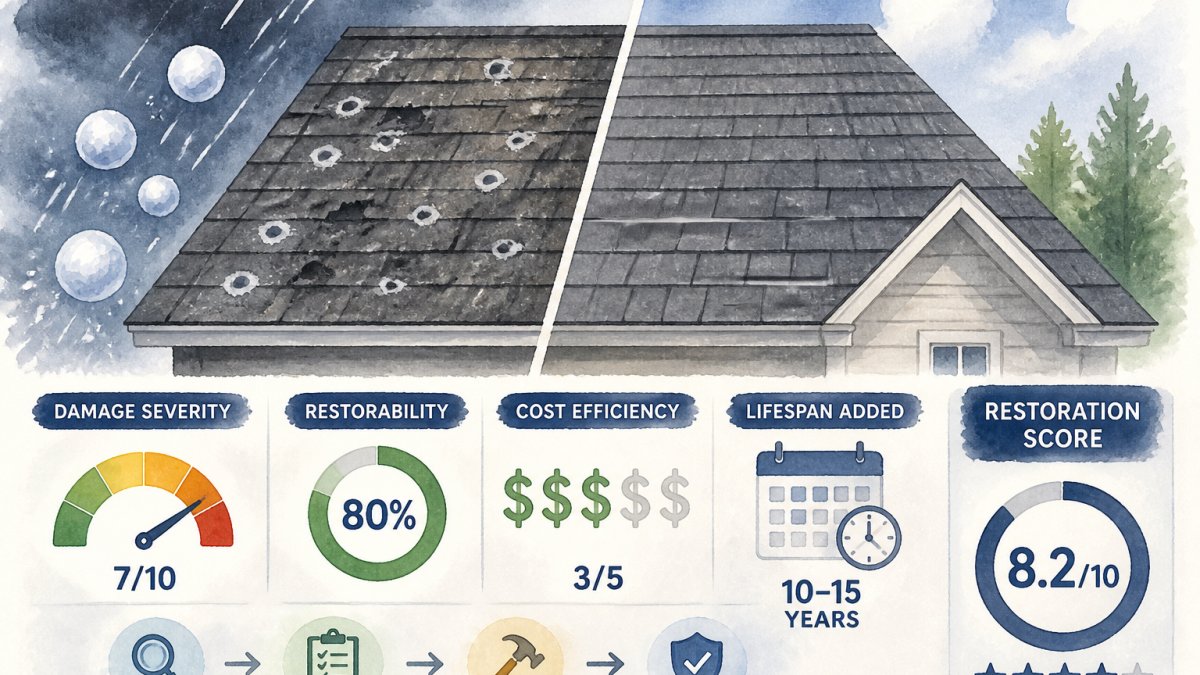
Spray foam restoration adds 10-15 years of additional lifespan. This is where restoration differs from repair.
A 15-year-old roof with 5 years of life remaining can be restored to additional protection. That's significant.
Real-World Timeline:
A typical hail-damaged roof that's properly restored will perform well. During that time, you should see minimal maintenance needs. After that period, the restored roof may need another restoration or replacement, depending on weather exposure and maintenance.
The key is addressing damage promptly. Delayed repairs allow water to cause secondary damage that's expensive to fix later.
Insurance Claims and Documentation for Hail Damage
Most homeowners' insurance policies cover hail damage to roofs. The process is straightforward if you document properly and file promptly.
Step 1: Document the Damage Immediately (Day 1-2)
Take photos and video of all visible damage from the ground and lower sections. Include wide shots showing the overall damage pattern and close-ups of specific damage.
Write down the date and time of the hailstorm, hail size if you know it, and weather conditions. This information supports your claim.
Step 2: File Your Claim (Within 30 Days)
Contact your insurance company and file a claim. Provide the documentation you've gathered. The insurer will assign an adjuster to inspect the roof.
Step 3: Insurance Adjuster Inspection (3-7 Days)
The adjuster visits your property and inspects the roof. They assess damage, take their own photos, and determine coverage.
Step 4: Claim Settlement (1-2 Weeks)
The insurer reviews the adjuster's report and issues a settlement. Most policies cover the cost of repair or replacement, minus your deductible.
Documentation Tips:
- Keep all photos, videos, and notes organized
- Get written estimates from contractors (insurers often require this)
- Keep receipts for any temporary repairs or protection
- Document any secondary damage (water stains inside, mold) that results from the hail damage
- Communicate with your insurer in writing (email) to create a record
Timeline:
Sun Flex Home Improvement can provide detailed damage assessments and repair estimates to support your claim.
Hail damage to your roof is repairable in most cases. The key is acting quickly, documenting thoroughly, and choosing the right restoration method for your specific roof and damage pattern.
Frequently Asked Questions
Can you restore a roof with hail damage, or does it always need replacement?
Many hail-damaged roofs can be restored rather than replaced, especially when damage is limited to surface granule loss or minor bruising on asphalt shingles. Restoration methods like spray foam roofing coatings, targeted shingle replacement, or flashing repairs can extend your roof's lifespan by 10-15 years at roughly half the cost of full replacement. However, structural damage, widespread punctures, or roofs near the end of their lifespan may require replacement instead. A professional inspection determines which approach makes sense for your specific situation.
How long does a roof last after hail damage if you repair it instead of replacing it?
A properly restored hail-damaged roof typically lasts for additional years, depending on the repair method, roof age, and local weather conditions. Spray foam restoration can add significant lifespan by creating a watertight barrier and protecting the underlying structure from further water intrusion. The key is addressing damage quickly after a hailstorm, delaying repairs allows moisture to penetrate underlayment and decking, which shortens remaining life. Regular maintenance and inspections after repair help maximize longevity.
What signs of hail damage on a roof mean I need immediate repair?
Urgent signs include visible punctures or holes, cracked shingles with exposed underlayment, missing shingles, dented or cracked flashing, granule loss exposing the mat layer (appears as dark spots), and water stains inside your attic or ceiling. These indicate compromised waterproofing and risk of leaks or structural damage. Even if you don't see interior damage yet, addressing these signs within days of a hailstorm prevents costly water intrusion. Minor bruising and surface granule loss can often wait for a scheduled repair appointment.
How do I know if my roof is worth restoring after hail damage versus replacing it?
Restoration typically makes sense if your roof is under 15 years old, damage is localized rather than widespread, and there's no structural damage to decking or underlayment. Restoration can be a cost-effective alternative to complete roof replacement, making it cost-effective for roofs with good bones. If your roof is 18+ years old, has multiple previous repairs, or shows widespread impact damage across more than 20% of the surface, replacement may be the better long-term investment. A professional damage assessment and cost estimate clarifies which path saves you money over time.
Is roof inspection after a hailstorm something I can do myself safely?
A ground-level visual inspection using binoculars is safe and helps you spot obvious damage like missing shingles or visible dents. However, climbing onto the roof yourself poses fall risks and may void your warranty or insurance coverage. A professional inspection within 48 hours of a hailstorm is safer and more thorough, contractors can document damage for insurance claims, assess underlayment and flashing, and identify hidden damage you'd miss. Many insurers recommend professional inspection before filing a claim anyway.