 how-to
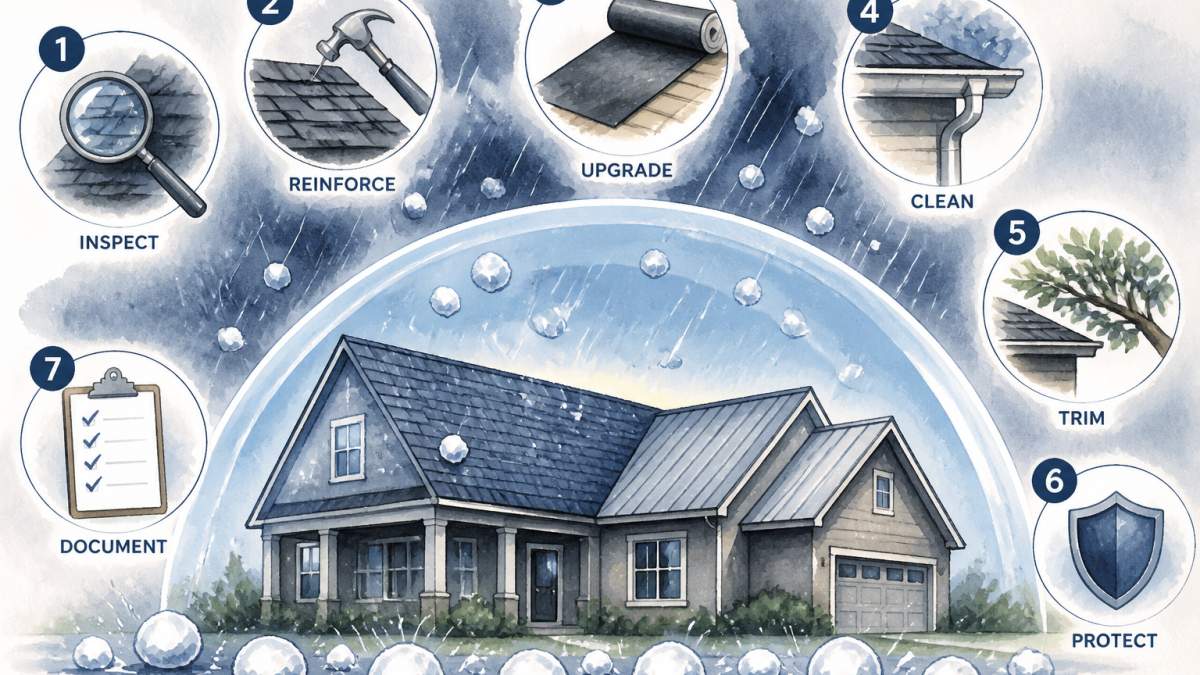
Protect Roof From Hail Damage: A 7-Step Guide
Table of Contents
- Why Hail Damage Threatens Your Roof's Structural Integrity
- How to Identify Hail Damage on Your Roof
- Choose Hail-Resistant Roofing Materials for Long-Term Protection
- Immediate Steps to Take After a Hail Storm
- File a Hail Damage Roof Insurance Claim Process
- Preventative Maintenance Schedules for Hail Resistance
- Professional Roof Inspections vs. DIY Safety Assessments
- Repair vs. Replacement: Making the Right Decision
- Frequently Asked Questions
Last Updated: September 28, 2026
Why Hail Damage Threatens Your Roof's Structural Integrity
Hail storms can devastate a roof in minutes. Large hailstones strike with tremendous force, creating dents, cracks, and punctures that compromise your home's protection. The damage isn't always visible from the ground. What looks like minor surface wear often masks serious underlying problems that lead to leaks, water infiltration, and structural decay.
Homeowners who act quickly to protect roof from hail damage save thousands in restoration costs; those who wait often face complete roof replacement.
Hail damage affects three critical areas: shingles sustain direct hits, underlying sheathing and underlayment crack under stress, and water seeps through gaps weakening your home's frame. A single season of unchecked water infiltration can rot wooden supports, compromise insulation, and create mold.
The real threat is what happens after: water finds every crack and within weeks causes ceiling stains, soggy insulation, and structural rot that costs far more to repair than the initial damage.
How to Identify Hail Damage on Your Roof
Most hail damage falls into two categories: functional damage that affects performance, and cosmetic damage that affects appearance.
Functional damage includes:
- Cracked or split shingles
- Punctures that expose the underlayment
- Dents deep enough to compress the granules permanently
- Missing sections of roofing material
- Damage to roof flashing around vents and chimneys
Cosmetic damage includes:
- Shallow dents that don't break the surface
- Granule loss (the colored coating on asphalt shingles)
- Discoloration or streaking
Start with binoculars from the ground, looking for darker or rougher shingles indicating exposed underlayment. If safe, climb onto your roof and feel for dents and rough spots not visible from below.
Check south and west-facing slopes first, as hail typically impacts the side facing the storm's approach and these areas often take the heaviest hits.
Document everything with close-up and wide-shot photos, marking the inspection date clearly for insurance adjusters.
Choose Hail-Resistant Roofing Materials for Long-Term Protection
Selecting the right material is your best defense against future hail damage. The best choice depends on your climate, budget, and desired roof lifespan.
Impact-Resistant Shingles and Asphalt Options
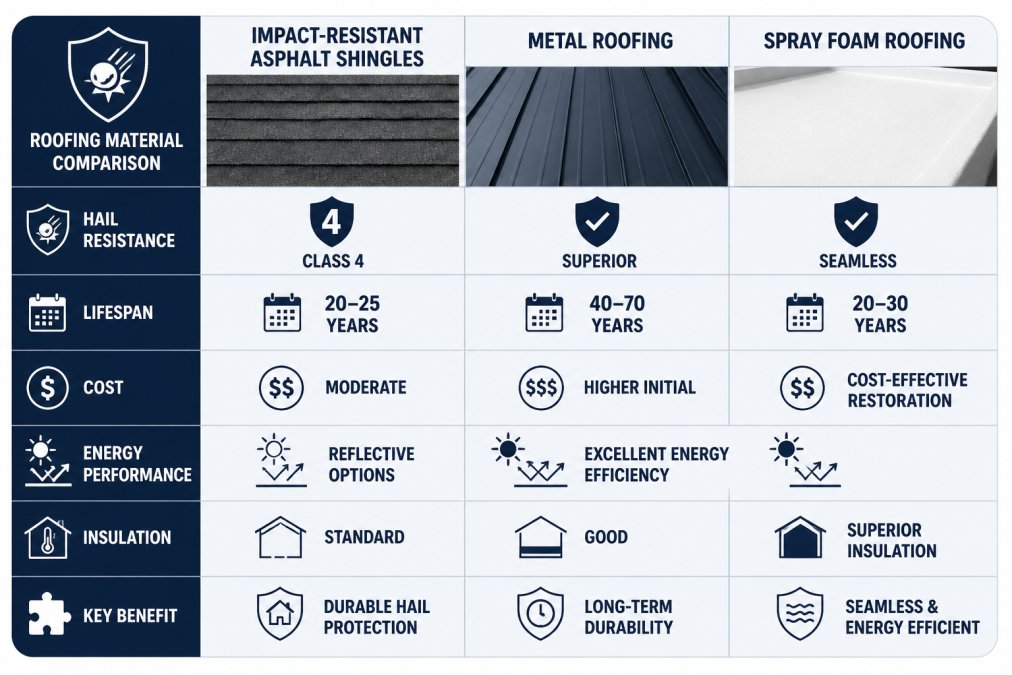
Impact-resistant asphalt shingles use reinforced fiberglass mats and polymer-modified asphalt that absorb energy instead of cracking. They cost more upfront but reduce functional damage during storms.
Look for Class 4 impact resistance, the highest rating. Class 4 shingles withstand 2-inch steel balls dropped from 20 feet, roughly equivalent to large hailstones, without cracking, splitting, or losing granules.
Impact-resistant asphalt shingles last 20-25 years in harsh climates versus 15-20 for standard shingles.
Work with contractors experienced in installing impact-resistant systems, as improper fastening reduces impact absorption.
Metal Roofing as a Durable Alternative
Metal roofing offers superior hail resistance: steel or aluminum panels bend under impact rather than crack, absorbing energy without compromising the watertight seal.
Metal roofing lasts 40-70 years.
The main drawback is noise, but modern systems include acoustic underlayment that dampens sound while improving insulation and impact absorption.
Metal roofing requires specialized installation. Verify contractor experience, as improper sealing or fastening creates leaks and voids the warranty.
Spray Foam Roofing for Seamless Protection
Spray foam roofing creates a seamless barrier with no seams or fasteners for water to penetrate, expanding into a continuous protective layer.
Foam absorbs impact energy across its entire surface with no weak points, flexing under impact then returning to shape, hail rarely creates functional damage on foam systems.
Spray foam restoration can add 20-30 years of life to structurally sound roofs without the cost and waste of complete replacement.
Foam provides continuous insulation with no thermal bridging.
Finding a contractor with proven spray foam expertise is critical, as application requires precise temperature and humidity control. Sun Flex Home Improvement specializes in spray foam restoration with over 25 years of experience across Montana and Northern Wyoming.
Immediate Steps to Take After a Hail Storm
Your response in the first 48 hours after a hail storm determines how much damage your roof sustains. Act quickly to protect roof from hail damage and prevent water infiltration.
Step 1: Assess safety first. Don't climb onto your roof if conditions are slippery. Use binoculars from the ground or hire a professional inspector if you can't safely access your roof.
Step 2: Document the damage. Take photos and video with wide shots and close-ups, noting the date and time to support insurance claims.
Step 3: Prevent water entry. Secure a heavy tarp over punctures, cracks, or missing sections with rope or clips to prevent water entry until repairs begin.
Step 4: Check interior for leaks. Inspect your attic and ceilings for water stains, wet insulation, or drips, marking wet areas to track new leaks.
Step 5: Contact your insurance company. File a claim promptly. Most policies require notification within a specific timeframe. Provide your documentation and let the adjuster schedule an inspection. Don't authorize repairs until your claim is processed.
Step 6: Get professional inspection. Have a qualified roofing contractor inspect your roof thoroughly. They'll identify damage you can't see and recommend repair or replacement options. Professional assessment protects you from making costly mistakes.
File a Hail Damage Roof Insurance Claim Process
Understanding the insurance claim process helps you recover costs and avoid disputes with your insurer.
Most homeowners insurance policies cover hail damage to roofing, but coverage varies (How Your Roof Influences Your Home and Business Insurance). Review your policy documents to understand hail-specific deductibles and exclusions before filing.
The claim process typically follows these steps:
-
Notify your insurer within 30 days of the storm with your policy number and damage description.
-
Schedule the adjuster inspection. The insurance company assesses damage and estimates repair costs at no cost.
-
Provide documentation. Submit photos, videos, and professional contractor assessments to strengthen your claim.
-
Review the adjuster's report and dispute if you disagree with the assessment.
-
Get contractor estimates. If your contractor's estimate exceeds the insurer's, submit it as additional documentation.
-
Negotiate if necessary. Request a re-inspection or hire an independent adjuster if estimates differ significantly.
-
Receive payment. Once approved, the insurer issues payment either upfront or after repairs are completed.
Keep copies of all communications, emails, letters, and claim numbers for a clear dispute record.
Preventative Maintenance Schedules for Hail Resistance
Regular maintenance extends your roof's life and helps it withstand future hail storms. A consistent schedule catches problems early before they become expensive.
Twice yearly (spring and fall):
- Inspect your roof visually from the ground
- Check gutters, downspouts, and flashing for debris and damage
After severe weather:
- Inspect within 48 hours of any hail storm, high wind, or heavy rain
- Document damage with photos
- Contact your insurance company if damage is significant
Annually:
- Hire a professional to inspect your roof, check for granule loss, and verify ventilation and drainage
Every 3-5 years:
- Clean gutters and downspouts professionally
- Check for moss or algae growth
- Inspect underlayment and roof sheathing if you have roof access
- Verify that impact-resistant shingles are performing as expected
For spray foam systems:
- Annual professional inspection for cracks or adhesion issues
- Recoating every 10-15 years for UV protection
This maintenance schedule prevents small problems from becoming major ones.
Professional Roof Inspections vs. DIY Safety Assessments
DIY inspections work well for basic assessments:
- Use binoculars to examine your roof from the ground
- Look for obvious missing shingles or damage
- Check gutters for debris and granule loss
DIY inspections are safe and free but have limitations: you can't safely assess roof pitch, underlayment condition, or whether damage is functional or cosmetic.
Professional inspections are essential when:
- You've experienced a hail storm or severe weather
- You're filing an insurance claim
- You're considering roof repair or replacement
- Your roof is more than 15 years old
- You notice interior water damage
Repair vs. Replacement: Making the Right Decision
Deciding whether to repair or replace your roof depends on several factors: the extent of damage, the age of your roof, and your budget.
Choose repair when:
- Damage is localized to a small area
- Your roof is less than 15 years old
- The roof structure is sound
- Repair costs are less than 30% of replacement cost
- You want to extend the roof's life by 5-10 years
Choose replacement when:
- Damage covers more than 30% of the roof
- Your roof is more than 20 years old
- Multiple layers of old roofing exist
- Structural damage is present
- You want a permanent solution with a long warranty
Frequently Asked Questions
Will homeowners insurance cover roof damage caused by hail?
Most homeowners insurance policies cover hail damage to your roof, but coverage depends on your specific policy and deductible. File a claim promptly after a hail storm by documenting damage with photos and contacting your insurer. The insurance adjuster will assess whether damage meets your policy's threshold. Review your policy to understand your deductible amount and coverage limits before a storm occurs.
What are the best roofing materials for hail resistance?
Impact-resistant shingles with Class 4 ratings, metal roofing, and spray foam roofing offer superior hail protection. Impact-resistant asphalt shingles use reinforced materials and ceramic granules to absorb hail impact without cracking. Metal roofing resists denting and punctures better than traditional shingles. Spray foam creates a seamless, flexible barrier that absorbs impact energy. Choose based on your climate severity, budget, and long-term durability goals.
How long will a roof last after sustaining hail damage?
A roof's lifespan after hail damage depends on damage severity and repair quality. Minor cosmetic damage (granule loss, small dents) may not affect longevity if underlying layers remain intact. Functional damage (leaks, structural compromise) requires immediate repair or replacement to prevent deterioration. Professional inspections identify hidden damage that could shorten roof life. Proper repairs can extend your roof's remaining lifespan by 10-15 years.
Do hail blankets really work for residential roofs?
Hail blankets offer temporary protection during severe storms but are not a permanent solution. They reduce impact energy and granule loss during active hail events, making them useful for properties in high-risk hail zones. However, blankets require installation before storms, add weight to roof structures, and don't prevent all damage. They work best as a short-term mitigation strategy while you plan long-term protection through material upgrades or professional restoration.