 blog
blog
Metal Roof Snow Shedding: Benefits for Snowy Climates
Table of Contents
- How Metal Roofs Shed Snow Effectively
- Reduced Snow Accumulation and Roof Load
- Metal Roof Snow Guards: Protection and Safety
- Metal Roofs and Ice Dams: Winter Performance
- Metal Roof Snow Load Capacity and Durability
- Safe Metal Roof Snow Removal Techniques
- Is a Metal Roof Right for Your Snowy Climate?
- Frequently Asked Questions
Last Updated: October 15, 2026
How Metal Roofs Shed Snow Effectively
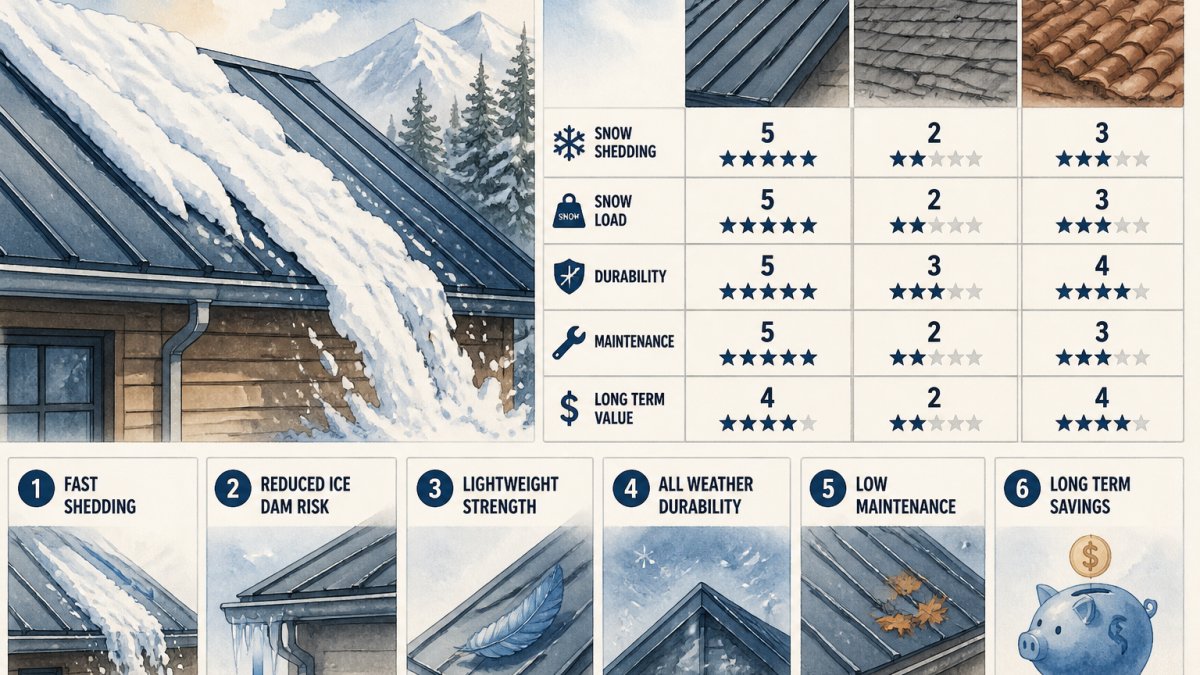
Metal roof snow shedding works because metal panels have a smooth, slick surface, so snow and ice slide off more easily than from asphalt shingles or wood. Gravity pulls snow down with nothing to grip, and on sunny winter days metal warms slightly, melting the bottom layer and letting sheets slide away.
At Sun Flex Home Improvement, we've provided roofing solutions across Montana and Northern Wyoming for over 25 years. The slick surface and proper pitch create a natural snow management system.
Reduced Snow Accumulation and Roof Load
Heavy snow accumulation creates structural stress on any roof. A foot of snow can weigh 10 to 15 pounds per square foot, depending on moisture content, and wet snow weighs even more.
The benefits extend beyond just the roof itself:
- Lower maintenance costs, Less snow means fewer emergency repairs
- Longer roof lifespan, Reduced weight stress slows deterioration
- Better structural integrity, The building foundation and walls experience less pressure
- Improved safety, Lower collapse risk during heavy storms
Traditional asphalt shingles trap snow layer by layer, so by mid-winter you might have 2 to 3 feet on your roof. Metal roofs typically shed most of this load naturally.
Metal Roof Snow Guards: Protection and Safety
Even though metal roofs shed snow effectively, sudden slides can be dangerous. When a large sheet releases at once, it falls with significant force, which is why snow guards and retention systems are essential. Snow guards hold snow temporarily so it melts gradually or releases in smaller pieces, protecting people, vehicles, gutters, and landscaping below.
The main types of snow retention
- Pad-style guards, Rubber, plastic, or metal pads bonded or fastened to the panel. They grip the bottom layer of snow and break a slide into smaller releases. Best for moderate snow loads and roofs where appearance matters.
- Bar-style guards, Horizontal bars or rails spanning the roof. They catch and hold snow above the bar and are common on steeper roofs and higher-snow regions.
- Pipe-style guards, Round or square pipes mounted on brackets. A heavier-duty version of bar guards, used where snow loads are high.
- Cleat-style guards, Small metal cleats that catch snow at the panel surface. Low-profile, they work well in lighter-snow areas or as a supplement to other guards.
How to choose a guard type
The right choice depends on four things:
- Roof pitch, Steeper roofs release snow faster, so they need stronger retention. A 12:12 pitch sheds far more aggressively than a 4:12 pitch.
- Expected ground snow load, Areas with higher design snow loads need heavier-duty guards and closer spacing.
- Panel type and finish, Standing-seam panels with a smooth finish shed more easily than through-fastened panels with exposed fasteners. The panel profile affects how guards attach.
- What is below, Doors, walkways, driveways, gas meters, HVAC equipment, and landscaping all change how much risk a slide creates.
Placement and layout
Proper placement matters as much as the guard itself. A common starting point is the first few feet from the eave, with additional rows higher up on steeper roofs or in heavy-snow regions.
A low-slope roof may need only one row near the eave, while a steep roof in a heavy-snow area may need several rows across the lower half.
When a continuous retention system makes sense
A continuous system, sometimes called a snow fence or full retention system, keeps snow on the roof rather than allowing release. This is common above main entrances, over walkways that cannot be rerouted, and where a slide would hit something that cannot be moved or protected.
They are also used when the pitch is steep enough that pad-style guards alone would not hold the snow. They cost more and add load, so they are not right for every building.
What to check before you buy
- Confirm the guard system is rated for your roof pitch and expected snow load.
- Ask whether the manufacturer provides a tested layout for your specific panel profile.
- Make sure fasteners are compatible with the panel material to avoid corrosion.
- Check that the added weight of the guards and retained snow is within the roof's design capacity.
Sun Flex Home Improvement recommends a professional assessment to determine the right snow retention system. Roof pitch, building height, proximity to walkways, and local snowfall patterns all influence the decision, and installation should follow the manufacturer's instructions and, where required, a licensed engineer's guidance.
Metal Roofs and Ice Dams: Winter Performance
Ice dams form when heat escapes from a building, melting snow on the roof. The meltwater runs down and refreezes at the cold eaves, creating a dam, and water backs up behind it and leaks inside. Metal roofs handle this differently than asphalt shingles: the smooth surface drains water quickly, and metal conducts temperature more evenly, reducing the difference between the roof peak and the eaves.
The metal roof snow shedding benefit extends to ice dam management: because snow doesn't accumulate as heavily, there's less meltwater to create dams.
Metal Roof Snow Load Capacity and Durability
Metal roofing systems are engineered to handle heavy snow loads, but the number that matters is the design snow load for your location and roof. Building codes set a ground snow load, and engineers convert it into a roof snow load based on pitch, exposure, and thermal conditions.
How snow load is actually measured
Snow load is expressed in pounds per square foot (psf). The weight depends heavily on moisture content:
- Light, dry snow, roughly 3 to 7 psf per foot of depth.
- Average settled snow, roughly 10 to 15 psf per foot of depth.
- Wet, heavy snow, roughly 15 to 20 psf per foot of depth, and sometimes more.
- Ice, about 5.2 psf per inch of thickness, which is why ice buildup is a bigger structural concern than many homeowners expect.
A roof holding 3 feet of wet snow could be carrying 45 to 60 psf, while the same depth of dry powder might be under 20 psf, which is why depth alone is a poor measure of risk.
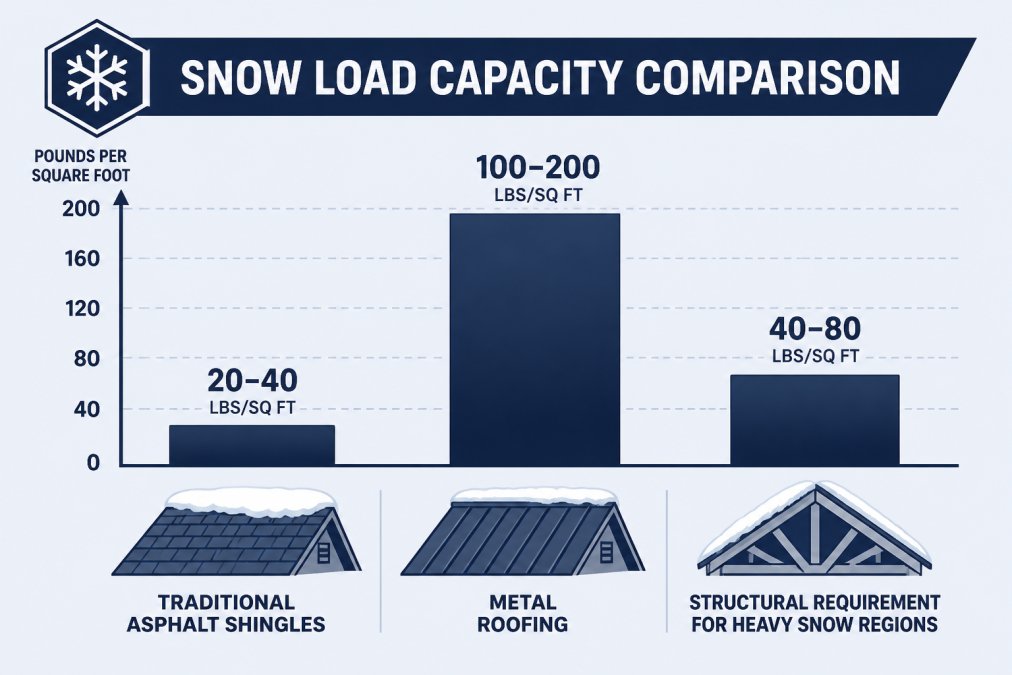
What metal roofs are designed to carry
Most standing-seam metal panels are rated well above typical residential snow loads. Exact capacity depends on panel gauge, seam spacing, purlin spacing, and span.
Design variables that change shedding and load
Snow shedding is not just about the metal surface. Several design variables change how much snow stays on the roof and how fast it leaves:
- Roof pitch, Steeper roofs shed faster. A 6:12 pitch or steeper is generally considered active for shedding, while roofs under 4:12 tend to retain more snow.
- Panel profile and seams, Standing-seam panels with tall seams and a smooth finish shed more readily than through-fastened panels with exposed fasteners.
- Coatings and finishes, A smooth, low-friction finish helps snow slide. Textured or granular finishes can slow release.
- Roof geometry, Valleys, dormers, and pitch changes can trap snow and create concentrated loads.
- Insulation and ventilation, A well-insulated, well-ventilated roof stays closer to outdoor temperature, which reduces melting and refreezing at the eaves.
Durability under winter conditions
Metal panels resist the freeze-thaw cycle that damages other roofing materials. Ice and snow expansion do not crack or degrade metal the way they can with asphalt or wood shingles, so metal roofs maintain their integrity year after year. Combined with metal roof snow shedding, this durability creates a long-lasting solution: asphalt shingles may need replacement every 15 to 20 years, while metal roofs often last for decades, an advantage even more pronounced in snowy climates.
The trade-off to keep in mind
A metal roof that sheds snow well can also release it suddenly. Reduced accumulation is a real benefit, but it does not eliminate structural snow-load risk or ice-related problems. The best results come from a roof designed for the local snow load, with the right pitch, panel, insulation, ventilation, and, where needed, snow retention.
Safe Metal Roof Snow Removal Techniques
Sometimes snow must be removed from a metal roof manually, if snow guards are overwhelmed, ice dams form despite prevention, or you need maintenance access.
Manual snow removal requires caution: the smooth surface that sheds snow naturally also makes the roof slippery.
Safe removal techniques include:
- Use a roof rake from the ground, A long-handled rake allows you to pull snow off without climbing onto the roof
- Hire a professional, Roofing contractors have the equipment and training for safe snow removal
- Work from inside if possible, Some attic access points allow you to push snow off from inside the building
- Avoid metal roofs during freeze-thaw cycles, Icy conditions make the surface even more slippery
- Never use salt or harsh chemicals, These can damage metal panels and gutters
If you must climb onto a metal roof, use a safety harness, wear slip-resistant footwear, and never work alone.
Is a Metal Roof Right for Your Snowy Climate?
Metal roof snow shedding offers clear advantages in heavy-snow regions, but whether a metal roof is right for your property depends on several factors.
Metal roofs make sense if:
- You experience regular heavy snowfall (20+ inches annually)
- Your building has structural capacity for a steeper roof pitch
- You want to minimize ongoing roof maintenance
- You're willing to invest in a durable, long-lasting system
- You can afford upfront installation costs for a premium roofing solution
Other roofing materials might be better if:
- Your roof pitch is very shallow (under 4:12)
- Budget is the primary constraint
- Your climate rarely sees significant snow
- You prefer the appearance of traditional shingles
- You need a quick, temporary solution
Sun Flex Home Improvement has helped property owners across Montana and Northern Wyoming evaluate roofing options for over 25 years.
Cost-effectiveness depends on your long-term plans.
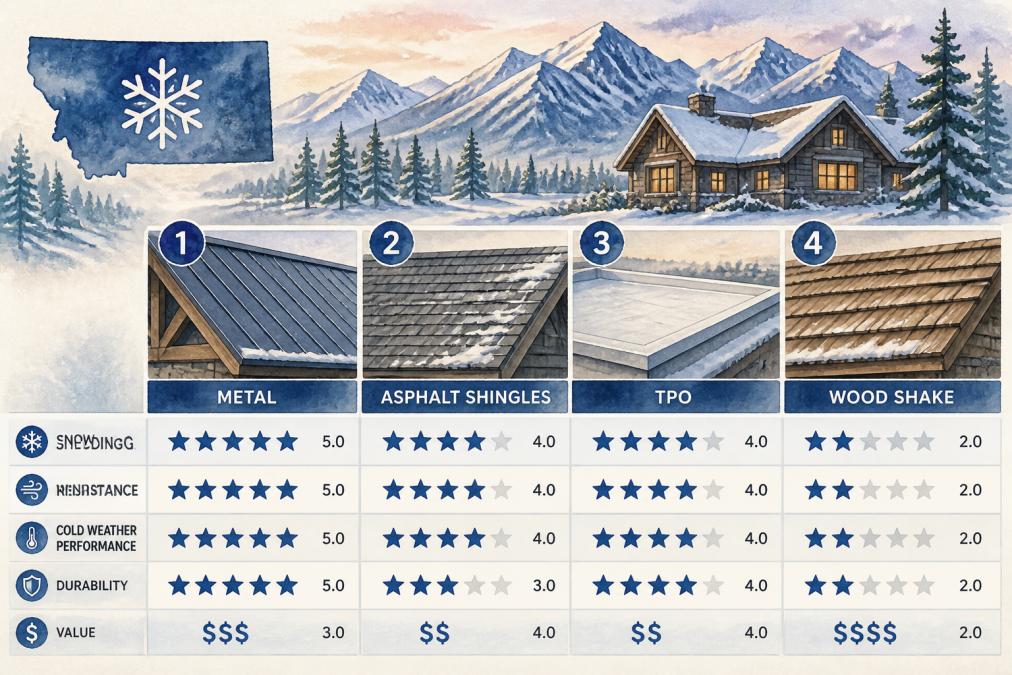
| Roofing Type | Snow Shedding | Durability | Initial Cost | Lifespan |
|---|---|---|---|---|
| Metal roofing | Excellent | 40-50 years | Higher | 40-50 years |
| Asphalt shingles | Fair | 15-20 years | Lower | 15-20 years |
| Wood shakes | Good | 20-30 years | Higher | 20-30 years |
| Standing seam metal | Excellent | 50+ years | Highest | 50+ years |
A professional roofing assessment can help you understand which system fits your property, climate, and budget.
Metal roof snow shedding addresses one of the biggest challenges in snowy climates: managing the weight and danger of accumulated snow. For property owners in Montana and Northern Wyoming dealing with harsh winter weather, a properly installed metal roof system with appropriate snow guards delivers reliable protection and peace of mind. Get a free estimate from our team to explore whether metal roofing is the right choice for your building.
Frequently Asked Questions
Do metal roofs actually shed snow better than other roofing materials?
Yes. Metal roofs have slick, smooth surfaces that allow snow to slide off more readily than asphalt shingles or wood. The metal panels' low friction coefficient means snow doesn't accumulate as heavily, reducing the structural load on your roof. This is especially valuable in snowy climates where heavy accumulation can damage traditional roofing over time.
Can metal roof snow shedding cause dangerous roof avalanches?
Snow can slide suddenly from metal roofs, especially on steep pitches. This is why snow guards and snow retention systems are essential. Properly installed snow guards break up large slides into smaller, manageable pieces, protecting people, vehicles, gutters, and landscaping below. Without guards, rapid snow release poses a genuine safety hazard that requires careful planning.
Will a metal roof prevent ice dams from forming?
Metal roofs reduce ice dam risk by shedding snow more efficiently, but they don't eliminate it entirely. Ice dams form when heat escapes through the roof, melting snow at the eaves. Proper attic insulation and ventilation are critical. Metal roofing's reflective properties can help reduce heat absorption, supporting your overall winter roof performance strategy.
How much snow can a metal roof safely hold?
Most metal roofing systems are engineered to handle significant snow load, depending on design and installation. Your roof's pitch, local building codes, and the specific metal panel system determine exact capacity. A professional assessment ensures your metal roof meets structural requirements for your region's typical heavy snowfall patterns.