 blog
blog
Affordable Roof Replacement Alternatives: 2026 Guide
Table of Contents
- Why Homeowners Search for Affordable Roof Replacement Alternatives
- Roof Restoration vs Replacement Cost: What the Numbers Look Like
- Asphalt Shingle Rejuvenation: Extending the Life of What You Have
- Spray Foam Roofing Benefits for Harsh Weather and Energy Savings
- Budget-Friendly Roofing Materials and DIY vs Professional Installation
- Financing Options and Insurance Claims for Roof Replacement Alternatives
- Maintenance Schedules and Tax Credits That Stretch Your Roof Budget
- Frequently Asked Questions
Last Updated: September 15, 2026
Why Homeowners Search for Affordable Roof Replacement Alternatives
A full tear-off and replacement is the largest maintenance expense most property owners will ever face, which is why so many households search for affordable roof replacement alternatives before signing a contract. At Sun Flex Home Improvement, we've spent more than 25 years helping property owners across Montana and Northern Wyoming weigh restoration against replacement, and a complete tear-off is often the most expensive path, not the only one. This guide covers what each alternative costs, when restoration makes sense, and how to finance it.
The pressure to replace usually arrives from three directions at once: a contractor's recommendation, a visible leak, and a budget that won't stretch. But a roof is a layered system, and the layers fail at different rates. The decking and structure underneath frequently have decades of life left even when the surface looks tired, and that gap is where affordable roof replacement alternatives live.
Roof Restoration vs Replacement Cost: What the Numbers Look Like
Roof restoration vs replacement cost decides most projects. Replacement means tearing off existing material, disposing of it, replacing damaged decking, and installing a new system. Restoration means repairing what's failed, sealing what's exposed, and adding a protective layer over a sound structure.
The cost gap comes down to what you're paying for:
| Project Element | Full Replacement | Restoration Approach |
|---|---|---|
| Tear-off and disposal | Required | Usually avoided |
| Decking replacement | Often extensive | Only damaged sections |
| New surface system | Full roof | Coating or overlay |
| Installation labor | Highest | Reduced |
| Typical project scope | Days to weeks | Often days |
Because restoration skips tear-off and disposal, the total project can come in well below a full replacement. Sun Flex Home Improvement built its restoration process around that gap: the goal is to save property owners up to half the cost of a new roof while still delivering a watertight, weather-resistant surface. Exact pricing depends on roof size, pitch, and condition, so the only way to get a real number is a free on-site estimate.
Where the Money Actually Goes
To understand why restoration is cheaper, it helps to see what a replacement invoice really pays for. A typical residential tear-off and re-roof breaks into four buckets:
- Tear-off and disposal. Removing the old material and paying landfill tipping fees, pure cost with no lasting value.
- Decking and structure. Replacing rotted sheathing, sistering rafters, or correcting framing. You can't skip this if the structure is genuinely compromised.
- The surface system. Shingles, underlayment, flashing, ridge caps, and fasteners, the layer that actually sheds water.
- Labor and overhead. Crew time, permits, dumpster rental, and the contractor's margin.
Restoration attacks the biggest bucket, tear-off and disposal, and shrinks labor by working over an existing surface instead of rebuilding from the deck up. If the decking is sound, you're paying for a new weatherproof skin, not a whole new assembly.
A Realistic Cost Framework
Exact prices vary by region, roof size, pitch, and material, so treat any single number with suspicion. What you can compare is the structure of the cost:
- A full replacement is priced per square (100 square feet) of new material plus tear-off, and tear-off alone can be a meaningful share of the total (nrc.gov).
- A restoration or coating project is priced per square foot of surface treated, with minimal disposal and reduced labor.
- A spot repair is priced per repair, cheapest when the failure is isolated to flashing, a penetration, or one damaged section.
The practical takeaway: the more of the roof that is still structurally sound, the wider the gap between restoration and replacement. Where most of the decking is intact, restoration can land well under half the replacement figure. Where decking is failing across the field, that gap closes fast and replacement becomes the honest recommendation.
When Restoration Makes Financial Sense
Restoration makes financial sense when the roof's structure is sound and the failure is confined to the surface. If the decking is rotted through or the framing has shifted, no coating will fix that, and replacement is the right call.
Ask three questions before you commit:
- Is the leak coming from the surface, or from failed flashing and penetrations?
- Is the decking soft underfoot, or still solid?
- Is the roof near the end of its expected lifespan, or does it have years left?
Two "yes" answers on the first two questions plus a solid structure usually point toward restoration, the point where affordable roof replacement alternatives stop being a compromise and become the smarter financial move.
Asphalt Shingle Rejuvenation: Extending the Life of What You Have
Asphalt shingle rejuvenation restores flexibility and weather resistance to aging shingles instead of tearing them off. As shingles age, they lose the oils that keep them pliable, granules wear away, and the surface cracks. Rejuvenation treatments address that degradation directly.
What most guides miss is that rejuvenation is a maintenance play, not a rescue. It works best on roofs that are aging but not yet failing, typically mid-service-life.
For roofs in that middle stage, rejuvenation is one of the most cost-effective ways to buy years of additional service. Pair it with a proper inspection and maintenance schedule, and you stretch the interval before replacement becomes unavoidable.
Spray Foam Roofing Benefits for Harsh Weather and Energy Savings
Spray foam roofing benefits show up fastest in climates that punish a roof. Spray polyurethane foam is applied as a liquid, expands to fill every seam and irregularity, and cures into a seamless, monolithic surface with no fasteners and no laps for water to work under. For buildings facing freeze-thaw cycles, hail, and heavy snow loads, that seamless surface is the whole point.
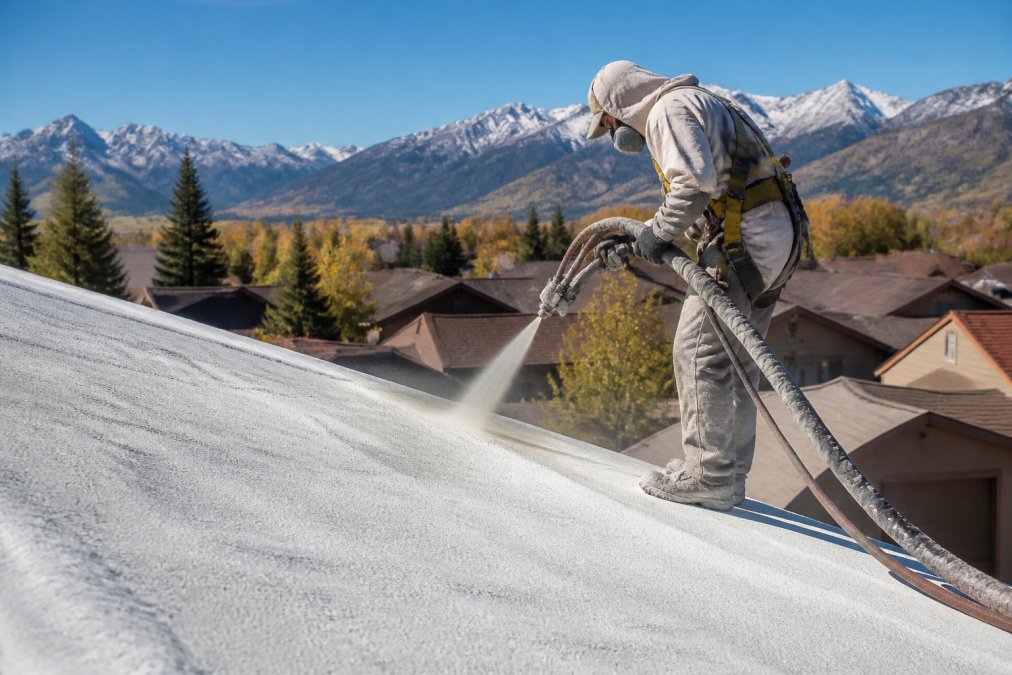
The energy side matters just as much. A seamless foam layer insulates as well as it waterproofs, reducing the heat transfer that drives heating and cooling costs. Commercial property owners with large flat roofs often notice the difference on utility bills within the first full season. That combination of weather resistance and insulation is why spray foam is one of the more durable affordable roof replacement alternatives for commercial and agricultural buildings.
How Spray Foam Handles Hail and Snow Melt
Spray foam handles hail better than rigid or brittle surfaces because it absorbs impact rather than cracking (ORNL roof and attic design proves efficient in summer and winter).
Snow melt is where the seamless surface earns its keep. The spring thaw is when small gaps and failed flashing turn into interior leaks, because meltwater finds every opening. A continuous foam membrane eliminates those seams, so water runs off instead of working its way in. Foam systems are typically finished with a protective coating that adds UV and impact resistance, recoat it periodically to extend the roof's life.
Budget-Friendly Roofing Materials and DIY vs Professional Installation
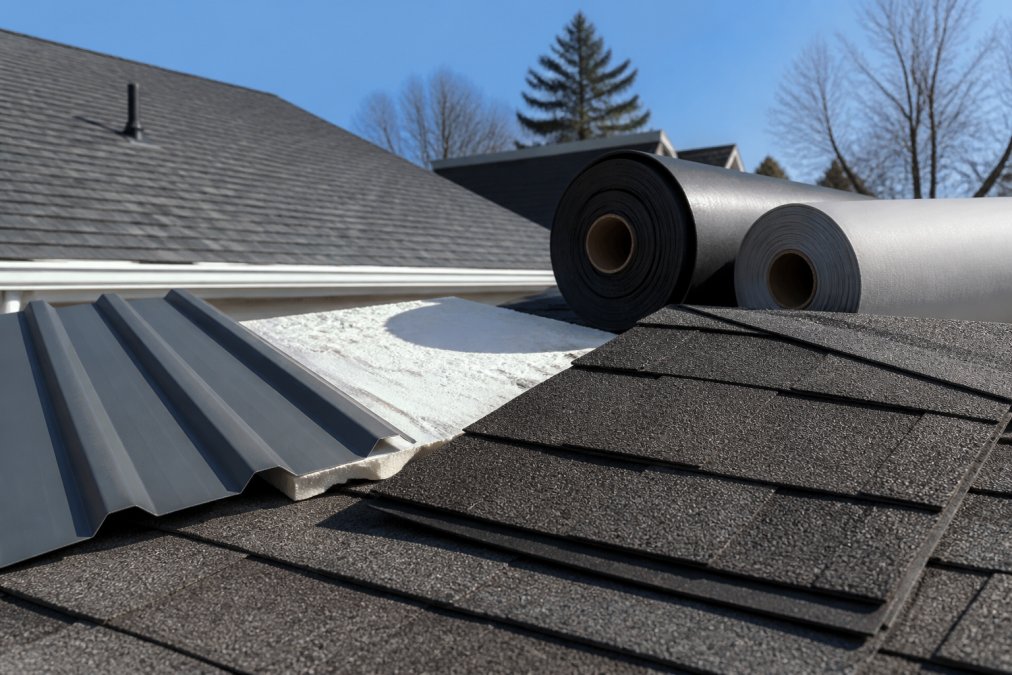
Budget-friendly roofing materials fall into a few practical categories, and the right pick depends on roof pitch and structure. Rolled roofing and corrugated metal suit low-slope and outbuilding applications, composite shingles remain the common choice for steep-slope homes, and spray foam covers flat and low-slope commercial roofs. Durability, weather resistance, and installation labor all factor into the true cost, not just the sticker price per square.
DIY vs professional installation is a genuine trade-off, and the honest answer depends on the material. Rolling out underlayment or patching flashing is within reach for a confident homeowner. Spray foam application is not.
Financing Options and Insurance Claims for Roof Replacement Alternatives
Maintenance Schedules and Tax Credits That Stretch Your Roof Budget
A Preventative Maintenance Calendar
Tax Credits and Rebates Worth Checking
Frequently Asked Questions
What is the 25% rule for roofing?
The 25% rule is a common guideline suggesting that if roof damage or deterioration affects more than 25% of your roof's total area, a full replacement may be more cost-effective than repeated repairs. However, this rule is not universal. Some roofing materials and restoration methods, such as spray foam or asphalt shingle rejuvenation, can address widespread issues at a fraction of replacement cost. Always get a professional inspection to determine whether restoration is viable for your specific situation.
Is roof restoration cheaper than replacement?
Roof restoration typically costs significantly less than a full replacement. Restoration focuses on repairing and sealing existing surfaces, which avoids tear-off costs and installation labor for new materials. For example, spray foam restoration can save property owners up to half the cost of a new roof. However, the exact savings depend on your roof's condition, size, and material. A professional assessment will give you the most accurate comparison for your home.
How do I know if my roof needs replacement or just repair?
Key signs that repair or restoration may be sufficient include isolated leaks, damaged flashing, or worn shingle granules in specific areas. If the roof's structural integrity is intact and the damage is localized, restoration methods like asphalt shingle rejuvenation or protective coating can extend its life. Widespread sagging, multiple leaks, or rot in the decking usually indicate replacement is necessary. A roof inspection from a qualified contractor will confirm which option fits your roof.
What can I put on my roof instead of shingles?
Alternatives to traditional shingles include spray foam roofing, rolled roofing, corrugated metal, and composite shingles. Spray foam is particularly effective for flat or low-slope roofs and provides a watertight barrier with added insulation. Each material has different costs, lifespans, and installation requirements, so choose based on your roof pitch, climate, and budget.