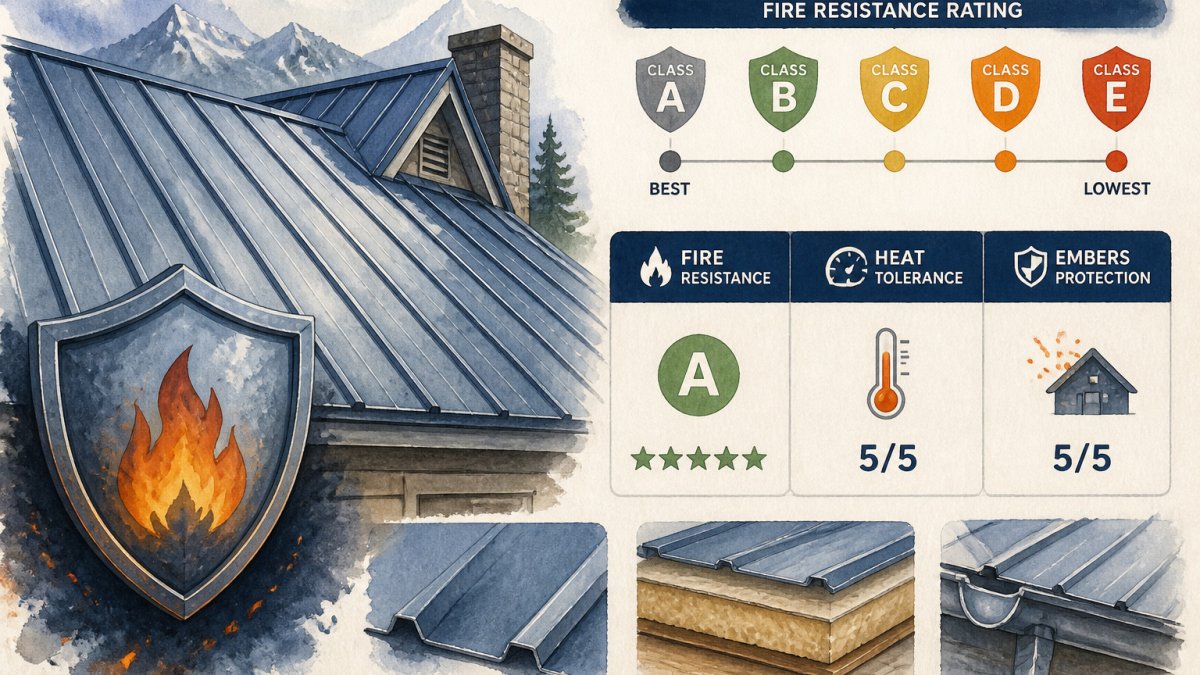
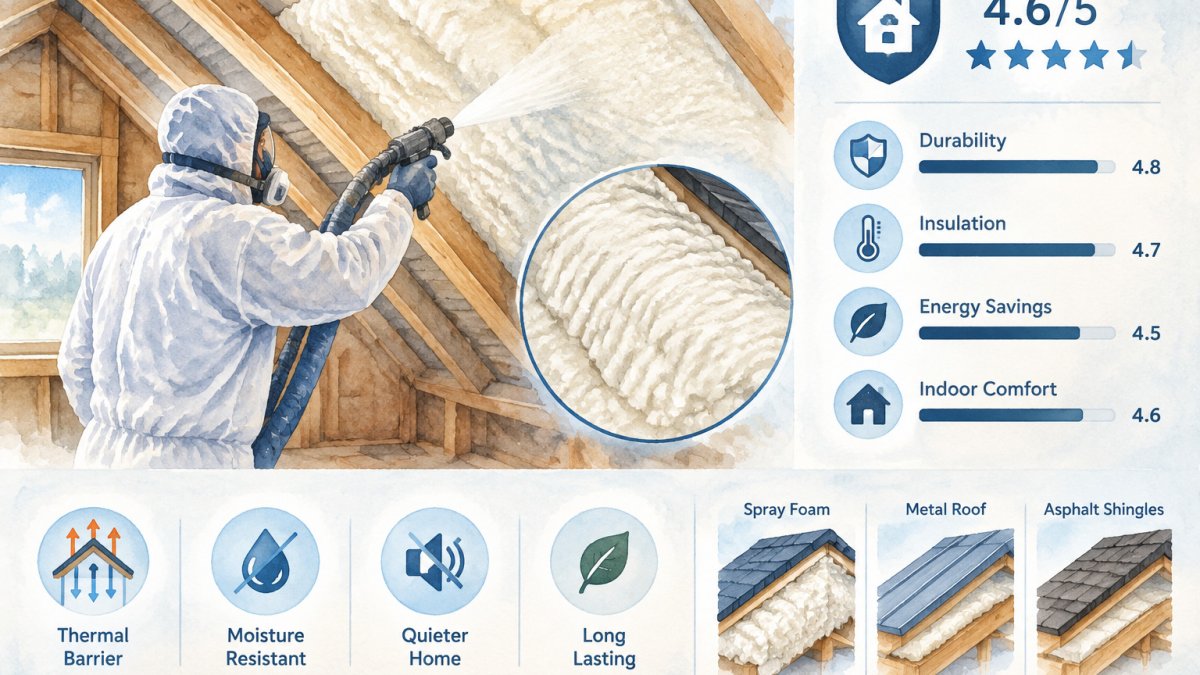
 comparison
Is Spray Foam Roofing Safe for Residential Attics?
Last Updated: November 11, 2026
Quick Summary
Spray foam roofing can be safe in a residential attic when it is properly installed and fully cured. The main risks come from concealed moisture, since the foam seals off attic ventilation and can hide roof leaks until damage is advanced. Installation quality decides how safe the result is.
- Spray foam roofing seals the attic, so moisture has fewer ways out.
- Closed-cell foam can trap water if a leak develops.
- Leaks in foam roofs can stay hidden until damage is well advanced.
- Strong odors that persist after curing can signal installation problems.
- Ask for the manufacturer's data sheet and installer's written re-entry guidance before work begins.
Table of Contents
- What Spray Foam Roofing Changes in a Residential Attic
- Open-Cell vs. Closed-Cell Spray Foam: How the Choice Affects Safety
- Spray Foam Attic Insulation Pros and Cons for Homeowners
- Health, Odor, and Re-Entry: Safety After Proper Curing
- Moisture, Roof Leaks, and Hidden Problems
- Spray Foam Attic Floor or Rafters: Which Application Fits Your Home
- Spray Foam Attic Insulation vs. Fiberglass and Other Options
- Mortgage, Inspection, and Next Steps If You Already Have Spray Foam
- Frequently Asked Questions
What Spray Foam Roofing Changes in a Residential Attic
Spray foam roofing turns an attic from a vented space into a sealed, conditioned one. Foam applied to the underside of the roof deck makes the roof deck, rather than the attic floor, the thermal boundary. Homeowners often ask whether spray foam roofing is safe, and the change it makes to the attic is the central reason. Find out whether spray foam roofing is waterproof and how it handles moisture.
Once the foam covers the roof deck, the attic stops breathing the way a traditional vented attic does. Warm, humid air no longer escapes through ridge and soffit vents. That is the design goal, but it also means any moisture that gets into the assembly has fewer ways out. Understanding this trade-off is the first step in judging whether spray foam fits a particular home.
Homeowners often picture the foam as a simple coat of insulation. In practice, it also acts as an air barrier and a structural layer on the roof deck, which changes how the entire roof assembly performs.
Open-Cell vs. Closed-Cell Spray Foam: How the Choice Affects Safety
Open-cell and closed-cell foams behave very differently, and that difference shapes both performance and risk. Open-cell foam is lighter and more vapor-permeable. It expands to fill irregular gaps around rafters and framing.
Closed-cell foam is denser and works as both a thermal insulator and a vapor barrier. The trade-off is that a closed-cell layer can trap moisture if a leak develops, because water has nowhere to pass through.
Choosing between them is less about which foam is "safer" and more about which assembly your home needs. A poorly matched foam, or one installed without proper curing, creates more risk than the chemistry itself.
Spray Foam Attic Insulation Pros and Cons for Homeowners
Spray foam offers real advantages. It seals air leaks thoroughly, which can reduce heat loss through the attic. It fills odd framing shapes that loose-fill materials miss. It can also extend the service life of an existing roof structure rather than requiring full replacement.
The drawbacks are just as real. Spray foam can hide roof leaks, because water that enters the assembly may not show up on the ceiling until damage is well advanced. Installation quality can vary, and defects can compromise performance. Removal is also costly if the system fails and the homeowner later wants a different roof.
Pros:
- Strong air sealing and reduced heat loss
- Fills complex framing and voids
- Adds rigidity and can extend roof life
- Avoids a full replacement in many cases
Cons:
- Can conceal leaks until significant damage occurs
- Installation quality directly determines performance
- Removal and repair are expensive
- Limits attic ventilation, so moisture management matters more
Health, Odor, and Re-Entry: Safety After Proper Curing
Most of the health concern with spray foam comes from the installation stage rather than the finished product. During application, the components release strong vapors. Exposure during spraying is the period with the highest concentrations, so the questions that matter most for a homeowner are about how the crew manages that window and how the foam behaves once it has fully cured.
After curing, the picture is different. A properly cured closed-cell or open-cell foam is a solid polymer, and the odor most homeowners notice afterward usually fades over the days following installation. Persistent or returning odors are the signal that deserves attention, because they can indicate incomplete curing, a mixing or ratio problem, insufficient ventilation during the cure window, or moisture reaching uncured material.
Because the right re-entry timeline depends on the product and the conditions on the day of installation, there is no single universal number that applies to every home. Treat the manufacturer's technical data sheet and the installer's written re-entry guidance as the controlling documents.
Homeowners with asthma, other respiratory conditions, chemical sensitivities or pregnancy should raise the timing with their doctor before the work starts.
A practical way to judge a finished job is to check three things after the stated cure period has passed: whether a strong chemical smell is still present in living spaces, whether anyone in the household is experiencing new headaches, eye or throat irritation, or breathing symptoms that began after installation, and whether the attic access point shows any sign of unusual residue or dust. If the answer to any of these is yes, stop assuming the job is complete. Document what you observe, contact the installer in writing, and if symptoms persist, speak with a physician.
Watch out: a home that is closed up tightly after installation can hold odors longer, so ask the installer whether ventilation should continue for a set period after the work is finished.
Moisture, Roof Leaks, and Hidden Problems
Moisture is the issue homeowners should watch most closely, and the reason is mechanical. In a vented attic, warm humid air leaves through ridge and soffit vents, carrying moisture away. Once the roof deck is covered with foam, that exit path is gone, so any moisture that enters the assembly has to be managed by the foam itself, the sheathing and the vapor profile of the roof.
Roof leaks are harder to detect with spray foam in place. By the time a stain appears on a ceiling or wall, the moisture may have spread across a wide area of sheathing and framing. See what happens when a spray foam roof is punctured or damaged.
A useful way to organize a suspected problem is to ask three questions in order. First, is the water source on the roof surface, such as a flashing, a vent penetration or a damaged shingle or membrane? Second, is the moisture coming from inside the house, such as a bathroom exhaust that vents into the attic or a condensation pattern on a cold surface? Third, is the damage confined to the foam, or does it extend into the deck or framing?
If you suspect a leak, photograph any staining or dampness and note its location and date. Check bathroom and kitchen exhaust fans to confirm they vent outside the building. Ask a qualified inspector who has experience with foam roofs to examine the underside of the deck. Contact the installer in writing and ask about their warranty inspection process.
Regular inspections, particularly after heavy snow, hail or wind events, can shorten the time between a leak starting and someone finding it. If the same area has needed patching more than once, the foam may not be the root cause, and the flashing, deck or ventilation design deserves a closer look.
Spray Foam Attic Floor or Rafters: Which Application Fits Your Home
Spray foam can go on the attic floor or on the underside of the roof deck, and the choice changes how the attic performs. Floor applications keep the attic vented, which allows moisture to escape but leaves the space less air-sealed. Rafter or roof-deck applications create a sealed, conditioned attic, which improves air sealing but removes the ventilation path.
Neither approach fits every house. A home with significant moisture sources, such as a bathroom fan that vents into the attic, may need a different plan. Ask your contractor which application suits your roof's construction, climate and existing ventilation before committing.
Spray Foam Attic Insulation vs. Fiberglass and Other Options
Fiberglass and blown-in cellulose remain common alternatives. Cellulose is treated for fire resistance, and it allows natural ventilation of the attic. It avoids the chemical odor associated with spray foam during curing, which appeals to homeowners concerned about indoor air quality. Its weakness is limited air sealing compared with spray foam.
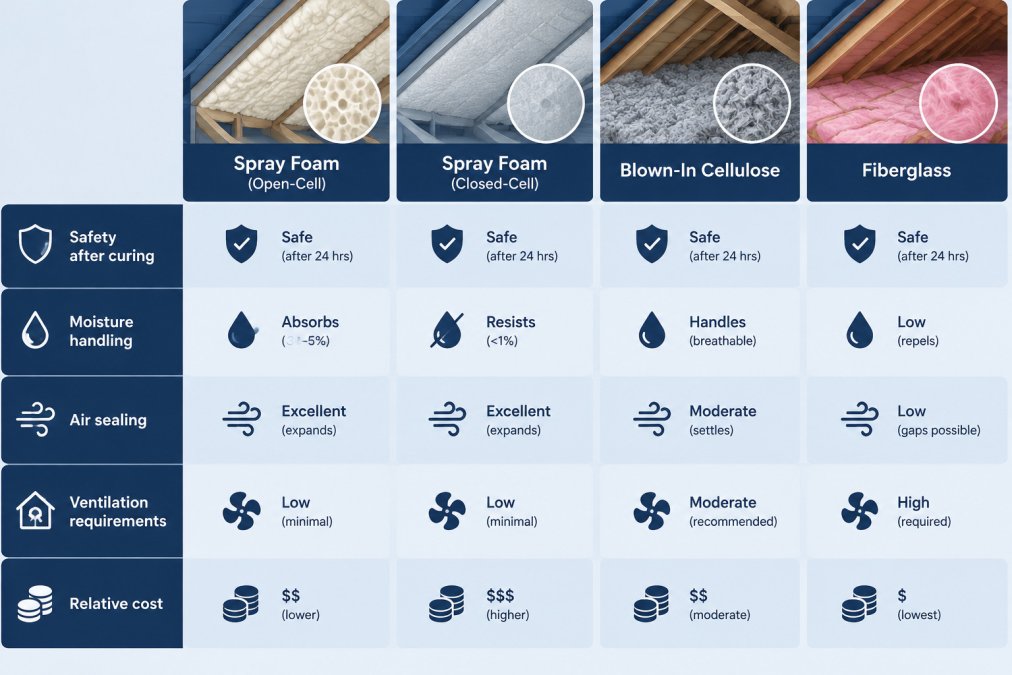
Fiberglass is generally the lowest-cost option and performs well when installed without gaps. It does not seal air leaks as thoroughly, and it loses effectiveness if it gets wet. Spray foam costs more upfront but delivers the strongest air sealing and the most consistent thermal performance when installed correctly.
| Option | Air Sealing | Ventilation | Moisture Handling | Odor During Install | Best For |
|---|---|---|---|---|---|
| Open-cell spray foam | Good | Limited | Vapor-permeable | Strong during cure | Irregular framing, sound control |
| Closed-cell spray foam | Excellent | Sealed | Vapor barrier, traps moisture if leaks occur | Strong during cure | Unvented roof assemblies |
| Blown-in cellulose | Moderate | Maintained | Breathable | Minimal | Indoor air quality concerns |
| Fiberglass batts | Limited | Maintained | Loses value if wet | Minimal | Lowest upfront cost |
Mortgage, Inspection, and Next Steps If You Already Have Spray Foam
If your home already has spray foam roofing, start with a documented inspection. Get written records of the installation, the product used and any warranty. Lenders and home inspectors may ask for this information, and missing documentation can complicate a sale or refinance.
Check your warranty carefully. Coverage and exclusions vary, and some warranties require regular inspections or maintenance to stay valid. Review spray foam roof warranty coverage and exclusions. Ask the installer what the warranty covers and what voids it. Insurance coverage for roof damage also differs by policy, so confirm with your agent how a spray foam roof is treated. Read how metal roof insurance coverage works.
If you are weighing repair against replacement, get more than one assessment. Sun Flex Home Improvement offers a free estimate for spray foam restoration. Compare written scopes from each contractor before deciding, and ask how each one handles warranty support after the work is complete. Learn how to hire a qualified roofing contractor.
Sun Flex Home Improvement is a BBB Accredited Business serving Montana and Northern Wyoming. Ask for a free estimate to see how spray foam restoration compares for your roof.
Our team at Sun Flex Home Improvement has spent more than 25 years helping property owners decide between restoration and replacement. If you are unsure whether spray foam fits your attic, we can inspect the roof and walk you through the options. Request a free estimate to get a clear, written plan for your home.
Frequently Asked Questions
Should you spray foam your attic roof?
Spray foam on the underside of the roof deck can be a reasonable choice for some homes, particularly where creating an unvented or conditioned attic is the goal and ducts or equipment sit in the attic. It is not automatically the right answer. Closed-cell foam acts as a vapor barrier and air seal, while open-cell foam is vapor-permeable and cheaper per board foot. Ventilation design, roof condition and installer qualifications should drive the decision. Get written assessments from more than one qualified contractor, and ask how the design handles moisture and future roof repairs before committing.
What are the biggest problems with spray foam insulation in attics?
The most cited problems are trapped moisture, hidden roof leaks, installation defects and chemical odors during curing. Foam that is applied too thick, too thin or without proper curing can crack, shrink or leave voids. Because closed-cell foam seals the roof deck tightly, a leak can soak into the framing and sheathing before it is visible from inside. Odors usually fade after proper curing and ventilation, but homeowners with chemical sensitivities should discuss this with their physician and their installer before work begins.
Is spray foam attic insulation better than fiberglass?
Spray foam generally air seals better and delivers higher R-value per inch than fiberglass, which makes it attractive in hot or cold climates and for homes with leaky attics. Fiberglass is less expensive, is easier to inspect, and keeps the attic ventilated, which helps manage moisture. Neither is better in every situation. Spray foam suits homes that need an unvented assembly; fiberglass or blown-in cellulose often suits homes where a ventilated attic is preferred. Compare total installed cost and the moisture plan, not just R-value.
What is the healthiest attic insulation option?
Blown-in cellulose and fiberglass are commonly chosen by homeowners who want to avoid chemical off-gassing, because they do not involve curing isocyanate-based foam. Spray foam is considered safe for residential use once fully cured and properly ventilated, but it does release odors during installation and curing. Whatever material you choose, prioritize proper installation, adequate attic ventilation and moisture control, since these affect indoor air quality more than the material alone.