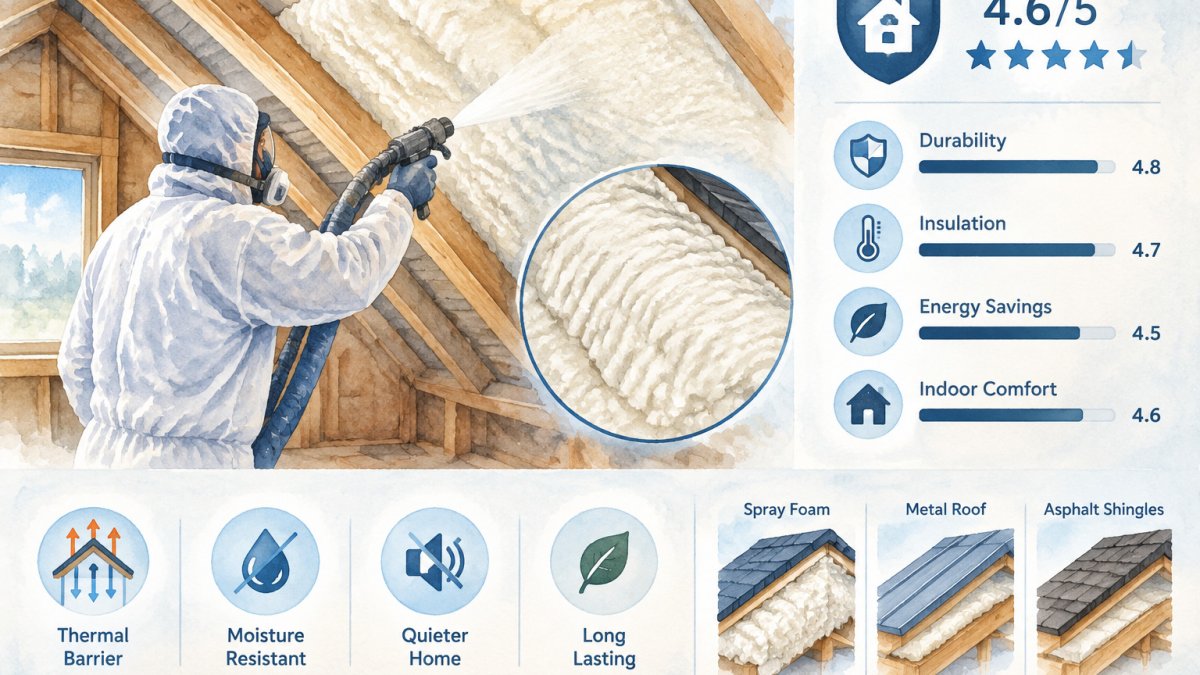
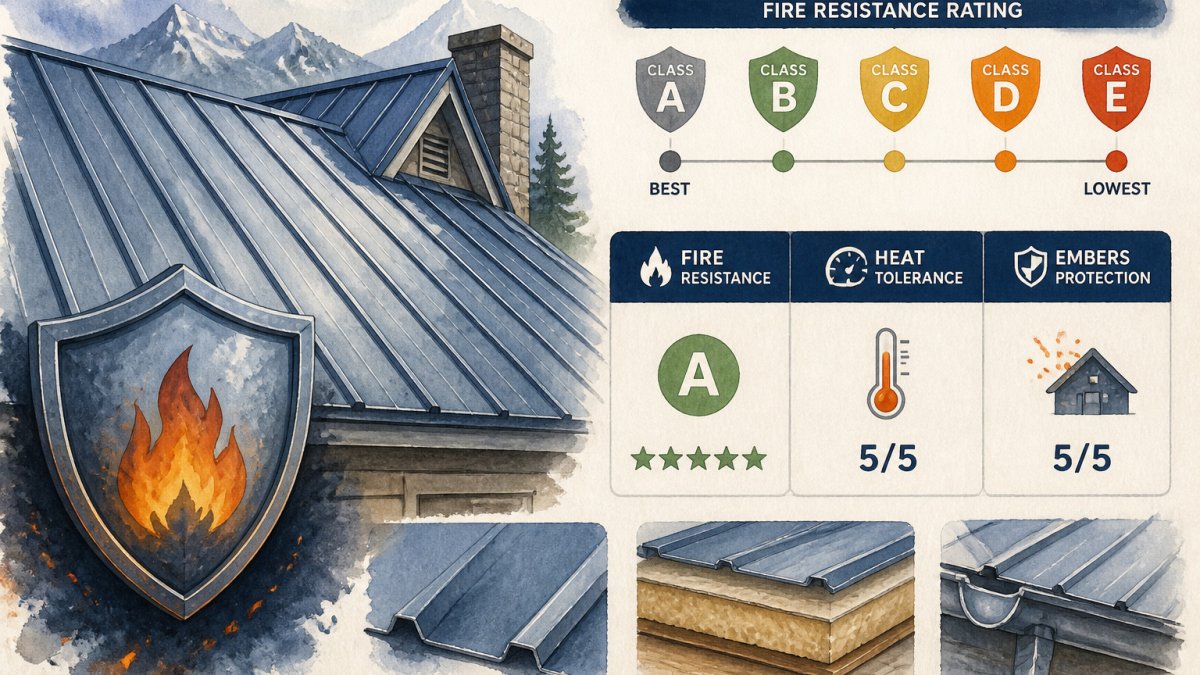
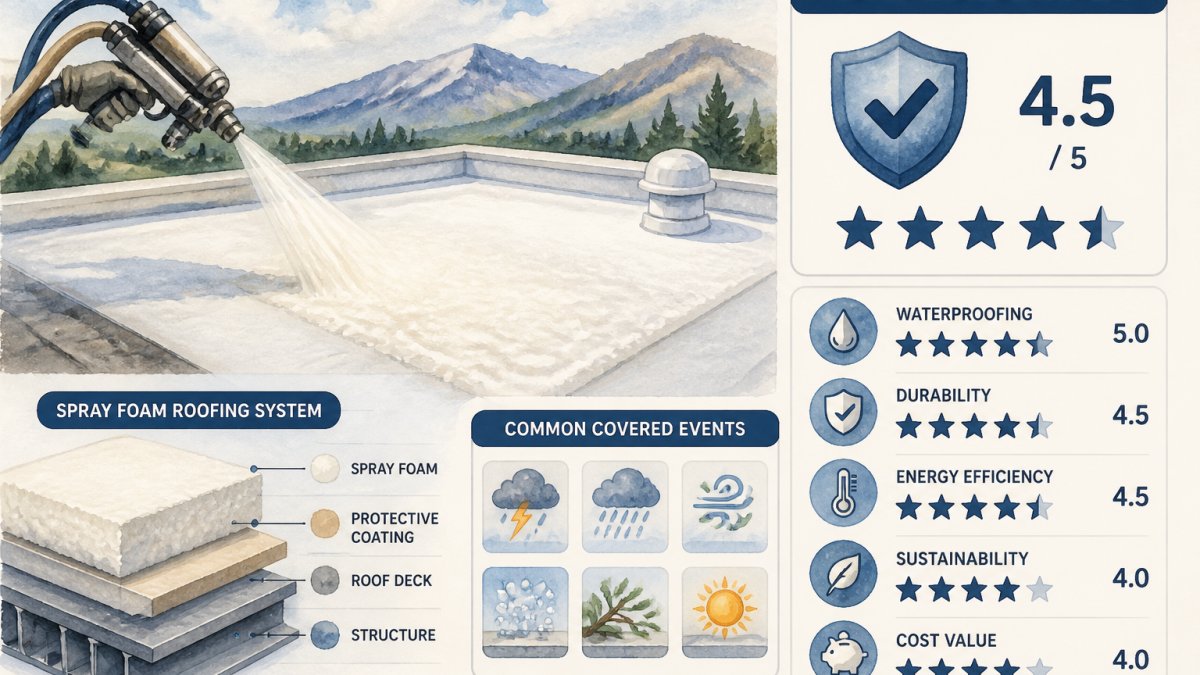
 comparison
Is Spray Foam Roofing Covered by Insurance?
Last Updated: October 23, 2026
Quick Summary
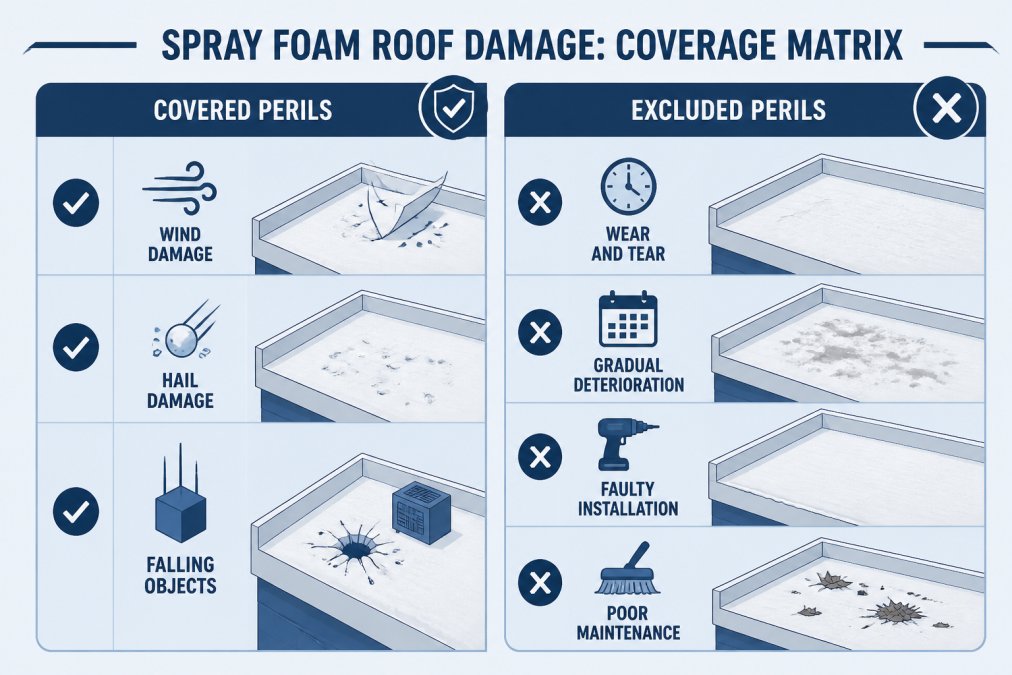
Spray foam roofing is covered by homeowners insurance when damage results from a covered peril, not from age or poor installation. Wind, hail, and falling objects are typically covered, while wear and tear, gradual deterioration, and faulty installation are excluded.
- Say spray foam roofing system, not spray foam insulation, when calling your insurer.
- Documentation must answer what caused the damage and what it costs to restore the roof.
- Underwriters often want the age of the most recent coating, not the original foam install date.
- Disclose a spray foam roof in writing at binding, before installation, and at every renewal.
- Damaged sections can often be cut out and re-foamed without a full tear-off.
Table of Contents
- How Homeowners Insurance Roof Coverage Treats Spray Foam Roofing
- Covered Perils: When a Spray Foam Roof Damage Insurance Claim Applies
- Exclusions: Wear, Aging, and Installation Defects
- Roof Leak Insurance Coverage and Water Damage
- Dwelling Coverage Limits, Deductibles, and Actual Cash Value
- Roof Insurance Claim Documentation: Evidence That Gets Claims Approved
- Underwriting, Eligibility, and Policy Restrictions for Spray Foam Roofs
- Repair vs. Replacement: How Insurers Settle Spray Foam Claims
- Frequently Asked Questions
How Homeowners Insurance Roof Coverage Treats Spray Foam Roofing
According to Liberty Mutual's guidance on roofs and home insurance, homeowners insurance generally covers roof damage from sudden events but not normal wear and tear or age. That distinction matters enormously for spray foam roofing.
At Sun Flex Home Improvement, we've spent over 25 years in the industry, and the questions we field most often are about claims, not installation.
Spray Foam Roofing vs. Spray Foam Attic Insulation
These are two different products, and insurers treat them differently. Spray foam roofing is a monolithic, seamless membrane applied to the roof deck, exposed to weather and impact. Spray foam attic insulation sits inside the building envelope and is not a roofing material.
A common mistake is assuming a policy that accepts spray foam insulation automatically covers a spray foam roof. RetroFoam's guidance on spray foam insulation and home insurance notes that major insurers don't treat spray foam insulation alone as a reason to deny coverage, but that's an insulation question, not a roofing one.
Covered Perils: When a Spray Foam Roof Damage Insurance Claim Applies
A spray foam roof damage insurance claim applies when a covered peril causes sudden, accidental damage. Wind, hail, and falling objects are the big three, and spray foam's seamless surface doesn't change that.
Wind, Hail, and Falling Objects
Wind damage on spray foam usually shows as lifted or torn coating at edges and penetrations, not missing shingles. Hail damage appears as dimpling or coating fractures.
Document the cause carefully. A puncture from a falling branch is a covered loss. A puncture from a screw backing out of an old penetration is a maintenance issue. Same hole, different outcome.
Exclusions: Wear, Aging, and Installation Defects
Exclusions do the heavy lifting in most denials. Wear and tear, gradual deterioration, and poor maintenance are excluded on virtually every home insurance policy, regardless of roof material. Spray foam is no exception.
Faulty installation and workmanship defects are also excluded, and this is where spray foam claims get contentious. If a roof fails because the foam was applied over a wet deck or at the wrong thickness, the insurer will point to installation quality, not a covered peril.
Roof Leak Insurance Coverage and Water Damage
Roof leak insurance coverage hinges on the leak's origin. Water damage from a sudden, accidental breach, like a storm-driven puncture, is generally covered. Water damage from a long-developing leak caused by deteriorated coating or neglected maintenance usually isn't.
Spray foam's watertight barrier is a genuine advantage here: a properly maintained foam roof sheds water as a single membrane with no seams to fail.
Dwelling Coverage Limits, Deductibles, and Actual Cash Value
Dwelling coverage is the portion of your policy that pays to repair or rebuild the structure, and your roof claim runs through it. Three numbers decide what you actually collect:
- Coverage limit: the cap on the dwelling portion of your policy
- Deductible: your out-of-pocket share before the insurer pays
- Settlement basis: replacement cost value or actual cash value
Actual cash value pays depreciated value; replacement cost value pays what it takes to rebuild today. Many policies use actual cash value for roofs past a certain age, which can leave a significant gap. Read your policy terms before you assume a full replacement is funded.
Roof Insurance Claim Documentation: Evidence That Gets Claims Approved
On a spray foam roof, the claim turns on two questions the adjuster must answer from your file: what caused the damage, and what it costs to put the roof back the way it was. Your documentation has to answer both in the language of the policy, not the roofing trade.
Build the file before you call
Assemble this before you open a claim, because the first adjuster conversation sets the frame:
- Wide and close photos of the damage from multiple angles, with a tape measure or coin for scale, dimpling and coating fractures flatten out in photos without a reference object
- Photos of the surrounding area showing the cause (downed limb, hail stones, debris field, impact marks on nearby surfaces)
- Your original installation paperwork: contract, product data sheets, permit, and manufacturer warranty
Separate covered damage from excluded defects in the file itself
The adjuster's job is to assign a cause. Help them by organizing evidence into two piles:
- Sudden, accidental, external: hail impact marks, wind-lifted or torn coating at edges and penetrations, punctures from falling objects, debris evidence. These map to covered perils.
- Gradual or workmanship-related: blistering from moisture trapped under the foam, disbonding from a wet deck at install, thin application, unchecked ponding, skipped recoats. These map to exclusions.
If your file mixes the two, the adjuster will default to the exclusion. Separate them, with dates and contractor notes, and you make the covered cause the easier conclusion.
How settlement math actually works on a foam roof
Documentation doesn't just prove cause; it drives the payout. Three policy mechanics decide what you collect:
- Replacement cost value (RCV) versus actual cash value (ACV). RCV pays what it takes to restore the roof today; ACV pays depreciated value. Many policies apply ACV to roofs past a certain age, and on a foam roof the depreciable base includes the coating system, not just the foam. That gap can be large, so confirm which basis your policy uses before you assume a full restoration is funded.
- Deductible. Your out-of-pocket share comes off the top of the loss, and some policies carry a separate, higher wind or hail deductible expressed as a percentage of dwelling coverage rather than a flat dollar amount. Read the declarations page, not the marketing summary.
- Repair versus replacement. Spray foam often favors repair, because damaged sections can be cut out and re-foamed and the coating re-applied without a full tear-off. That repairability usually lowers the loss, which is good for the carrier and can be good for you if it keeps the claim under a deductible or preserves a claims-free discount.
Communicate with the insurer in policy terms
When you file, describe the loss by peril and date, "wind-driven debris punctured the roof membrane on [date]", not by material. Send the contractor's written assessment with the photos, and ask the adjuster to confirm in writing which settlement basis and deductible apply.
A complete file does not guarantee approval, but an incomplete one almost guarantees a fight. On a seamless membrane, the evidence that wins is dated, organized, and tied to a specific covered event.
Underwriting, Eligibility, and Policy Restrictions for Spray Foam Roofs
Underwriting is where spray foam roofing diverges most sharply from asphalt shingles, and it's the part of the coverage question most homeowners never hear until renewal. A spray foam roof is not a standard risk on most carrier appetite guides, so the underwriter, not the claims adjuster, often decides whether the roof is insurable at all.
What underwriters actually look at
When a carrier reviews a home with spray foam roofing, the questions tend to cluster around four things:
- Roof age and remaining service life. Carriers commonly decline roofs past a certain age or with less than a set number of useful years left. Spray foam roofs are recoated rather than replaced, so the "age" the underwriter wants is the age of the most recent protective coating, not the original foam install date.
- Installation credentials. Was the system installed by a licensed roofing contractor, with permits and inspection records? A spray foam roof installed without a permit trail is a common decline or surcharge trigger.
- System type and coating. A closed-cell foam roof with a maintained acrylic or silicone coating reads very differently to an underwriter than an exposed, uncoated foam surface. Coating condition is often the single biggest factor in whether the roof is accepted.
Progressive's explanation of how roof type affects insurance confirms that roof material, age, and shape factor into cost and eligibility, but it does not address spray foam specifically, which is exactly why you should get the answer in writing from your own carrier rather than infer it from a general page.
Disclosure timing matters more than the roof itself
The most common underwriting failure is not the roof, it's the omission. If a spray foam roof was installed after the policy was bound and the carrier was never told, the underwriter may treat the undisclosed material change as a rating error, leading to a mid-term premium adjustment, a non-renewal, or, worst case, a claim dispute over material misrepresentation.
Disclose the roof in writing at three points:
- At purchase or first binding, if the roof is already spray foam.
- Before installation, if you are re-roofing an insured home. Ask the carrier in writing whether the new system is acceptable and what documentation they want.
- At every renewal, with updated recoat and inspection records.
Policy restrictions to read for
Beyond eligibility, read the policy form for restrictions that hit foam roofs specifically:
- Cosmetic damage exclusions. Some forms exclude damage that is purely cosmetic, hail dimpling on a coating can fall into that gap even when the membrane is intact.
- Matching exclusions. If only part of the roof is damaged, a matching exclusion can limit payout to the damaged section rather than a uniform re-coat of the whole roof.
- Ordinance or law coverage. If a repair triggers a code upgrade, the base policy may not pay for it without an endorsement.
What to do if a carrier declines
A decline is not the end of the search. Ask the underwriter to state the reason in writing, then shop the risk to carriers that write older or non-standard roofs, or work with an independent agent who can place it. Often the fix is documentation, a current inspection report and recoat records, rather than a different roof.
Repair vs. Replacement: How Insurers Settle Spray Foam Claims
Insurers settle spray foam claims by comparing repair cost to replacement cost, then applying your policy's settlement basis. Spray foam often favors repair, since damaged sections can be cut out and re-foamed without tearing off the whole roof, one reason restoration can cost far less than a full replacement.
That's also where we come in. Sun Flex Home Improvement specializes in spray foam roofing restoration, and our process can save property owners up to half the cost of a new roof while extending the life of the existing structure.
Frequently Asked Questions
Does homeowners insurance cover damage to a spray foam roof?
Most homeowners insurance policies cover spray foam roofing damage from sudden events like wind, hail, and falling objects. Coverage depends on the cause of damage rather than the roofing material itself. Gradual deterioration, wear and tear, and poor maintenance are typically excluded. Check your policy terms and confirm with your insurance company whether spray foam roofing is listed as an acceptable roofing material before filing a claim.
Will insurance pay to replace a spray foam roof?
Insurance may pay for roof replacement when a covered peril causes damage beyond repair. The settlement depends on your dwelling coverage limits, deductible, and whether your policy uses actual cash value or replacement cost value. A licensed contractor and an adjuster typically assess whether repair or full replacement is needed. Review your policy terms carefully, since roof age and condition can affect how much the insurance company pays out.
Does homeowners insurance cover a roof leak caused by wear and tear?
No. Roof leak insurance coverage generally applies to sudden and accidental damage, such as a storm opening a seam. Leaks traced to wear and tear, gradual deterioration, or poor maintenance are excluded under most home insurance policies. If a covered event caused the leak, document the damage with photos and a roof inspection report. Keep maintenance records to show the roof was maintained, which strengthens your claim.
How do I file a homeowners insurance claim for spray foam roof damage?
Start by documenting the damage with dated photos and notes, then contact your insurance company to open a claim. A licensed contractor can provide a damage assessment and written repair estimate. Keep all roof insurance claim documentation, including maintenance records and contractor liability insurance details. The adjuster will review the covered loss against your policy terms, deductible, and coverage limits before approving the claim.
Can an insurer deny coverage because a spray foam roof was installed incorrectly?
Yes. Faulty installation and workmanship defects are common policy exclusions, so an insurer can deny a claim when damage traces to improper application rather than a covered peril. This is why hiring a licensed contractor with proper installation quality matters. Keep documentation of the original installation and any warranty. If a covered event like hail damage occurs later, that documentation helps separate covered damage from excluded installation defects.
Filing a roof claim is stressful enough without wondering whether your material will be questioned. If your spray foam roof has storm damage and you need a clear damage assessment for your insurer, get a free estimate from Sun Flex Home Improvement. Our team brings over 25 years of experience, watertight restoration work, and the documentation your claim needs to move forward.