 how-to
How to Extend Asphalt Shingle Life With Regular Maintenance
Last Updated: October 30, 2026
Quick Summary
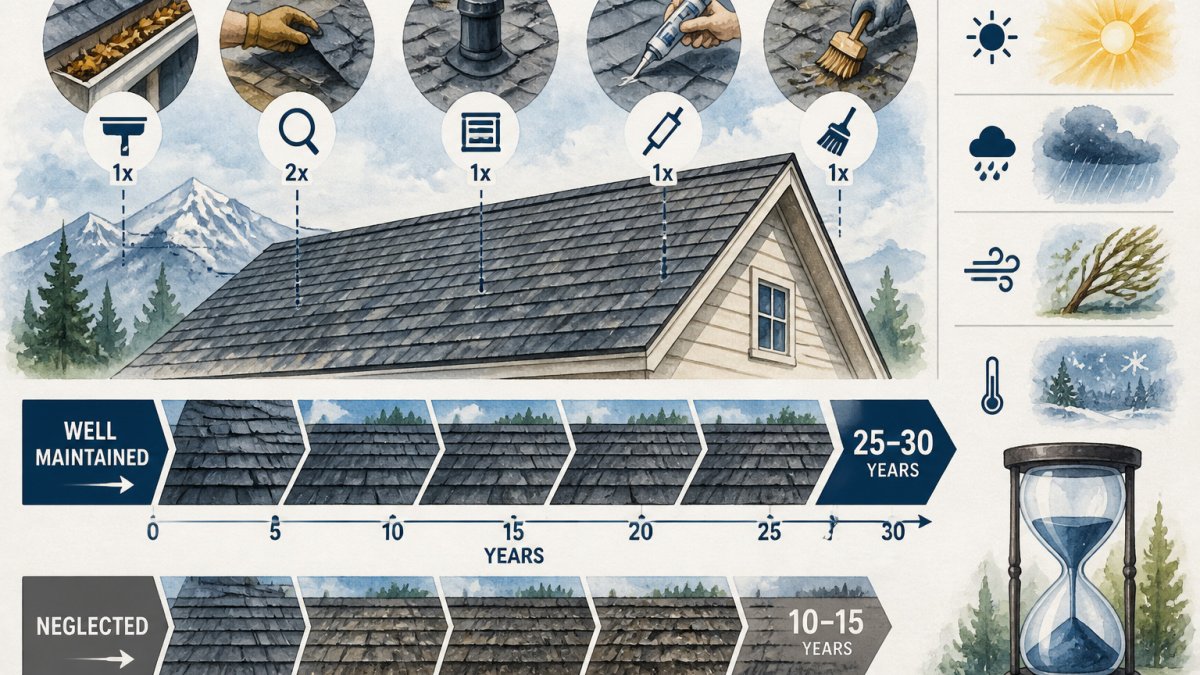
Asphalt shingle life depends mainly on steady routine upkeep: regular inspections, clearing debris and gutters, trimming overhanging branches, and controlling moss and moisture. Most asphalt shingle roofs are built to last roughly 25 to 35 years, and small problems caught early are far cheaper to fix than a full replacement.
- Run a quick ground-level roof check monthly and a fuller inspection every spring and fall.
- Clear leaves, needles and debris so moisture can dry between rains.
- Trim branches that hang over the roof or rub against shingles.
- Never pressure wash shingles, since it strips granules and can void warranties.
- Repair exposed underlayment or water intrusion promptly, because waiting usually costs more.
Table of Contents
- Why Asphalt Shingle Life Depends on Routine Upkeep
- Set Up a Seasonal Maintenance Schedule
- Step 1: Run an Asphalt Shingle Roof Inspection Checklist
- Step 2: Clear Debris, Gutters and Overhanging Branches
- Step 3: Control Moss, Algae and Moisture
- Step 4: Follow a Roof Maintenance Checklist Year-Round
- Telling Normal Aging From Damage That Needs Repair
- Booking Your Free Estimate With Sun Flex Home Improvement
- Frequently Asked Questions
Asphalt shingles are the most common roofing material on American homes, and most of them are built to last roughly 25 to 35 years. Roofs that reach or beat their expected life are almost always the ones that got steady, unglamorous attention every season. This guide walks through a practical maintenance routine that helps asphalt shingle life go the distance, plus the signs that tell you when a repair is no longer enough.
Why Asphalt Shingle Life Depends on Routine Upkeep
Shingles do not usually fail overnight. They wear down slowly under sun, wind, freezing temperatures, and moisture, and small problems grow into big ones when nobody looks. Routine upkeep catches those problems while they are still cheap to fix.
Good maintenance does three things for your roof:
- Catches small damage early, such as a lifted tab or a cracked seal
- Keeps water moving off the roof instead of pooling or backing up under shingles
- Protects the roof deck and attic from rot, mold, and insulation damage
Think of upkeep as the difference between replacing a few shingles and replacing the whole roof. Regular care is the cheapest way to get the most years out of the material you already have.
Set Up a Seasonal Maintenance Schedule
A simple calendar keeps maintenance from slipping. Most homeowners do well with two full checks a year, plus a quick look after any major storm.
- Spring: Inspect for winter damage, clear debris, and check gutters
- Fall: Clear leaves, trim branches, and check flashing before snow arrives
- After storms: Look for missing, loose, or displaced shingles
Put these dates in your phone. A reminder takes thirty seconds to set and can save thousands in later repairs. For a broader view of extending roof life over time, see our guide on how to extend roof life: 2026 guide.
Step 1: Run an Asphalt Shingle Roof Inspection Checklist
A useful inspection is less about spotting one dramatic problem and more about repeating the same checks on a schedule so small changes stand out. A useful cadence combines a quick ground-level look monthly, a fuller seasonal inspection in spring and fall, and a professional inspection every one to three years depending on the roof's age and local weather.
Monthly, from the ground (5 minutes):
- Scan the roofline with binoculars for missing, lifted, or visibly curled shingles
- Look for granules collecting at downspout outlets or in gutter runs
- Note new dark streaks, moss patches, or staining on the roof surface
- Check for sagging along the ridge or eaves
- Look at the ceiling inside for new water stains or discoloration
Seasonal, spring and fall (30-60 minutes):
- Repeat every monthly check
- Inspect flashing around chimneys, vents, skylights, and valleys for lifted edges, cracked sealant, or rust
- Clear gutters and downspouts and confirm water flows freely
- Trim branches within several feet of the roof
- Enter the attic and look for water stains on the roof deck, damp or compressed insulation, and daylight showing through gaps
- Photograph anything that looks different and note the date
Professional inspection (every 1-3 years, or after any major storm):
A qualified roofer can walk the roof safely, check underlayment and deck condition, and assess whether the flashing and ventilation are performing as intended. Ask for a written summary of findings so you can track changes over time.
Safe DIY limits: Stay on the ground unless you have a stable, dry, low-slope roof and proper fall protection. Never walk a steep pitch, a wet surface, or a roof covered in moss or debris. Most serious roof injuries involve homeowners working alone on slick or steep surfaces. Use binoculars, a camera with zoom, and a long extension pole from the ground for debris removal.
Distinguishing normal aging from repair-worthy damage:
| Condition | Usually normal aging | Needs prompt repair |
|---|---|---|
| Granule loss | Light loss in gutters over many years | Bare patches or heavy loss within a few years |
| Curling | Slight edge lift on older shingles | Curled, cupped, or broken edges |
| Cracking | Hairline cracks in older shingles | Open cracks or split tabs |
| Missing shingles | None | Any missing piece exposes the underlayment |
| Lifted edges | None | Edges lifting after wind or storms |
| Flashing | Minor surface wear | Lifted, cracked, or rusted flashing |
Any exposed underlayment, active water intrusion, or soft spot in the deck deserves prompt attention. Waiting usually costs more later.
Step 2: Clear Debris, Gutters and Overhanging Branches
Debris holds moisture against shingles, and moisture speeds up aging. Clear the surface and the drainage system on a regular schedule:
- Remove leaves, pine needles, and twigs by hand or with a soft-bristle broom
- Flush gutters and downspouts so water flows freely
- Trim branches that hang over the roof or rub against shingles
- Keep tree limbs at least several feet away from the roofline
Overhanging branches also drop debris and give pests and animals easy access. Trimming them is one of the highest-value jobs on the list.
Watch out: Never walk a steep or wet roof to clear debris. Most serious roof injuries happen to people working alone on slick surfaces. Use a long extension pole from the ground or hire a professional.
Step 3: Control Moss, Algae and Moisture
Moss and algae are symptoms of moisture that stays on the roof too long. Moss holds water against shingles, lifts tab edges, and can work roots under the surface; algae (often the dark streaks seen on north-facing slopes) is usually cosmetic but signals a damp, shaded environment that also ages shingles faster. In regions with freeze-thaw cycles, high heat, heavy rain, or coastal humidity, the same conditions that feed growth also stress the shingle mat and sealant.
Climate-specific patterns to watch:
- Freeze-thaw cycles: Water that seeps under lifted tabs freezes, expands, and pries shingles further. Keep edges sealed and clear ice dams before they form.
- High heat and sun: UV dries shingles and makes them brittle; shaded, damp areas are where growth takes hold. Balance shade and airflow.
- Heavy rain and wind: Driving rain can force water under lifted tabs; check flashing and sealant after every major storm.
- Coastal or humid conditions: Salt air and persistent moisture accelerate granule loss and growth; rinse off salt residue and keep drainage clear.
Product and treatment cautions:
- Avoid pressure washing. High-pressure water strips granules, voids many manufacturer warranties, and can force water under shingles. Use low-pressure rinsing or a soft-bristle broom instead.
- Use cleaners labeled for asphalt shingles. Follow the manufacturer's dilution and dwell-time instructions; some bleach-based products can discolor shingles or damage plants below. Rinse surrounding landscaping before and after.
- Skip rejuvenation coatings and shingle paints unless the manufacturer explicitly approves them. Many coatings trap moisture or void warranties, and results are inconsistent.
- Check your warranty first. Most shingle manufacturers specify acceptable cleaning methods and exclude damage from improper cleaning or coatings.
Practical moisture control:
- Keep the roof clear of debris so moisture can dry between rains
- Improve airflow where heavy tree shade keeps the roof damp
- Confirm attic ventilation is working, poor airflow traps heat and humidity that damage shingles from underneath
- Direct downspouts away from the foundation so water does not wick back toward the roof structure
Step 4: Follow a Roof Maintenance Checklist Year-Round
Turn the steps above into a repeatable checklist you can use every season:
- Inspect shingles for cracks, curling, and missing pieces
- Check flashing around chimneys, vents, and valleys
- Clear gutters and downspouts
- Trim overhanging branches
- Look for moss, algae, or dark staining
- Check the attic for leaks, damp insulation, and light gaps
- Write down what you found and the date
Keeping a written log helps you spot trends. A single granule-filled gutter means little. The same gutter full every spring tells you something about your roof's condition.
Telling Normal Aging From Damage That Needs Repair
Some wear is expected. Granules slowly wash off, and shingles gradually lose flexibility. The question is whether what you see is normal aging or damage that needs prompt attention.
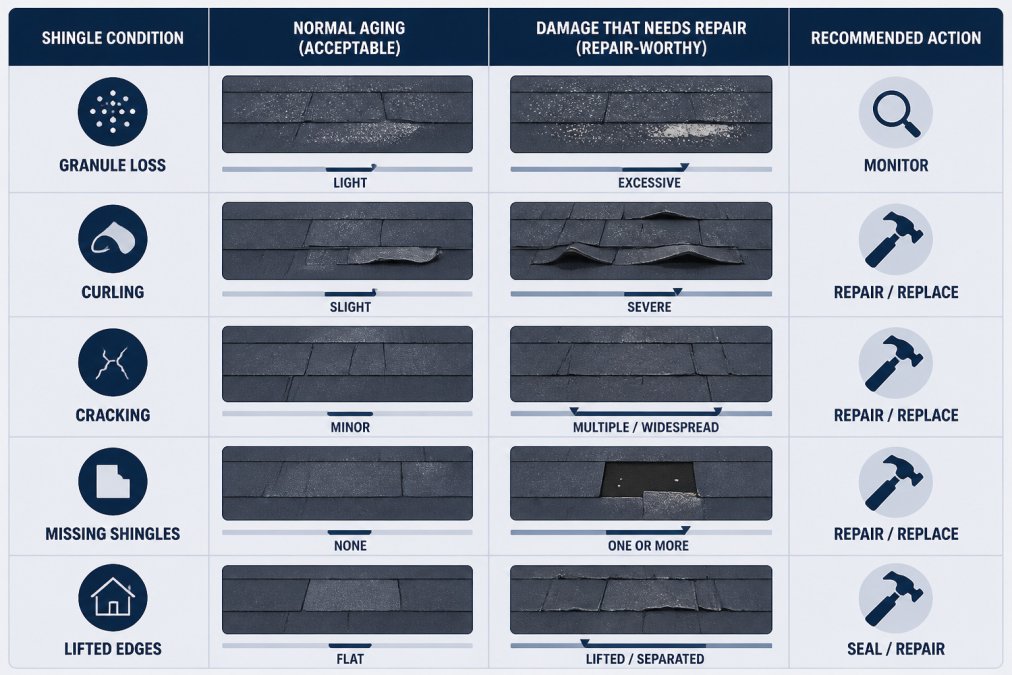
| Condition | Usually Normal Aging | Needs Repair |
|---|---|---|
| Granule loss | Light loss in gutters over many years | Bare patches or heavy loss within a few years |
| Curling | Slight edge lift on older shingles | Curled, cupped, or broken edges |
| Cracking | Hairline cracks in older shingles | Open cracks, split tabs |
| Missing shingles | None | Any missing piece exposes the underlayment |
| Lifted edges | None | Edges lifting after wind or storms |
When damage is extensive, you may be comparing a repair against a full replacement. Our guide on roof leak repair vs replacement: a 2026 guide explains how to weigh those options. For a closer look at active leaks specifically, see how to stop roof leaks: 7-step repair guide for 2026.
Any exposed underlayment or sign of water intrusion deserves prompt attention. Waiting usually costs more later.
Booking Your Free Estimate With Sun Flex Home Improvement
If your inspection turns up damage you are not sure about, a professional assessment is the best next step. Sun Flex Home Improvement, a BBB Accredited Business with over 25 years of experience, offers a free estimate for residential and commercial roofs across Montana and Northern Wyoming. The team can help you weigh whether a repair, a restoration, or a replacement makes the most sense for your property.
Pricing depends on the size of the roof, the extent of the damage, and the materials chosen, so the best way to get a real number is to request a quote directly from Sun Flex Home Improvement. Ready to take the next step? Get a residential roof restoration quote in 7 steps to see what the process looks like.
Frequently Asked Questions
What is the typical lifespan of asphalt shingles?
Asphalt shingles commonly last roughly 20 to 30 years, with three-tab shingles often on the shorter end and architectural shingles lasting longer. Actual service life depends on shingle grade, attic ventilation, climate and how consistently the roof is maintained. Regular inspections and prompt repairs of small problems like lifted tabs or clogged gutters can help a roof reach the upper end of its range, while neglected debris, moss and moisture problems tend to shorten it.
How often should an asphalt shingle roof be inspected?
Most homeowners should inspect their asphalt shingle roof at least twice a year, once in spring and once in fall, and after any severe storm with strong winds, hail or heavy snow. Spring checks catch winter damage and ice dam effects, while fall checks prepare the roof for winter loads. A quick ground-level look plus a careful check of the flashing, gutters and visible shingles is often enough between professional inspections.
Can cleaning gutters help extend the life of a shingle roof?
Yes. Clogged gutters hold water against the edge of the roof, which can push moisture under the shingles, rot the fascia and promote ice dams in colder months. Clearing leaves and debris from gutters and downspouts at least twice a year keeps water moving away from the roof edge. Make sure downspouts discharge well away from the foundation, and avoid pressure washing shingles, since it strips protective granules and shortens service life.
When should asphalt shingles be repaired or replaced?
Repair isolated problems such as a few missing or loose shingles, minor flashing gaps or small leaks around vents. Consider replacement when shingles are curling, cracking or bald across large areas, when granule loss exposes the mat, when water stains appear on the attic ceiling in several places, or when the roof is near the end of its expected service life. A professional inspection can help you compare the cost of repairs against restoration or full replacement before deciding.