 how-to
Get a Residential Roof Restoration Quote: 7 Steps
Table of Contents
- When to Choose Roof Restoration Over Replacement
- What to Expect During a Roof Inspection
- How to Get a Residential Roof Restoration Quote
- How to Evaluate Roofing Contractor Quotes
- Affordable Roof Replacement Alternatives to Full Replacement
- Factors Affecting Your Roof Restoration Pricing
- Financing and Insurance Options for Your Roofing Project
- Frequently Asked Questions
Last Updated: September 19, 2026
When to Choose Roof Restoration Over Replacement
Roof restoration and roof replacement serve different purposes, and choosing between them depends on your roof's current condition and your budget. Restoration involves cleaning, repairing, and coating your existing roof structure to extend its lifespan and improve performance. Replacement means removing the old roof entirely and installing a new one from scratch.
The decision often comes down to structural integrity. If your roof has minor leaks, surface damage, or is showing early signs of wear, restoration is typically the better choice. A licensed contractor can assess whether your roofing system still has years of useful life remaining. If the underlying structure is sound, restoration can add 10-15 years to your roof's longevity at a fraction of replacement costs.
However, if your roof has extensive damage, multiple failed repairs, or severe structural issues, replacement may be the only viable option. At Sun Flex Home Improvement, we help property owners across Montana and Northern Wyoming understand when restoration makes financial sense and when replacement is necessary. The key is getting a thorough roof inspection before committing to either approach.
What to Expect During a Roof Inspection
A professional roof inspection is the foundation for getting an accurate residential roof restoration quote. During this process, a licensed contractor examines your roof's condition, identifies damage, and determines whether restoration or replacement is appropriate.
The inspection typically begins with a visual assessment from the ground and continues onto the roof itself. The contractor looks for signs of water damage, missing or damaged shingles, deteriorated flashing, and structural issues. They'll check the roof pitch, ventilation, and underlying roofing materials to understand the full scope of work needed.
Inside your home, the inspector checks for water stains, mold, or signs of leaks in the attic or upper floors. These interior clues reveal whether water intrusion is an active problem or a past issue that's already been resolved. A thorough inspection takes 1-2 hours and should result in detailed documentation of findings.
The inspector will measure your roof's square footage, note the type of roofing material, and assess the age and condition of components like underlayment and flashing. This information becomes critical when you receive your residential roof restoration quote from multiple contractors.
How to Get a Residential Roof Restoration Quote
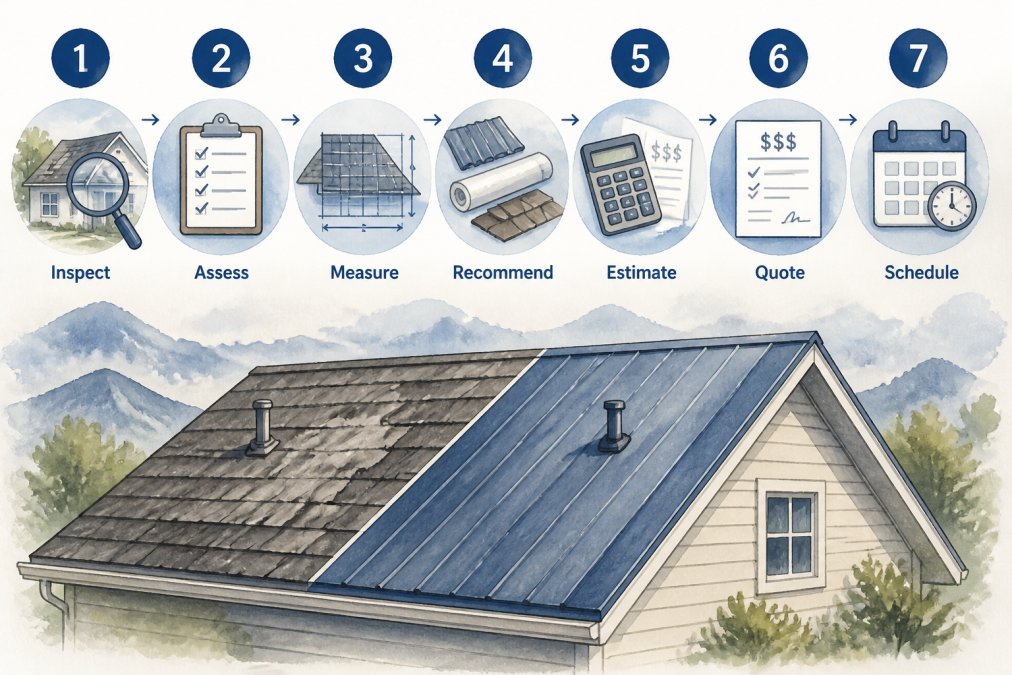
Getting a residential roof restoration quote involves a systematic process that ensures you have accurate information for comparing contractors and making an informed decision. Follow these steps to gather competitive quotes and evaluate your options.
Step 1: Document Your Roof's Current Condition
Start by documenting visible damage and issues with your roof. Take photos and videos from the ground showing damaged areas, leaks, or wear patterns. Note when problems started, whether you've had previous repairs, and how long you've lived in the property. This documentation helps contractors understand your roof's history and current state.
Create a simple list of concerns: interior leaks, missing shingles, sagging areas, energy efficiency issues, or storm damage. Include the approximate date each problem appeared. This information becomes part of your residential roof restoration quote request and helps contractors provide accurate estimates.
Step 2: Measure Your Roof's Square Footage
Knowing your total square footage can be helpful for getting an accurate residential roof restoration quote. You can estimate this by measuring your home's footprint and accounting for roof pitch, or you can let contractors measure during their inspection.
If you want to measure yourself, use your home's blueprints or measure the length and width of each roof section from the ground. Multiply length by width for each section, then add them together. Remember that pitched roofs have more surface area than your home's footprint suggests, steeper pitches mean larger square footage.
Contractors will verify your measurements during their site visit, so your estimate doesn't need to be perfect. However, having a ballpark figure helps you communicate the scope of work and compare quotes more effectively.
Step 3: Contact Licensed Contractors for Free Estimates
Reach out to multiple licensed contractors in your area and request free estimates for your residential roof restoration quote. Look for contractors with proper licensing, insurance, and BBB accreditation. Many reputable roofing companies offer free consultations and estimates without obligation.
When contacting contractors, provide your square footage estimate, roof material type, and description of current problems. Ask specifically about their experience with roof restoration projects and whether they offer free estimates. Request that they conduct a thorough roof inspection as part of the estimate process.
Sun Flex Home Improvement offers free estimates for residential and commercial roofing projects across Montana and Northern Wyoming. Our team brings over 25 years of industry experience to every inspection and quote, ensuring you have accurate information for your decision.
Step 4: Request a Detailed Quote Breakdown
A quality residential roof restoration quote should break down costs into specific categories: labor, materials, permits, disposal, and any additional services. This transparency helps you understand where your money goes and compare quotes fairly across contractors.
Ask contractors to itemize labor costs separately from material costs. Request details on the specific materials they'll use, asphalt shingles, metal roofing, spray foam coating, or other options. Include costs for roofing underlayment, flashing repair, and roof ventilation improvements if applicable.
The quote should also specify the project timeline, warranty coverage, and any guarantees. A detailed breakdown prevents surprises and makes it easier to spot significant differences between contractors' pricing.
Step 5: Ask About Warranty Coverage and Guarantees
Warranty coverage directly impacts the value of your residential roof restoration quote. Ask each contractor about their warranty on labor and materials.
Understand what the warranty covers: does it include water leaks, material defects, or labor issues? Is the warranty transferable if you sell your home? Get the warranty terms in writing as part of your quote. A comprehensive warranty provides peace of mind that your restoration investment is protected.
Also ask about guarantees on specific outcomes. For example, if the restoration is designed to stop a chronic leak, does the contractor guarantee that the leak won't return? Clear guarantees show contractor confidence in their work.
How to Evaluate Roofing Contractor Quotes
Once you've gathered multiple quotes for your residential roof restoration quote, evaluating them requires looking beyond the lowest price. Create a comparison matrix to assess each contractor across key criteria.
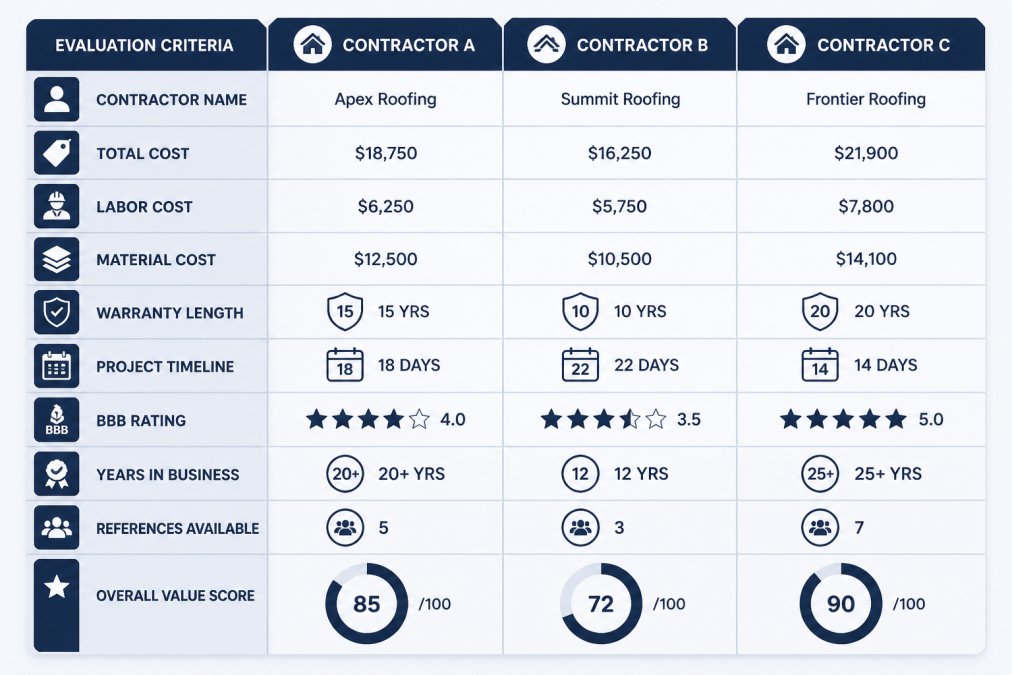
Price is important, but it's only one factor. A contractor offering the lowest residential roof restoration quote might use inferior materials, employ inexperienced workers, or provide minimal warranty coverage. Conversely, the highest quote doesn't automatically mean the best quality.
Compare the following across all quotes:
- Total cost and payment terms, Does the quote match your budget? Do they offer financing options?
- Material quality, Are they using name-brand materials with proven durability?
- Labor expertise, How many years has the contractor been in business? Do they have local references?
- Timeline, How long will the project take? Can they work around your schedule?
- Warranty and guarantees, What's covered and for how long?
- BBB accreditation and reviews, What do past customers say about their experience?
A contractor with a BBB Accredited rating, strong local references, and transparent pricing typically delivers better value than the lowest bidder. Trust your instincts: if a contractor seems evasive about details or pressures you to decide quickly, look elsewhere.
Affordable Roof Replacement Alternatives to Full Replacement
If full roof replacement is out of reach financially, several affordable roof replacement alternatives can extend your roof's life and improve performance. Roof restoration is the most cost-effective option for property owners facing budget constraints.
Spray foam roofing restoration is one popular alternative that can save property owners up to half the cost of a new roof.
Factors Affecting Your Roof Restoration Pricing
Your residential roof restoration quote depends on multiple factors beyond just square footage. Understanding these variables helps you anticipate costs and compare quotes more intelligently.
Warranty and guarantees influence cost.
Financing and Insurance Options for Your Roofing Project
If your residential roof restoration quote exceeds your immediate budget, several financing options can make the project more affordable. Many contractors offer payment plans that spread costs over several months or years.
Frequently Asked Questions
What factors influence a residential roof restoration quote?
Roof size, roofing material type (asphalt shingles, metal, spray foam), roof pitch, extent of storm damage or existing leaks, local labor rates, and required permits all affect your quote. Your licensed contractor will assess structural integrity and any underlying damage during inspection. Request a detailed breakdown that separates labor costs from material costs to understand what you're paying for.
How do I know if my roof needs restoration or full replacement?
If your roof is less than 15-20 years old, has isolated leaks, and shows no major structural damage, restoration is often viable. Signs you need replacement include widespread leaks, sagging, multiple missing shingles, or significant storm damage across large areas. A professional roof inspection will reveal the roof's longevity and whether restoration can extend its life cost-effectively. Spray foam restoration can extend an existing roof's lifespan at a fraction of replacement cost.
What's included in a roofing contractor's free estimate?
A comprehensive free estimate should include square footage measurements, material specifications, labor costs, warranty coverage details, project timeline, permit fees, and waste disposal costs. The estimate should be itemized so you can compare quotes from different contractors. Ask whether the estimate includes a roof inspection, flashing repair assessment, and ventilation evaluation. Ensure the contractor provides this in writing before you commit.
How can I verify a roofing contractor's credentials before hiring?
Check that the contractor holds a valid roofing license and carries liability insurance and workers' compensation coverage. Verify BBB accreditation and read recent customer reviews. Ask for local references from homeowners who've had work completed in the past 2-3 years. Confirm the contractor understands regional weather challenges (hail, snow load, wind) and can recommend appropriate roofing materials for your area. Licensed contractors follow roofing installation standards and understand local permit requirements.