 listicle
Top Commercial Roofing Companies: 2026 Guide
Table of Contents
- How to Choose the Right Commercial Roofing Company
- Quick Comparison: Top Commercial Roofing Companies
- Commercial Roofing Contractors: Regional and National Leaders
- Commercial Roofing Cost: What Affects Your Budget
- Commercial Roof Inspection: When and Why You Need One
- Commercial Roof Maintenance: Extend System Life and Prevent Damage
- Roofing Systems and Services: What Commercial Companies Offer
- Where Each Contractor Wins: Use-Case Recommendations
- Frequently Asked Questions
Last Updated: October 13, 2026
How to Choose the Right Commercial Roofing Company
Choosing a commercial roofing company is one of the most important decisions a property owner makes.
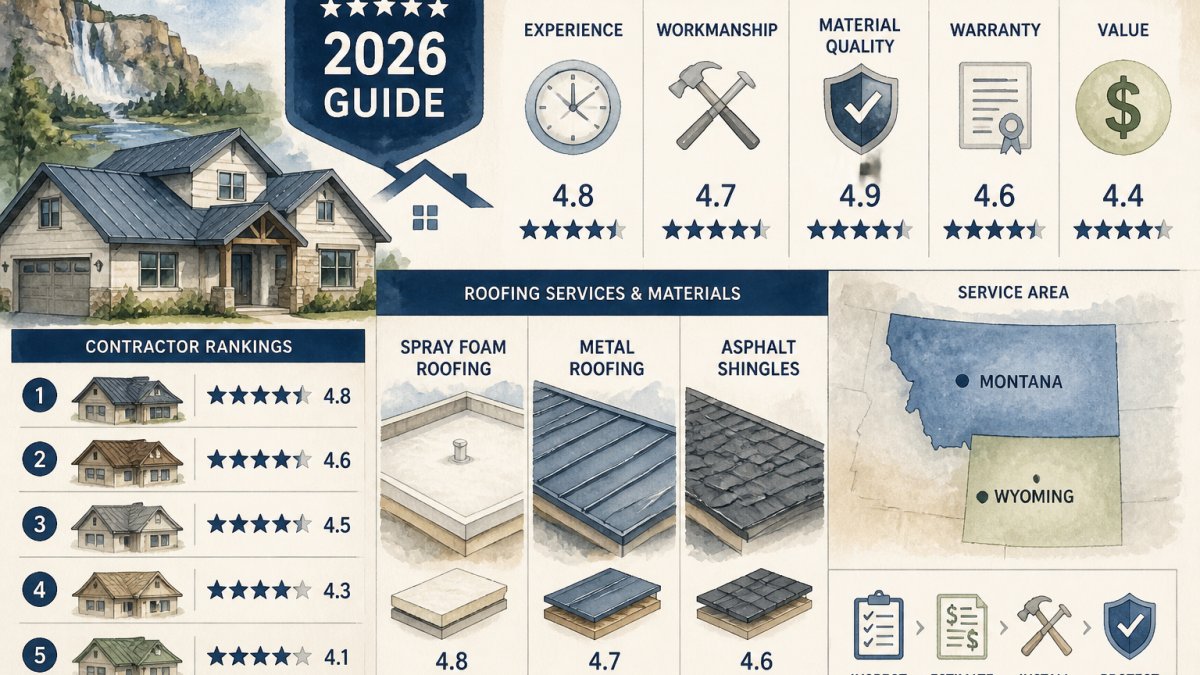
At Sun Flex Home Improvement, we've spent over 25 years helping property owners across Montana and Northern Wyoming navigate this decision.
Before comparing contractors, understand what you're comparing: spray foam restoration, metal roofing for a new build, or flat roof repair.
This guide covers how to evaluate commercial roofing companies, which services matter for your situation, and where to find contractors who deliver.
Quick Comparison: Top Commercial Roofing Companies
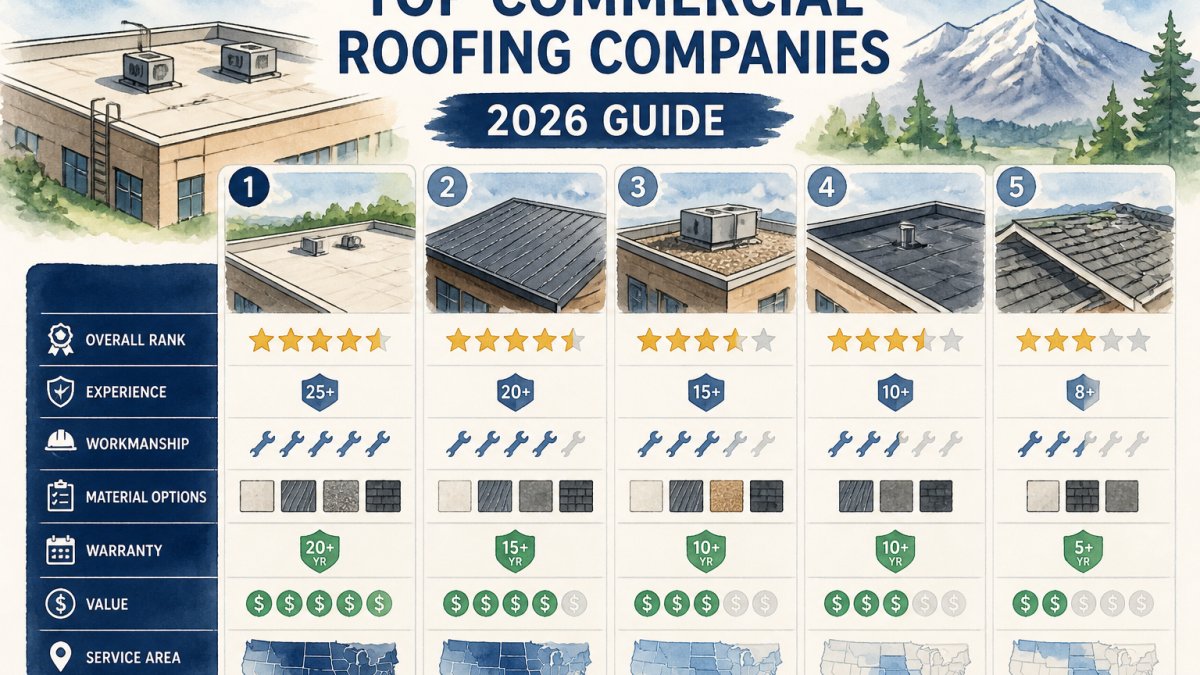
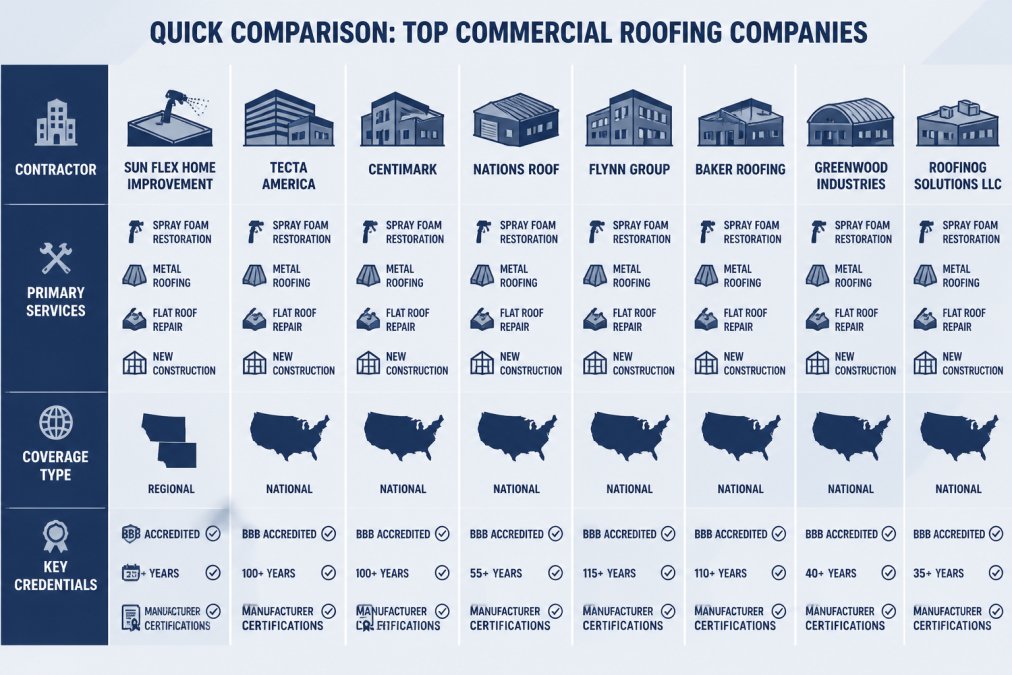
Most "top commercial roofing companies" lists tell you who is biggest, not who is right for your building. This one uses stated criteria you can check yourself and separates national scale from regional depth.
How We Evaluated These Companies
We scored each company on five criteria, weighted for a commercial property owner:
- Licensing and insurance. Active licensing where required, plus general liability and workers' compensation coverage. Request a certificate of insurance before work begins.
- Safety record and program. A written safety program, OSHA-aligned training, and, for larger firms, an experience modification rate (EMR). A lower EMR generally indicates fewer lost-time incidents.
- System expertise. Depth in the roof systems relevant to your building (single-ply membrane, modified bitumen, metal, coatings/restoration), not just a general "commercial roofing" claim.
- Project experience and references. Completed projects of similar size, building type, and system, with references you can call.
- Coverage and response. Whether they can reach your property for emergency service, and how quickly.
We did not rank on advertising spend, directory placement, or paid listings. Where a company's strength is regional, we say so rather than penalizing it.
National vs. Regional: Which Fits Your Project
National contractors bring standardized processes, larger crews, manufacturer partnerships, and multi-site mobilization. Regional contractors bring faster response, familiarity with local codes and inspectors, and often better pricing on smaller projects. Neither is universally better, the fit depends on your building count, project size, and urgency.
The Companies at a Glance
Sun Flex Home Improvement, Regional specialist in spray foam restoration and metal roofing, serving Montana and Northern Wyoming.
Tecta America, National platform with broad system capability and resources for large or complex projects.
CentiMark Corporation, National commercial roofing focus with an emphasis on maintenance programs and long-term service.
Nations Roof, Regional-to-national commercial flat and low-slope roofing with an emphasis on documentation and responsive service.
Questions to Ask Any Company on This List
- What is your experience with my specific roof system and building type?
- Who is the manufacturer, and what warranty tier are you proposing?
- What is your workmanship warranty, and what voids it?
The answers to those five questions will tell you more than any ranking, including this one.
Commercial Roofing Contractors: Regional and National Leaders
Sun Flex Home Improvement: Spray Foam Restoration Specialists
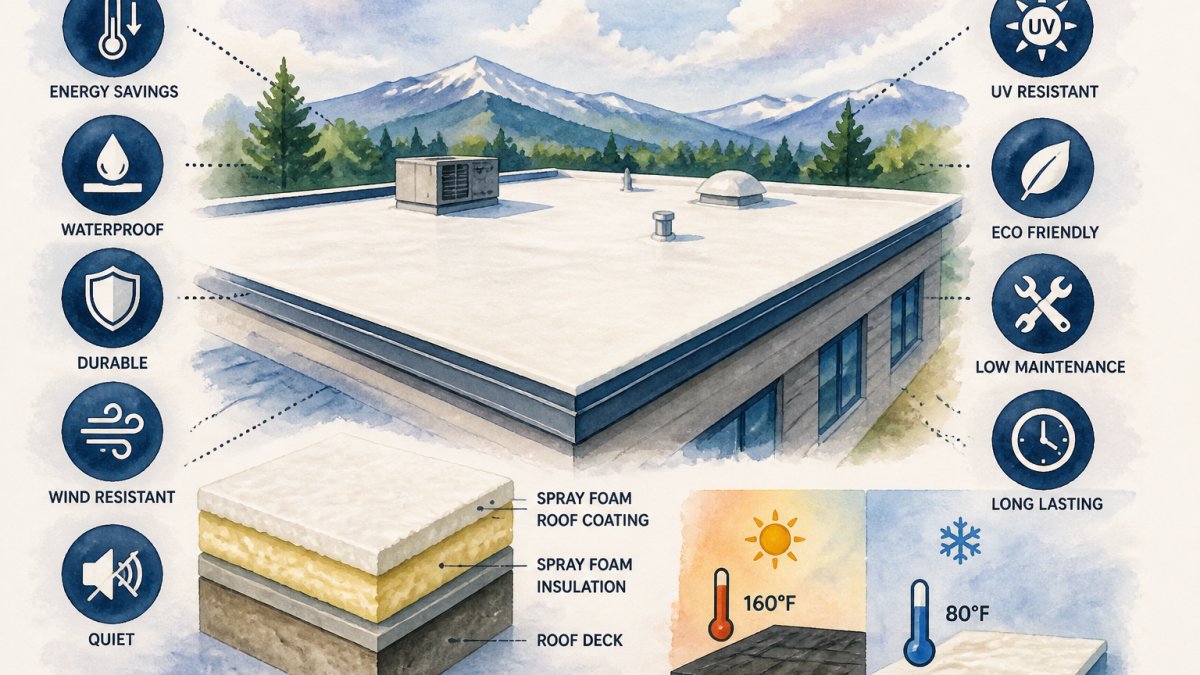
Sun Flex Home Improvement specializes in extending the life of existing roofs through spray foam restoration. Over 25 years, we've helped property owners avoid full replacement cost while improving energy efficiency and weather resistance.
If your roof is 15-20 years old and showing wear, replacement can cost tens of thousands of dollars.
We serve Montana and Northern Wyoming, so we understand regional weather challenges: heavy snow loads, temperature swings, and hail.
Best for: Property owners avoiding full replacement costs while improving energy efficiency and weather protection. Ideal for commercial buildings, agricultural structures, and residential properties with aging roofs.
Pros:
- Over 25 years of industry experience
- Specialists in spray foam roofing restoration
- Can save property owners up to half the cost of a new roof
Cons:
- Regional service area only (Montana and Northern Wyoming)
- Spray foam restoration works best on roofs with existing structure; not suitable for severely compromised systems
National Contractors: Tecta America, CentiMark, and Nations Roof
These three operate across multiple states, bringing standardized processes, larger crews, and manufacturer partnerships to commercial roofing projects.
Tecta America appears consistently in commercial roofing rankings.
Nations Roof operates regionally across the country with emphasis on commercial flat and low-slope systems, known for responsive service and detailed project documentation.
Best for: Large commercial properties, multi-building portfolios, and projects requiring rapid crew deployment or specialized equipment.
Pros:
- National coverage and resources
- Standardized processes and documentation
- Ability to handle large-scale projects
Cons:
- Less local presence in smaller markets
- May charge premium rates for smaller projects
- Response times can vary by region
Additional Established Providers
Flynn Group of Companies, Baker Roofing Company, Greenwood Industries, and Roofing Solutions, LLC round out the landscape of established commercial roofing contractors. Each brings regional presence and documented project experience.
These firms typically specialize in specific roofing systems (metal, flat, low-slope) or service areas. Before engaging them, confirm direct experience with your building type and roofing system.
Commercial Roofing Cost: What Affects Your Budget
Most commercial roofing companies will not publish prices, which is part of why bids vary so widely for what looks like the same scope. The useful move is to understand the cost drivers well enough to compare estimates line by line, what moves the price, and how to read a bid so you're comparing the same work.
What Actually Drives the Price
Roofing system type. Membrane replacement, metal, and restoration coatings sit in different cost bands because material and labor intensity differ.
Roof area and geometry. Pricing is usually quoted per square (100 sq ft).
Existing roof condition and tear-off. If the membrane and insulation are sound, a recover or restoration may be viable.
Regional labor and material availability. Labor rates, prevailing-wage requirements on public work, and material travel distance all move the number.
How to Compare Bids Without Getting Burned
Request at least three written estimates, each broken into the same categories so you can line them up:
- Scope of work, tear-off vs. recover, deck repair allowance, insulation R-value, membrane type and thickness, attachment method.
- Exclusions, what is not included (deck replacement beyond an allowance, HVAC curb work, skylight replacement, interior damage repair).
- Warranty, manufacturer warranty term and type, workmanship warranty term, and what voids each.
A lower bid that excludes deck repair, uses a thinner membrane, or carries only a one-year workmanship warranty is not actually lower, it is a different scope. Normalize scopes first, then compare price.
Lifecycle Cost, Not Just First Cost
The number that matters is cost per year of service, not the day-one invoice. A system that costs more upfront but delivers longer service life and lower maintenance can win on lifecycle cost. Ask each contractor for:
- Expected service life of the proposed system under local weather exposure.
- Recommended maintenance frequency and the cost of a maintenance contract.
- Whether the system is repairable in place or requires full replacement at end of life.
NRCA guidance on roof system selection and lifecycle cost
Commercial Roof Inspection: When and Why You Need One
A professional roof inspection is your first step before any decision about repair, restoration, or replacement.
Inspect your roof annually, especially after severe weather. Spring inspections catch winter damage. Post-storm inspections document damage for insurance claims.
Inspect before selling or leasing commercial property.
A professional inspection typically costs $300 to $800 depending on building size and roof complexity, an investment that prevents far more expensive surprises.
Commercial Roof Maintenance: Extend System Life and Prevent Damage
Debris removal prevents pooling water and membrane degradation.
Flashing inspection ensures seals around penetrations (vents, skylights, equipment) remain intact. Failed flashing is the leading cause of commercial roof leaks.
Gutter and drain cleaning keeps water moving off the roof.
Sealant reapplication maintains watertight seals around transitions and edges; sealant degrades and needs refreshing every 3-5 years.
Professional maintenance contracts provide scheduled inspections and preventive work, costing less than reactive repairs.
Maintenance extends roof life by 5-10 years and prevents emergency repairs that disrupt operations.
Roofing Systems and Services: What Commercial Companies Offer
Understanding roofing system types helps you evaluate contractor expertise and communicate your needs.
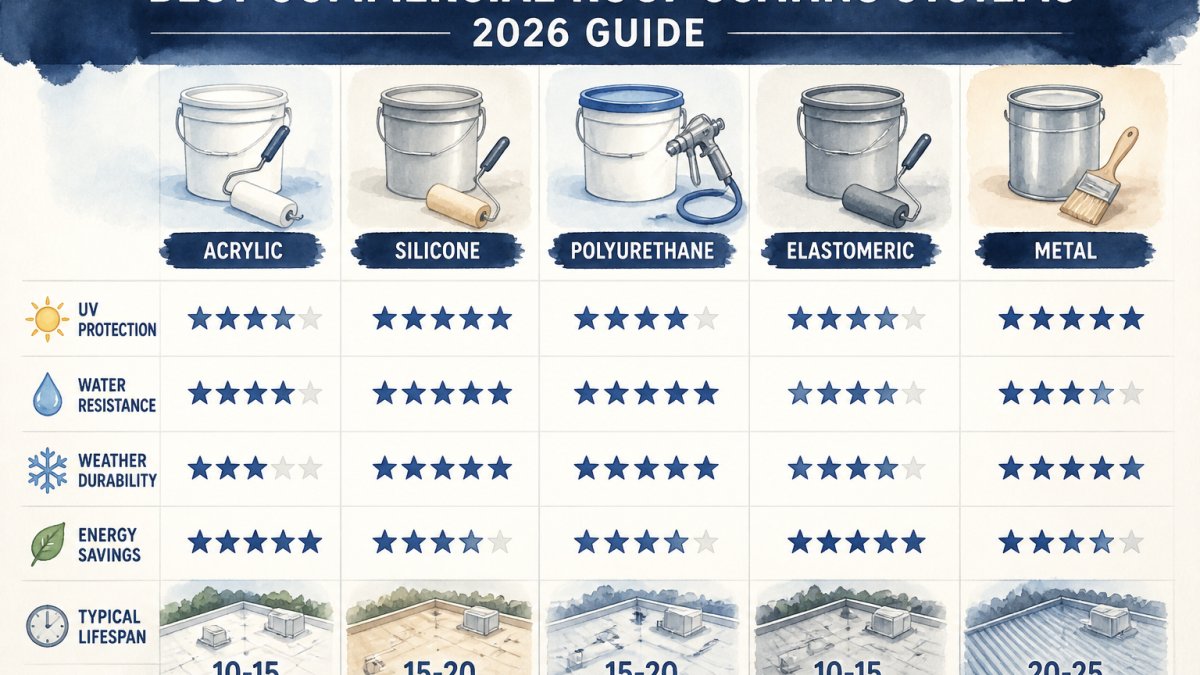
Flat roof systems (membrane roofing) are standard on most commercial buildings.
Steep-slope roofing (pitched roofs) uses shingles, metal panels, or tiles. Common on warehouses, agricultural buildings, and some commercial structures.
Metal roofing and architectural metalwork provide long-term durability and aesthetic appeal.
Waterproofing and building-envelope services extend beyond roofing to wall systems, flashing, and moisture barriers, protecting the entire building exterior.
Roof repair and maintenance services keep existing systems functional.
New roof construction on additions or new buildings requires coordination with structural and architectural teams.
Where Each Contractor Wins: Use-Case Recommendations
Choose Sun Flex Home Improvement if you have an aging roof and want to avoid full replacement costs.
Choose a national contractor (Tecta America, CentiMark, Nations Roof) if you have a large commercial property, manage multiple buildings, or need rapid crew deployment.
Choose a regional specialist if you need expertise in a specific roofing system (metal, flat, steep-slope) and local presence.
Choosing a commercial roofing contractor requires evaluating experience, service scope, and local expertise, a decision affecting your property's protection, energy costs, and operational continuity for years. At Sun Flex Home Improvement, we help property owners decide with confidence, providing free estimates and honest assessments of whether restoration or replacement makes sense. Get a free estimate from Sun Flex Home Improvement and learn how we can protect your investment with durable, energy-efficient roofing solutions.
Frequently Asked Questions
What services do commercial roofing companies typically provide?
Commercial roofing companies offer roof repair, maintenance, inspections, full replacement, and system-specific services like flat roof restoration, metal roofing installation, and waterproofing. Many also provide emergency leak response and preventive maintenance plans. Specialists like Sun Flex Home Improvement focus on cost-effective alternatives such as spray foam restoration, which can extend existing roof life without full replacement.
How much does commercial roofing cost?
Commercial roofing cost depends on roof size, system type, damage severity, and labor complexity. Replacement projects typically cost more than repairs or restoration. Spray foam restoration can save property owners up to half the cost of replacement. For accurate pricing on your specific project, contact contractors directly for detailed quotes, costs vary significantly by location and building specifications.
How often should a commercial roof be inspected?
Most experts recommend commercial roof inspections at least twice per year, typically in spring and fall, to catch damage from weather and seasonal stress. After severe weather events like hail or high winds, schedule an immediate inspection. Regular commercial roof inspection helps identify leaks, membrane damage, and drainage issues early, preventing costly emergency repairs and extending system life.
What makes a commercial roofing contractor reliable?
Look for licensed, insured contractors with verifiable experience on commercial projects similar to yours. Check BBB accreditation, customer reviews, and references from recent local projects. Reliable commercial roofing contractors offer written warranties, respond promptly to inquiries, provide detailed inspections and bids, and maintain transparent communication throughout the project.
Can spray foam roofing handle harsh weather like hail and heavy snow?
Spray foam roofing creates a durable, seamless membrane that resists water penetration and UV damage. When properly installed and maintained, it withstands snow load and freeze-thaw cycles common in northern climates. However, impact resistance depends on foam density and coating quality. Contractors like Sun Flex Home Improvement design systems for regional weather, discuss your specific climate concerns during the inspection to ensure the system fits your building's needs.