 how-to
Prepare Flat Roofs for Heavy Snow: A How-To Guide
Last Updated: October 23, 2026
Quick Summary
To prepare flat roofs heavy snow, inspect your roof in September or October for membrane damage and deterioration, clear all debris and blocked drains, and know your roof's snow load capacity so you can remove snow before it reaches dangerous levels.
- Most residential flat roofs are designed to handle 20 to 40 pounds per square foot of snow load capacity.
- Remove snow when it reaches 50 percent of your roof's maximum load capacity to prevent structural damage.
- Use only plastic shovels or soft-bristled roof rakes on flat roofs, never metal tools that can tear the membrane.
- Clear gutters, scuppers, and drains thoroughly before winter so water flows freely when snow melts.
- Watch for warning signs like visible sagging, interior ceiling cracks, or stuck doors that indicate dangerous roof stress.
Table of Contents
- Why Flat Roofs Need Special Winter Preparation
- Understanding Flat Roof Snow Load Capacity
- Pre-Winter Roof Inspection and Damage Assessment
- Flat Roof Winter Maintenance Checklist
- Flat Roof Drainage and Roof Drains: Clearing the Path
- Safe Flat Roof Snow Removal Techniques
- Preventing Ice Dams and Managing Moisture Intrusion
- When to Call a Professional
- Frequently Asked Questions
Why Flat Roofs Need Special Winter Preparation
Flat roofs face unique challenges when heavy snow arrives. Unlike pitched roofs that shed snow naturally, flat roofs collect it. That weight builds up fast.
This is where most property owners make their first mistake. They assume flat roofs are built to handle whatever winter throws at them. That's not always true.
At Sun Flex Home Improvement, we help property owners protect their flat roofs through the winter months.
Understanding Flat Roof Snow Load Capacity
Every flat roof has a maximum snow load it can safely carry. This is called the roof load capacity, and it's measured in pounds per square foot.
Most residential flat roofs in this region are designed to handle 20 to 40 pounds per square foot of snow load.
The challenge is that snow weight varies dramatically. Wet, heavy snow can weigh 20 pounds per cubic foot. Light, fluffy snow might weigh only 5 pounds per cubic foot.
Flat roof snow load capacity varies by building type and design, affecting how much snow your roof can safely hold.
| Building Type | Typical Capacity | Snow Weight Factor |
|---|---|---|
| Residential flat roofs | 20 to 40 pounds per square foot | Varies by design |
| Commercial buildings | 50 pounds or more per square foot | Varies by design |
| Wet, heavy snow | N/A | 20 pounds per cubic foot |
| Light, fluffy snow | N/A | 5 pounds per cubic foot |
Pre-Winter Roof Inspection and Damage Assessment
To prepare flat roofs heavy snow, start your winter preparation with a thorough inspection. The best time is late September or early October, before the first snow arrives. You're looking for problems that could worsen under snow load or allow water intrusion when snow melts.
Check roof membranes, seams, and flashing
Your roof membrane is the waterproof layer that keeps water out. It's typically rubber (EPDM), modified bitumen, or single-ply material.
Pay special attention to seams where two pieces of membrane meet. Seams are the weakest points on any flat roof. Look for gaps, lifting, or separation.
Flashing is the metal trim where your roof meets walls, vents, or other structures. Flashing should be tight and sealed.
Look for existing deterioration and weak spots
Scan the entire roof surface for signs of wear. Look for:
- Blistering or bubbling in the membrane
- Areas where the surface coating is worn away
- Debris accumulation in corners or low spots
- Discoloration that might indicate moisture damage
- Soft or spongy spots that suggest rot in the underlying structure
Mark any problem areas with tape or chalk so you can address them before winter. Small repairs now prevent major damage later.
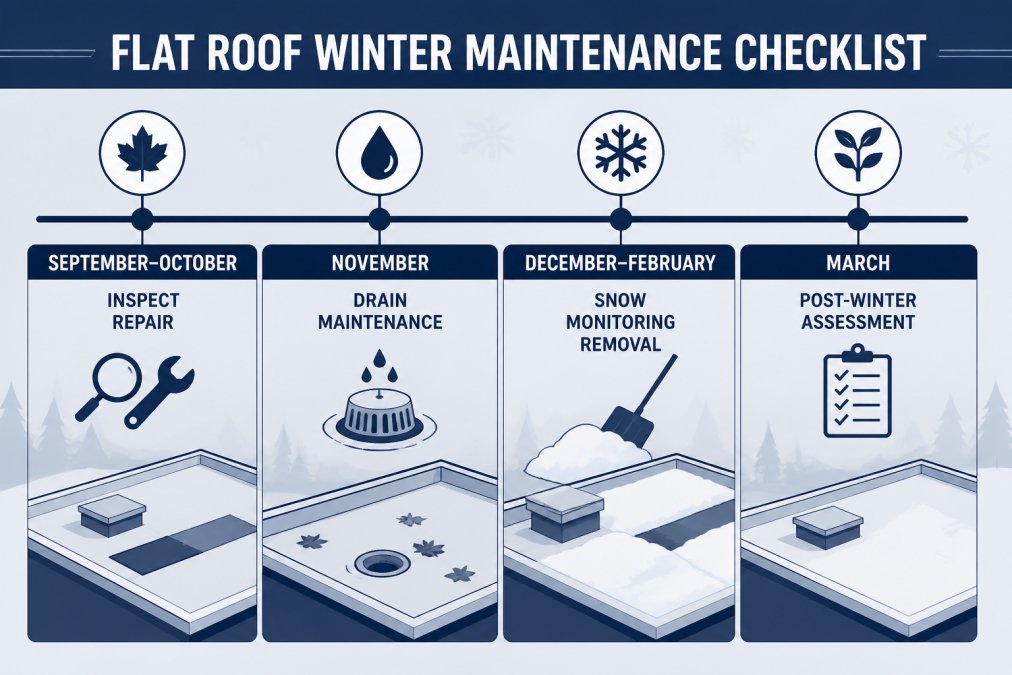
Flat Roof Winter Maintenance Checklist
Create a seasonal maintenance schedule and stick to it. This checklist covers the key tasks that protect your flat roof through winter.
September to October (Pre-Winter Prep):
- Complete full roof inspection
- Repair any membrane damage or deterioration
- Reseal flashing and seams
- Clean gutters, drains, and scuppers thoroughly
- Remove all debris from roof surface
- Trim back overhanging tree branches
- Test all roof drains to confirm water flow
- Document roof condition with photos
November (Drainage Maintenance):
- Clear leaves and debris from gutters again
- Inspect scuppers for blockages
- Flush roof drains with water to test flow
- Check for standing water after rain
- Verify downspouts direct water away from foundation
December through February (Snow Season):
- Monitor snow depth on roof after each storm
- Remove snow when depth approaches safe limits
- Watch for ice dam formation at roof edges
- Check for signs of roof stress or sagging
- Inspect interior for new leaks or water stains
March (Post-Winter Assessment):
- Inspect roof for winter damage
- Check for water intrusion or mold
- Look for new cracks or membrane damage
- Verify all drains cleared of ice
- Plan repairs before next winter
Flat Roof Drainage and Roof Drains: Clearing the Path
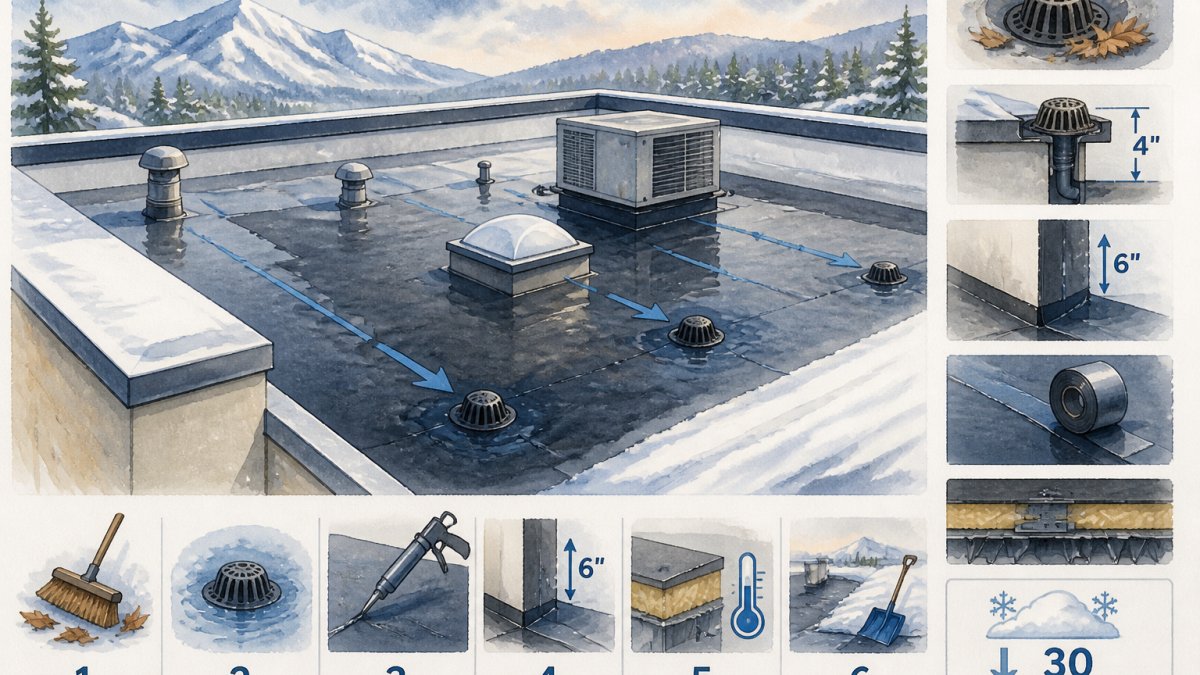
Water drainage is your flat roof's best defense against damage. When snow melts or heavy rain falls, water must flow off your roof quickly. If it pools, it puts weight on the roof and seeps into seams and weak spots. Blocked drains turn a manageable snow load into a dangerous one.
Remove leaves, branches, and debris
Leaves and branches are the enemy of flat roof drainage. They accumulate in gutters, on the roof surface, and around drain openings.
Pay special attention to corners, edges, and low spots where debris collects. These are the areas where water pools when drains are blocked.
Overhanging tree branches drop leaves constantly. If trees hang over your roof, trim them back at least 6 feet from the roof edge. This reduces debris accumulation significantly.
Inspect and maintain scuppers and gutters
Scuppers are openings in the roof edge that allow water to drain off. They're common on flat roofs. Make sure each scupper is clear and unobstructed. Debris can block them completely.
Gutters collect water from the roof and direct it to downspouts. Clean gutters thoroughly before winter. Remove all leaves, dirt, and debris.
After cleaning, test your drainage system. Pour water into gutters and scuppers and watch it flow. It should move quickly and exit the downspout.
Safe Flat Roof Snow Removal Techniques
Snow removal is necessary, but it must be done safely. The wrong approach can damage your roof or injure someone.
When to remove snow and safe depth thresholds
The key question: when should you remove snow? The answer depends on your roof's capacity and the type of snow.
Light, fluffy snow is less urgent. Heavy, wet snow requires faster action. If you're unsure about your roof's capacity or the weight of accumulated snow, call a professional to assess it.
Don't wait for the snow to get dangerously deep. Removing snow after each storm is easier and safer than waiting for a massive accumulation.
Tools and methods for safe removal
Never use metal shovels on a flat roof, they can tear the membrane. Use plastic shovels or soft-bristled roof rakes instead.
Work systematically from one end to the other. Create channels to direct melting snow toward drains. Don't pile snow in one spot, distribute the load evenly.
Never work alone on a roof. Always have someone on the ground watching and ready to help. Use a fall-arrest harness if you're working at height.
Recognizing dangerous structural loading
Watch for signs that your roof is under stress from snow load:
- Visible sagging or dips in the roof surface
- Interior ceiling cracks or bulging
- Doors or windows that suddenly stick or won't close
- Cracking sounds from the structure
- Water stains appearing on interior ceilings
These are emergency signals. If you notice any of these, stop snow removal immediately and call a professional. Your roof may be at risk of collapse.
Preventing Ice Dams and Managing Moisture Intrusion
Ice dams form when snow melts on the warm upper part of your roof, then refreezes at the cold edges.
Prevent ice dams by maintaining consistent roof temperature. This means proper attic ventilation and insulation.
After heavy snow, watch for water stains on interior ceilings. These indicate leaks. If you see them, locate the source and address it immediately.
Moisture buildup inside the roof structure is just as damaging as leaks. Ensure your attic has adequate air leaks for ventilation.
When to Call a Professional
Some roof maintenance tasks are DIY-friendly. Others require professional expertise and equipment. Know the difference.
Call a professional if you:
- Can't safely access your roof
- Don't know your roof's snow load capacity
- Discover significant membrane damage or deterioration
- See signs of structural stress or sagging
- Have standing water that won't drain
- Need to remove heavy snow accumulation safely
- Want a pre-winter inspection by an expert
Professional roofers have the training, equipment, and insurance to work safely at height. They can assess your roof's condition accurately and make repairs that last.
National Roofing Contractors Association guidelines on winter roof maintenance recommend professional inspection before winter for all commercial and residential flat roofs.
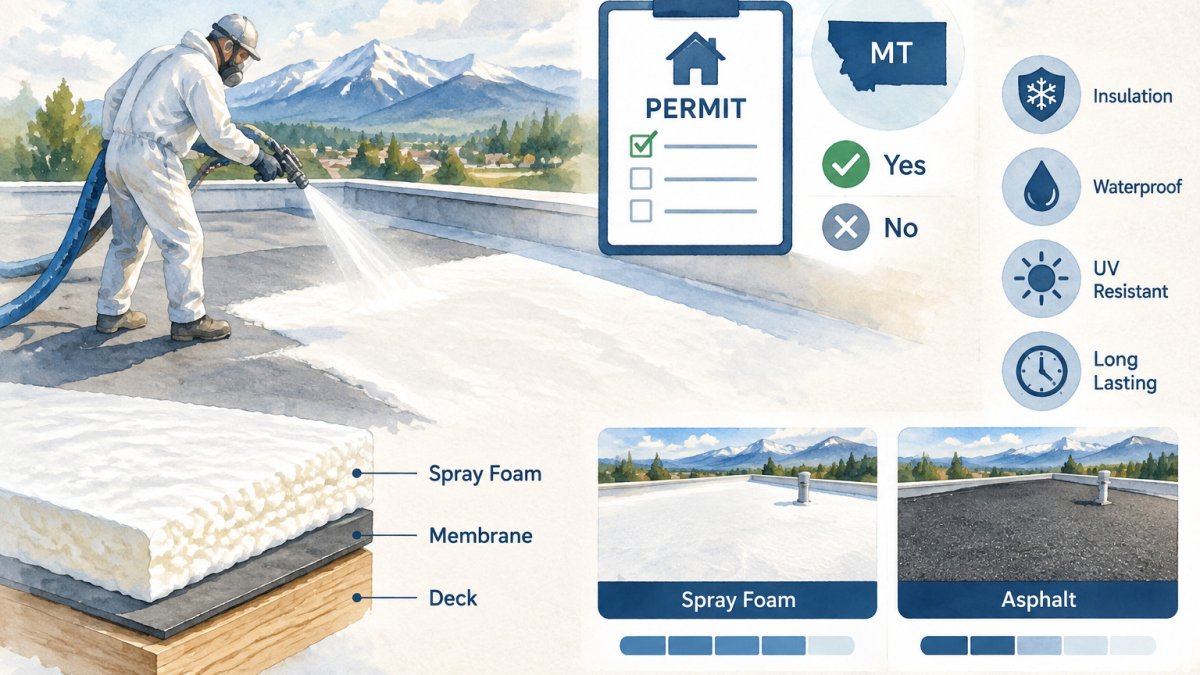
At Sun Flex Home Improvement, we offer roof restoration for Montana homes that strengthen flat roofs and extend their lifespan. We also provide spray foam roofing for flat roofs as a long-term solution that improves drainage and energy efficiency while adding insulation value.
If your flat roof is aging or has experienced damage, don't wait for winter to create an emergency. Explore roofing solutions for Montana winters to see how restoration or reinforcement can protect your investment.
Frequently Asked Questions
How much snow can a flat roof safely hold?
Most flat roofs are designed to handle 20-30 pounds per square foot of snow load, though this varies by local building codes and your roof's age and condition. Heavy, wet snow can exceed safe limits faster than dry snow. If snow depth reaches 12-18 inches, or if you notice sagging, cracking sounds, or water stains inside, remove snow immediately. Consult your roof's original specifications or a professional to confirm your roof's exact capacity.
What's included in a flat roof winter maintenance checklist?
A comprehensive flat roof winter maintenance checklist should cover: inspecting membranes, seams, and flashing for damage; clearing leaves and branches; cleaning gutters and roof drains; checking scuppers for blockages; testing drainage flow; verifying attic ventilation; sealing air leaks; and documenting the roof's condition. Complete this inspection in fall before heavy snow arrives, then monitor drainage during winter thaw periods and check for water intrusion in spring.
How do you prevent ice dams on a flat roof?
Flat roofs are less prone to ice dams than pitched roofs, but ponding water can still freeze and block drains. Prevent ice buildup by maintaining proper roof slope toward drains, keeping gutters and scuppers clear of debris, ensuring adequate attic ventilation to minimize heat loss that melts snow unevenly, and sealing air leaks that allow warm air to escape. If ice does form, avoid salt, it damages membranes. Remove snow before it melts and refreezes, or call a professional for safe removal.
Should you remove snow from a flat roof yourself?
Removing snow from a flat roof yourself is risky. Falls from height are a leading cause of serious injury. If you decide to remove snow, use a roof rake from ground level when possible, never walk on snow-covered roofs, wear a safety harness if you must go on the roof, and stop if snow depth exceeds 18 inches or conditions are icy. For heavy accumulation, steep pitches, or ice buildup, hire a professional with proper equipment and safety training. A professional can also assess structural loading and warn you of dangerous conditions.
Heavy snow doesn't have to mean heavy worry. A well-maintained flat roof with proper drainage, regular inspection, and timely snow removal will survive winter reliably. The key is preparation, starting now, before the first snow falls. If your flat roof needs inspection, reinforcement, or professional snow removal planning, reach out for a free estimate. We'll help you prepare your roof for whatever winter brings.