 ultimate-guide
Flat Roof Repair in Wyoming: A Complete Guide
Table of Contents
- Understanding Flat Roof Repair in Wyoming
- Common Causes of Flat Roof Damage
- Spray Foam Roofing Benefits for Flat Roof Restoration
- DIY vs. Professional Flat Roof Repair Assessment
- Commercial Roofing Companies and System Solutions
- Commercial Roof Maintenance Checklist for Longevity
- Flat Roof Drainage and Ponding Water Solutions
- Cost Estimation and Repair vs. Replacement
- Frequently Asked Questions
Last Updated: September 25, 2026
Understanding Flat Roof Repair in Wyoming
Flat roof repair in Wyoming presents unique challenges due to extreme weather, high elevation, and temperature fluctuations that accelerate material degradation. Property owners must decide between patching and full replacement. At Sun Flex Home Improvement, we've spent over 25 years helping homeowners and commercial property managers navigate these choices with solutions that extend roof life while controlling costs.
The most common question is: "Can my roof be saved, or do I need to replace it?" The answer depends on damage extent, roof age, and structural condition. Restoration through spray foam roofing can extend lifespan significantly while improving energy efficiency and reducing heating and cooling costs.
Common Causes of Flat Roof Damage
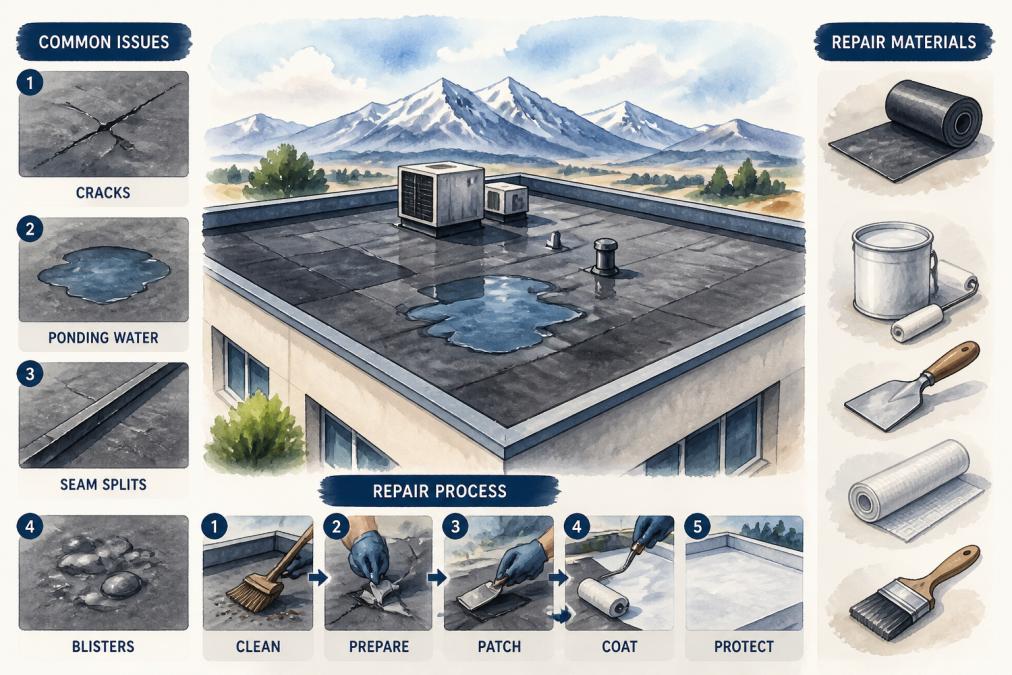
The most frequent cause of flat roof failure is water pooling from inadequate drainage. In Wyoming's climate, ponding water freezes and thaws repeatedly, cracking membranes and seams. A single winter cycle can turn a minor drainage issue into a major leak.
Seam failures are the second major failure point. Sealed seams deteriorate through UV exposure, thermal cycling, and material brittleness. Older hot tar roofs are particularly vulnerable as tar hardens and becomes inflexible.
Wind damage, hail, and foot traffic also compromise flat roof integrity. Wyoming's high winds and severe hail accelerate wear beyond manufacturers' warranties. Improper roof access can puncture membranes, creating water infiltration entry points.
Spray Foam Roofing Benefits for Flat Roof Restoration
Spray foam roofing transforms flat roof restoration in harsh climates. Polyurethane foam is sprayed directly onto the existing roof surface and topped with a protective coating, creating a seamless barrier that eliminates seam failures.
Spray foam provides continuous insulation, significantly improving thermal resistance. Property owners report noticeable reductions in heating and cooling costs.
Spray foam restoration can save property owners up to half the cost of a new roof. The material bonds directly to existing surfaces, requiring no removal of old roofing materials.
The seamless application eliminates vulnerable joints where water infiltrates. UV-protective coatings extend the system's lifespan.
DIY vs. Professional Flat Roof Repair Assessment
Whether a repair is DIY-capable depends on damage type, roof access, and safety. Understanding which repairs are low-risk versus those with hidden complexity is essential.
Repairs You Can Handle Yourself (With Proper Safety Gear):
Small, isolated punctures or tears in TPO or EPDM membranes under 6 inches can be patched with kits ($15-$40). Clean the area, apply adhesive, press the patch, and allow cure time. This works only if the underlying membrane is flexible and insulation is intact.
Cleaning gutters, removing debris, and clearing drains are maintenance tasks any property owner can perform safely. These preventive actions reduce ponding and extend roof life.
Caulking around flashing penetrations using roofing-grade sealant prevents water infiltration. Use only sealants rated for roofing; standard caulk fails under thermal cycling and UV exposure.
Repairs That Require Professional Contractors:
Multiple leaks, seam failures, or damage larger than 6 inches require professional contractors. Seam failures are deceptive; a small separation often indicates compromised adhesive along the entire seam length.
Ponding water or drainage problems require professional diagnosis. Standing water indicates inadequate slope, blocked drains, or structural settling. Property owners cannot reliably diagnose these issues without professional equipment and experience.
Roof leaks that appear in one location may originate elsewhere. A contractor uses thermal imaging or moisture meters to locate the true source, preventing repeated failed repairs.
Roof access at height requires fall protection and safety training. Falls cause serious injuries; most insurance policies exclude coverage for non-professional injuries. Building codes require licensed contractors for commercial roofing work.
The Warranty and Liability Factor:
Manufacturer warranties require professional installation and maintenance. DIY repairs can void warranty coverage. Professional contractors carry liability insurance and provide warranties, protecting the property owner if repairs fail.
For commercial properties, professional repair is non-negotiable. Building codes require licensed contractors, and warranties are void if repairs are performed by unqualified individuals.
The Cost-Benefit Reality:
A DIY patch might save $200-$500, but if it fails and requires professional repair, total costs exceed hiring a contractor initially. Professional assessment ($150-$300) identifies whether repair or replacement is better.
Commercial Roofing Companies and System Solutions
Commercial roofing requires systematic approaches. The choice between TPO membranes, EPDM rubber, hot tar, or spray foam depends on building use, climate exposure, and budget.
TPO (thermoplastic polyolefin) roofing is lightweight, reflective, and UV-resistant. Seams are heat-welded, but proper installation is critical.
EPDM (ethylene propylene diene monomer) rubber roofing is popular for durability and cost-effectiveness. It is flexible and handles thermal cycling well.
Spray foam systems offer advantages for complex roof geometries. The seamless application eliminates seam vulnerability. For commercial buildings, spray foam delivers excellent freeze-thaw performance and handles ponding water effectively.
Sun Flex Home Improvement specializes in commercial roofing solutions that match the specific demands of Montana and Northern Wyoming properties. Our experience with commercial roof maintenance and restoration ensures that system selection aligns with your building's actual performance requirements, not just initial cost.
Commercial Roof Maintenance Checklist for Longevity
Preventive maintenance extends roof life and prevents expensive emergency repairs by catching problems early.
Quarterly Inspections:
- Walk the entire roof surface, checking for visible cracks, blisters, or membrane separation
- Clear debris from gutters and drainage areas
- Check flashing around vents, skylights, and wall penetrations for separation or corrosion
- Inspect seams and joints for adhesive failure or membrane splitting
Annual Professional Inspection:
- Hire a licensed roofing contractor for comprehensive inspection
- Document findings with photographs to track deterioration patterns
Post-Storm Assessment:
- After severe weather, hail, high winds, or heavy snow loads, inspect the roof for damage
- Address storm damage immediately; delaying repairs allows water infiltration and accelerates secondary damage
- Document damage with photographs for insurance claims
Maintenance Log:
- Keep detailed records of all inspections, repairs, and maintenance activities
- Track dates, findings, and work performed
- Maintenance records support warranty claims and provide valuable information for future contractors
Flat Roof Drainage and Ponding Water Solutions
Proper drainage is the foundation of flat roof longevity. Flat roofs must slope toward drainage points to move water off the surface. When drainage fails, water pools, creating conditions for membrane failure and structural damage.
Ponding water is particularly problematic in Wyoming's climate. Water freezes in winter, expanding and stressing the membrane. When ice melts, water penetrates cracks formed during freeze-thaw cycles. A single winter season can transform a minor drainage issue into a major leak.
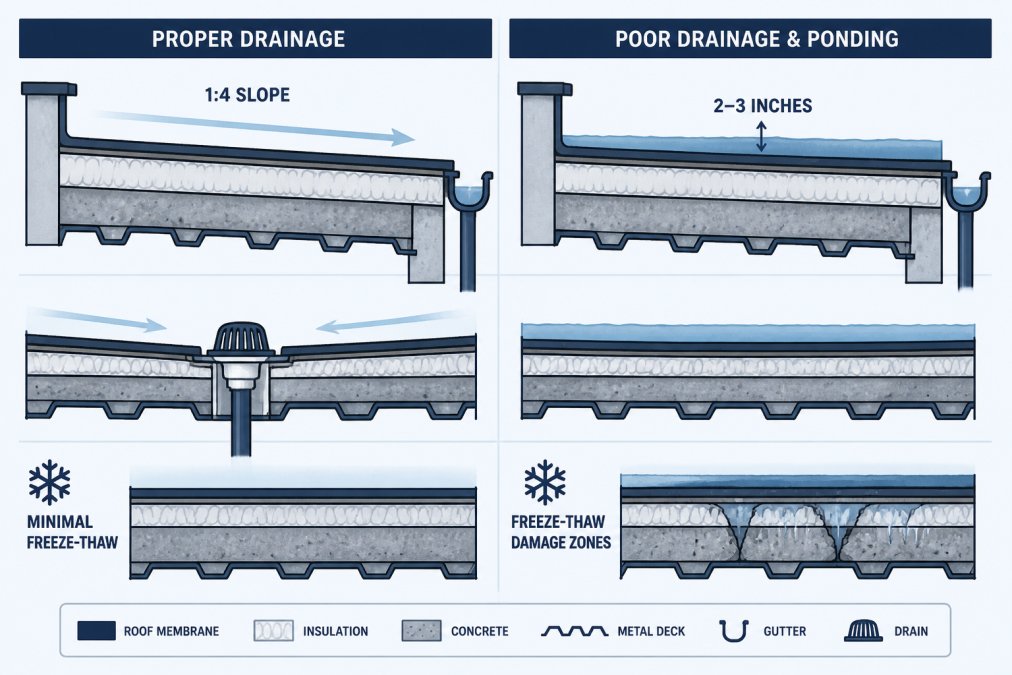
Adding tapered insulation creates slope, directing water toward existing drains. This works well when drainage infrastructure exists but slope is inadequate.
Installing additional drains or interior scuppers prevents water accumulation. The cost is modest compared to damage from repeated ponding.
Spray foam roofing offers a modern drainage solution. The seamless application accommodates minor settling without cracking. Combined with reflective coating, it sheds water efficiently while reducing thermal stress.
Cost Estimation and Repair vs. Replacement
The decision between repair and replacement hinges on cost comparison and long-term outlook.
Professional contractors should provide detailed estimates including roof size, material selection with specifications, labor hours and rates, tear-off costs, structural repairs, warranty terms, and timeline.
Compare estimates from at least two contractors, but do not automatically choose the lowest bid. Ask why estimates differ; legitimate variations stem from material choices, warranty terms, or site-specific factors.
Frequently Asked Questions
How much does flat roof repair cost in Wyoming?
Flat roof repair costs depend on damage severity, roof size, materials needed, and whether you choose restoration or replacement. Spray foam restoration typically costs significantly less than full replacement. For accurate pricing tailored to your property, contact a local roofing contractor for a free estimate. Factors like labor availability and seasonal demand also affect final costs.
Is spray foam roofing a viable repair option for flat roofs?
Yes. Spray foam roofing creates a seamless, watertight barrier that adheres directly to existing roof surfaces. It's particularly effective for flat roofs because it fills cracks, seals seams, and prevents ponding water issues. Spray foam restoration can extend your roof's life and save property owners up to half the cost of a new roof, making it a practical alternative for property owners seeking cost-effective solutions.
Can you fix a flat roof yourself, or do you need a professional?
Minor repairs like patching small leaks can be DIY projects using roofing cement and patches. However, widespread leaks, drainage problems, or structural issues require professional assessment. Commercial roofing companies have specialized equipment, materials, and warranties that DIY repairs lack. If your roof leaks repeatedly or you're unsure of the damage extent, professional inspection prevents costly mistakes and ensures long-term protection.
What signs indicate that a flat roof needs professional repair versus replacement?
Repair is appropriate for isolated leaks, minor ponding, or damaged flashing. Replace the roof if you see widespread membrane deterioration, multiple leak locations, sagging sections, or if repairs have failed repeatedly. Age matters too: roofs over 20 years old often warrant replacement. A professional roof inspection identifies the right path forward and helps you avoid unnecessary full replacements when restoration would suffice.