 how-to
Can You Apply Roof Coating Over Old Shingles?
Table of Contents
- Can You Apply Roof Coating Over Old Shingles?
- Roof Coating for Asphalt Shingles: What Works and What Doesn't
- Assessing Your Roof: When Coating Is Viable
- How to Prepare Shingles for Roof Coating
- Application Methods and Installation Steps
- Roof Coating Lifespan on Shingles
- Roof Coating vs. Roof Replacement: Making the Right Choice
- Frequently Asked Questions
Last Updated: October 20, 2026
Can You Apply Roof Coating Over Old Shingles?
Yes, you can apply roof coating over old asphalt shingles, but not all roofs qualify. The key is assessing your shingles' condition first. If they're still structurally sound with minimal damage, coating offers a cost-effective way to extend roof life and improve weather resistance. If they're severely deteriorated, coating becomes a temporary fix that won't solve underlying problems.
At Sun Flex Home Improvement, we help property owners across Montana and Northern Wyoming protect their investments. The roofs that benefit most from coating are those with moderate weathering and no active leaks. Those with significant granule loss, curling edges, or persistent leaks need repair or replacement instead.
Applying roof coating over old shingles requires honest assessment, proper preparation, and realistic expectations. This guide walks you through whether your roof qualifies, how to prepare it, and what to expect from the coating itself.
Roof Coating for Asphalt Shingles: What Works and What Doesn't
Not every roof coating works on asphalt shingles. The coating must bond to the shingle surface, remain flexible as shingles expand and contract, and resist UV exposure without peeling or cracking.
Silicone and Acrylic Coatings
Silicone coatings excel at water shedding and flexibility. They expand and contract with temperature swings without cracking. Acrylic coatings offer good UV resistance and cost less upfront, but they're less durable in wet climates. Both adhere reasonably well to clean asphalt shingles.
Silicone works best in regions with heavy rainfall or snow melt. Acrylic suits drier climates. Neither performs well on shingles with heavy algae or moss, the coating won't bond properly to contaminated surfaces.
Polyurethane and Elastomeric Options
Polyurethane coatings provide excellent durability and strong adhesion. They handle impact and UV exposure well. Elastomeric coatings stretch significantly, making them ideal for roofs with slight movement or settling.
Polyurethane costs more and requires careful application in specific weather conditions. Elastomeric coatings are forgiving during installation but may not cure properly in high humidity. Both require a clean, dry surface to bond effectively.
The right choice depends on your climate, shingle condition, and budget.
Assessing Your Roof: When Coating Is Viable
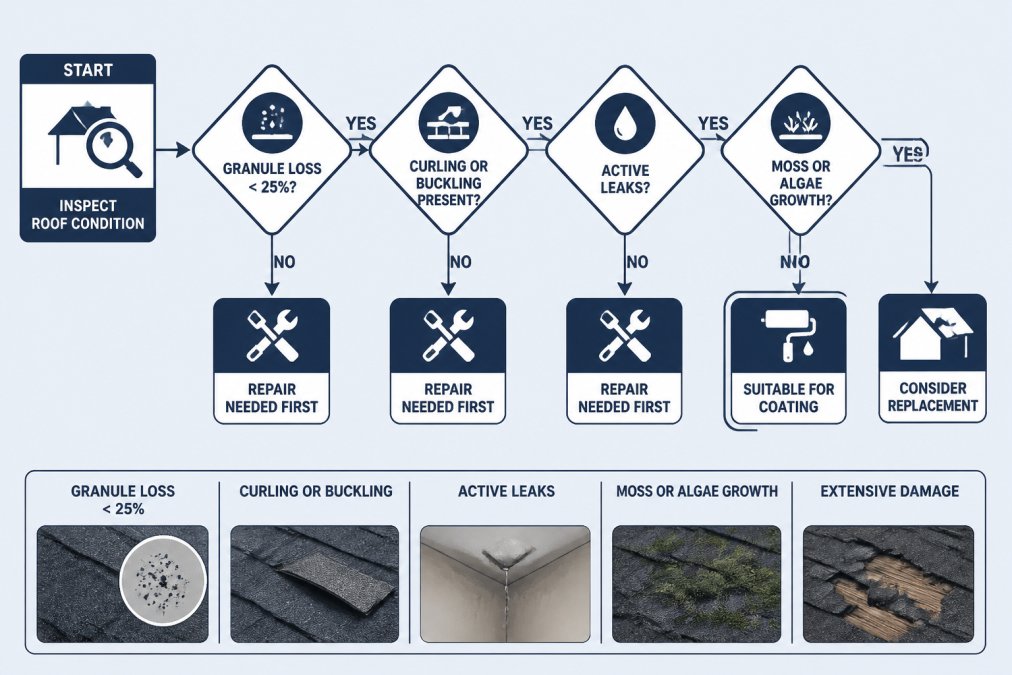
Before ordering coating, inspect your roof thoroughly. A roof that looks weathered from the ground might be unsuitable for coating once you examine it closely. The unique angle here is a set of measurable inspection criteria, not just a list of problems, so you can make a yes/no call instead of guessing.
Identifying Damage That Prevents Coating
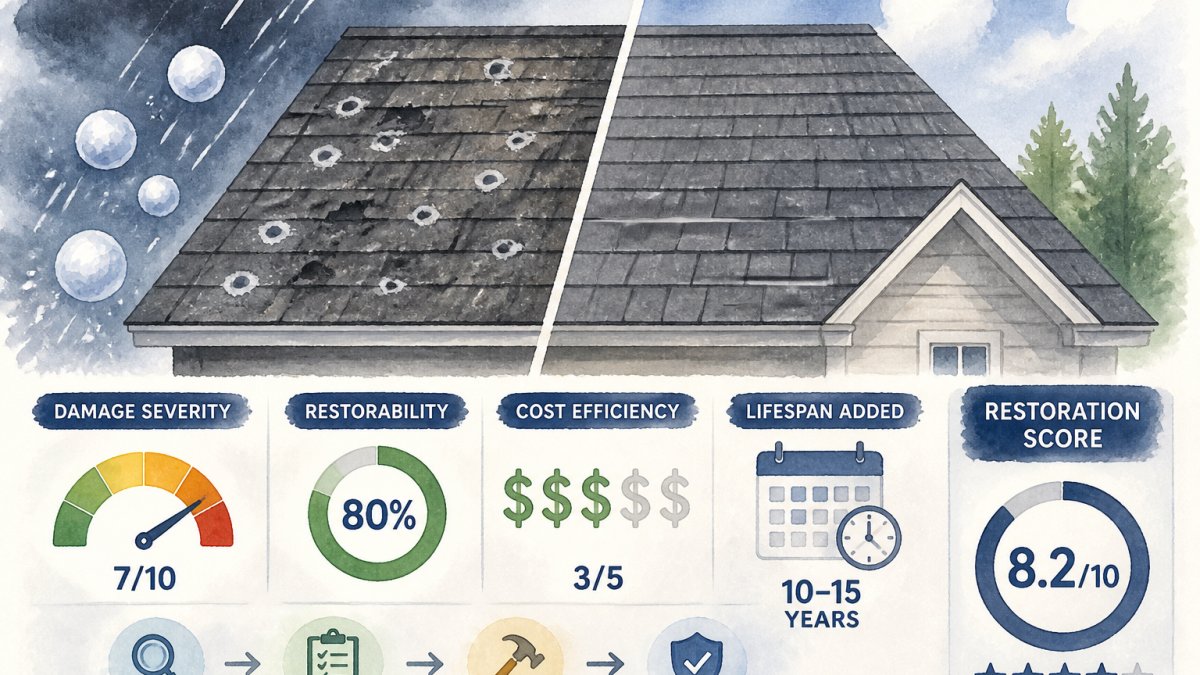
Certain damage makes coating ineffective or impossible. Active leaks mean water is already penetrating. Coating the surface won't stop interior damage. Curling or buckling shingles indicate the underlying roof deck has shifted or settled. Coating won't flatten them back.
Granule loss exceeding roughly 25% signals advanced deterioration. Shingles without granules expose the asphalt layer, which degrades faster. Coating provides some protection, but the shingles are already past mid-life. Moss or algae growth suggests moisture is trapped in the shingle layers. Coating traps it further, accelerating rot.
A Measurable Inspection Checklist
Walk the roof (or have a professional do it) and score each item. If two or more of the first four items are present, coating is usually the wrong call.
- Curling or clawing: Lift a shingle corner. If it stays lifted or cracks when bent, the mat is brittle and coating will bridge and peel.
- Granule loss: Compare a 1-square-foot patch near a valley to a shaded area. If the exposed asphalt is visible across most of the patch, you are past the coating window.
- Soft decking: Press firmly with a screwdriver handle. Spongy give means the sheathing has absorbed water; coating seals that moisture in.
- Active leaks: Water stains on ceiling drywall, attic sheathing stains, or daylight through the deck rule out coating until repaired.
- Exposed fasteners: Rusted or backed-out nail heads create paths for water and must be reset and sealed first.
- Flashing condition: Lifted step flashing or cracked pipe boots are repair items, not coating items.
- Ventilation: Check that ridge and soffit vents are open. Coating a poorly ventilated roof traps heat and moisture from below.
Checking Manufacturer Warranty and Compatibility
Your shingle manufacturer's warranty matters. Some warranties are voided if you apply coating. Others require specific coating types. Check your paperwork or contact the manufacturer with the shingle brand and installation date.
Compatibility is critical. Asphalt shingles accept silicone and acrylic coatings readily. Polyurethane requires a primer on some shingle types. Elastomeric coatings need proper surface preparation to adhere.
Call the coating manufacturer too. They can confirm whether their product bonds to your specific shingle brand. A mismatch wastes money and creates peeling within months. Ask for the product data sheet and confirm the listed substrate includes asphalt shingles.
How to Prepare Shingles for Roof Coating
Preparation determines success. A poorly prepared roof will shed coating within a year. Proper prep takes time but ensures the coating bonds and lasts.
Step 1: Clean and Soft-Wash the Surface
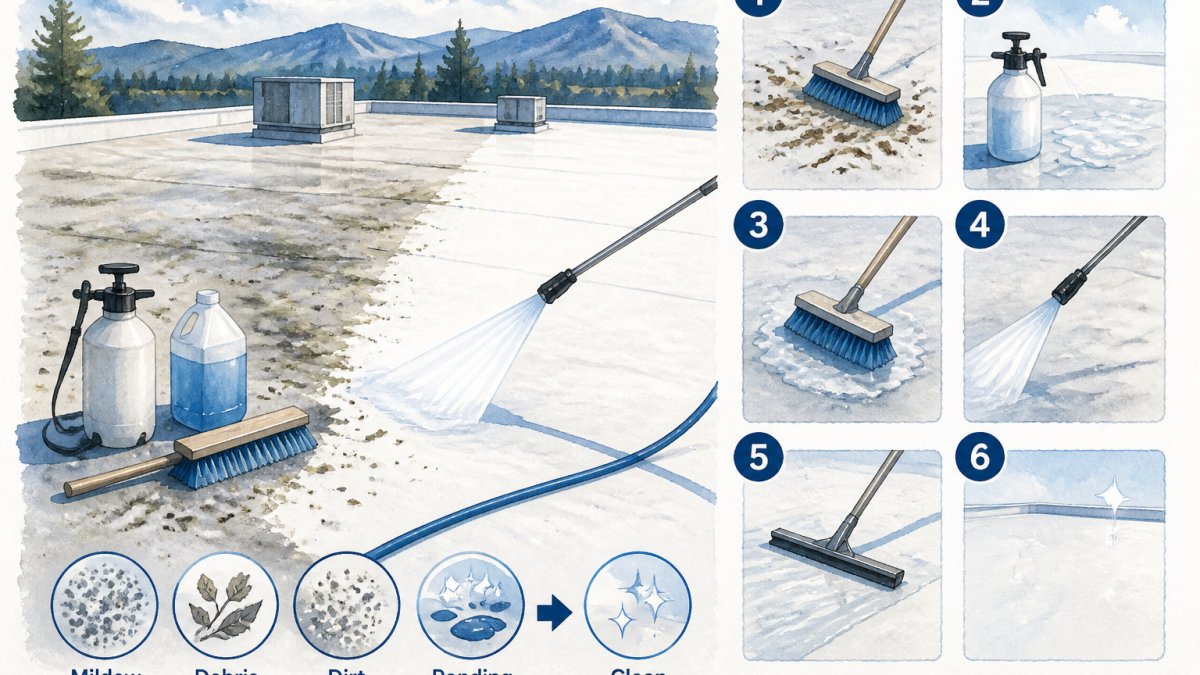
Start by removing debris. Sweep leaves, branches, and dirt off the roof surface. Use a broom or leaf blower, not a pressure washer yet.
Next, soft-wash the roof. This means low-pressure water spray with a cleaning solution designed for asphalt shingles. High-pressure washing damages shingles and forces water under the edges. Soft-washing removes algae, moss, and surface dirt without harm.
Mix the cleaner per manufacturer instructions. Apply it with a pump sprayer or low-pressure spray. Let it sit for 10-15 minutes. Rinse gently with a garden hose on low pressure. Work from the roof peak downward.
Allow 48-72 hours of dry weather after washing. The roof must be completely dry before coating.
Step 2: Repair Damage and Seal Gaps
Inspect the roof surface after cleaning. Fix any issues before coating.
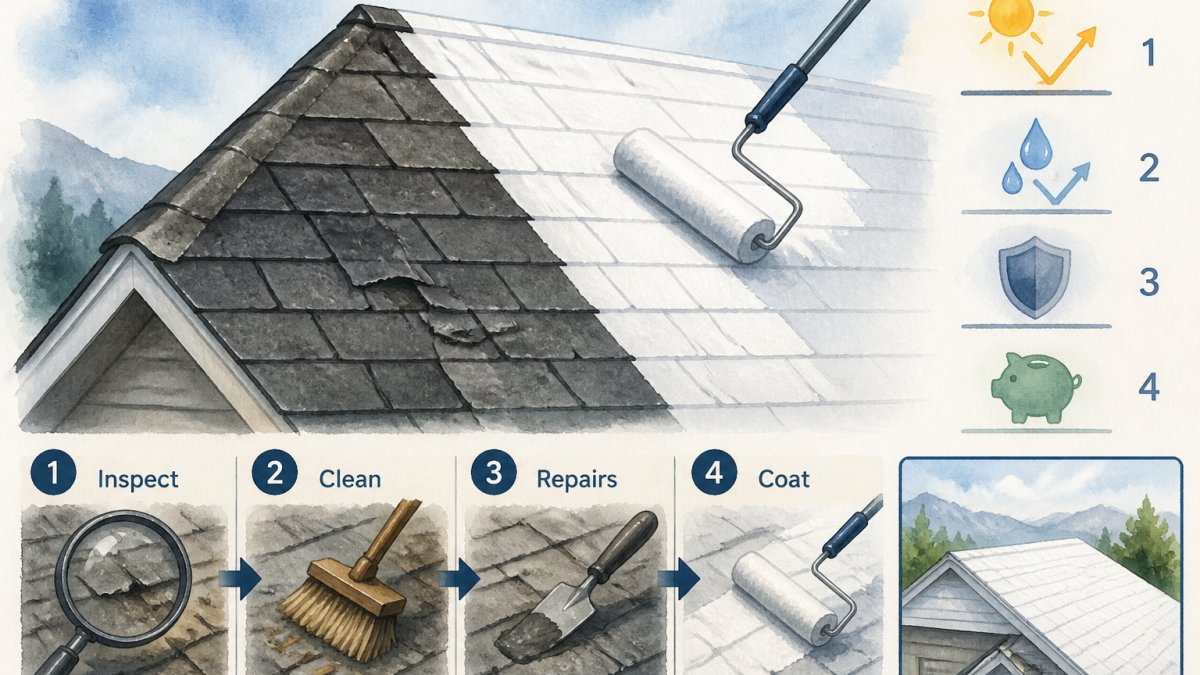
Seal gaps around flashing, vents, and chimneys with roofing cement or caulk rated for asphalt. Replace missing or damaged shingles. Patch small holes with roofing cement. Flatten any lifted edges and secure them with roofing nails.
These repairs prevent water from entering during the coating process. Coating won't seal existing leaks, only prevent new ones.
Step 3: Allow Proper Drying Time
Moisture is coating's enemy. Even damp shingles cause poor adhesion. After washing and repairs, wait for completely dry conditions.
Ideal conditions are 3-5 days of clear, dry weather with no rain forecast. Night dew should evaporate by mid-morning. If you live in a humid climate, wait longer. Check the shingles with your hand, they should feel completely dry, not cool or tacky.
Application Methods and Installation Steps
Application method affects durability and appearance. Each method has trade-offs.
Spraying vs. Brush Application
Spraying covers large areas quickly and applies an even coat. It's the standard method for residential roofs. Spraying requires equipment and skill, poor technique creates thin spots or runs.
Brush application takes longer but gives you precise control. It works well for detail areas, flashing, and edges. Brush-applied coating can look streaky if not blended carefully. Most contractors spray the main surface and brush the details.
For most homeowners, professional spraying is worth the cost. DIY brush application is possible on small roofs but time-consuming.
Weather and Curing Conditions
Temperature and humidity determine coating success. Most coatings require 50-85°F during application and curing. Below 50°F, they don't flow properly. Above 85°F, they cure too fast and don't bond well.
Humidity matters too. Ideal conditions are 30-60% humidity. High humidity slows curing. Low humidity can cause the coating to dry too fast on the surface while remaining soft underneath.
Avoid rain for 48 hours after application. The coating needs time to cure and harden. Early rain washes it away or traps water underneath.
Apply coating on a clear day with temperatures rising through the day. Morning application gives maximum curing time before nightfall. Avoid application on days with rain forecast within 72 hours.
Roof Coating Lifespan on Shingles
How long does roof coating last? The answer depends on climate, coating type, and maintenance.
Silicone coatings typically last 10-15 years on asphalt shingles. They resist UV better than acrylics and handle wet climates well. Acrylic coatings last 5-10 years. Polyurethane lasts 12-20 years but costs more. Elastomeric coatings last 10-15 years if applied correctly.
These timelines assume proper preparation and application. A poorly prepared roof sheds coating in 3-5 years. A well-maintained roof approaches the upper range.
Maintenance extends lifespan. Inspect the roof annually. Look for peeling, cracking, or bare spots. Clean moss and algae promptly. Seal any new gaps around flashing. Minor repairs now prevent major problems later.
The coating doesn't restore shingles to new condition. It protects them from further weathering. A 20-year-old roof with coating won't suddenly perform like a 5-year-old roof. But it can remain watertight and functional for 10-15 more years.
Roof Coating vs. Roof Replacement: Making the Right Choice
Coating and replacement serve different purposes. Understanding the difference helps you choose wisely.
Cost and Service Life Comparison
Roof coating costs significantly less than full replacement. Replacement means removing old shingles, repairing the deck, and installing new shingles, a multi-day job. Coating is applied over existing shingles in one to two days.
Use these ranges as planning figures, not quotes. Actual pricing varies by region, roof pitch, access, and coating type.
- Coating: pricing depends on quantity, dates, and delivery. Visit our website for a free estimate.
- Replacement: pricing depends on quantity, dates, and delivery. Visit our website for a free estimate.
The trade-off is lifespan. New asphalt shingles commonly last 20-30 years. Coating extends an aging roof by roughly 10-15 years. If your roof is already 25 years old, replacement gives you 20+ more years. Coating gives you 10-15.
For roofs under 15 years old with minor damage, coating is economical. For roofs over 25 years old or with significant structural issues, replacement may be the smarter investment.
When Replacement Is the Better Option
Replace instead of coat if:
- The roof deck is soft, rotted, or sagging
- Multiple leaks exist despite repairs
- Shingles are curling, buckling, or missing in large sections
- Granule loss exceeds 50%
- The roof is over 25 years old and you plan to stay 20+ more years
- Insurance or building codes require replacement
Replacement addresses root problems. Coating masks them. A failing roof deck won't improve with surface coating. Water will find its way in regardless.
A Simple Payback Check
Divide the coating cost by the expected years of added life. If coating costs a few thousand dollars and buys 10 years, that is a few hundred dollars per year of protection. Compare that to the annualized cost of replacement spread over 25 years. When the coating's annualized cost is lower and the roof is structurally sound, coating wins. When the roof is near end of life, replacement wins because you are paying twice, once for coating now and again for replacement soon after.
At Sun Flex Home Improvement, we recommend coating for roofs that are structurally sound but weathered. We recommend replacement for roofs that are failing or nearing end of life. The right choice depends on your roof's condition and your long-term plans.
Frequently Asked Questions
Can you apply roof coating over old shingles that are still in fair condition?
Yes, if your asphalt shingles show less than 25% granule loss, no major curling or buckling, and no active leaks, roof coating can extend their life significantly. Coating creates a protective layer that seals the surface and prevents further deterioration. However, any existing damage must be repaired before application. Have a professional inspect your roof to confirm it's suitable for coating before proceeding.
What's the difference between roof coating and roof replacement for asphalt shingles?
Roof coating applies a protective layer over existing shingles, typically costing half as much as replacement and adding 10-15 years of life. Replacement removes old shingles and installs new ones, offering 20-25 years of protection but at significantly higher cost. Coating works best for roofs with minor wear; replacement is necessary when shingles are severely damaged, curled, or leaking extensively.
How long does roof coating last on shingles?
Quality roof coating on asphalt shingles typically lasts 10-15 years, depending on climate, UV exposure, and maintenance. Silicone coatings tend to last longer than acrylic in wet climates. Regular inspection and minor maintenance, such as clearing debris and addressing small cracks, can extend the coating's lifespan. In harsh weather regions with extreme temperature swings or heavy hail, durability may be on the lower end of this range.
What preparation is required before applying roof coating?
Thorough preparation is critical. Soft-wash the roof to remove algae, moss, and debris without damaging shingles. Repair any damaged areas, seal gaps around vents and flashing, and allow the surface to dry completely. Remove loose granules and check for manufacturer compatibility with your specific shingle type. Poor preparation leads to coating failure, so this step determines the entire project's success.