 listicle
5 Best Metal Roofing Colors for Modern Homes
Quick Summary
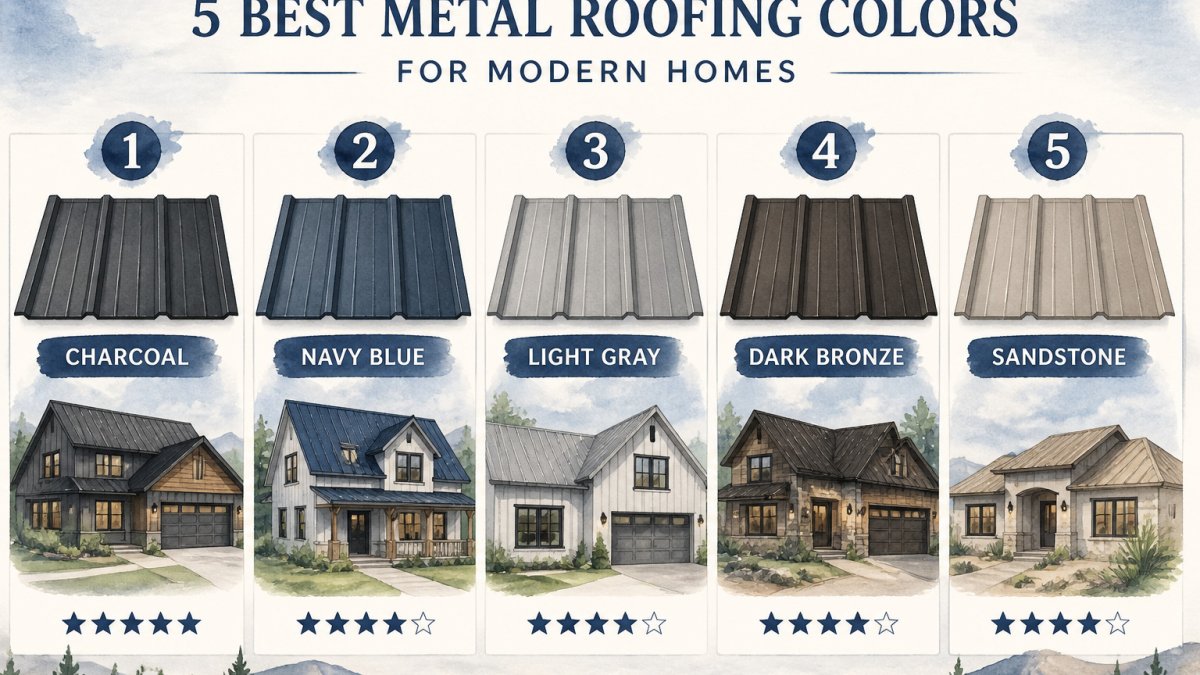
The best metal roofing colors for modern homes are charcoal gray, matte black, slate gray or dark bronze, regal white, and warm sandstone neutral. Charcoal gray is the most versatile default, pairing well with a wide range of siding and hiding dust better than darker finishes.
- Charcoal gray ranks first because it pairs with white, gray, and natural wood siding.
- Matte black gives the sharpest modern look but absorbs more heat than lighter colors.
- Regal white reflects more solar energy, which can limit heat gain in sunny regions.
- Order full-size samples and view them on the house at morning, midday, and evening.
- Confirm finish, fade rating, and warranty terms in writing, and check HOA rules before ordering.
Table of Contents
- Why Color Matters More on a Modern Home Roof
- Top 5 Metal Roofing Colors for Modern Homes: Comparison Table
- 1. Charcoal Gray: The Versatile Modern Default
- 2. Matte Black: Sharp Lines and Strong Contrast
- 3. Slate Gray and Dark Bronze: Quiet Neutrals
- 4. Regal White: Bright Roofs and Cool Exteriors
- 5. Warm Neutral (Sandstone): The Adaptable Middle Ground
- How to Choose a Metal Roof Color for Your Home
- Metal Roof Color Combinations With Siding and Trim
- Frequently Asked Questions
5 Best Metal Roofing Colors for Modern Homes
Last Updated: November 2, 2026
Why Color Matters More on a Modern Home Roof
Metal roofing colors do more than set the mood of a home. On a modern house with clean lines and large flat planes, the roof is one of the most visible surfaces, and its color shapes the whole exterior.
The stakes are practical too. A U.S. Department of Energy guidance on cool roofs explains how reflective surfaces can reduce heat gain, which is why light and dark finishes behave so differently in summer.
Keep the modern-home context in mind as you read. A sharp-angled, minimalist house rewards a restrained palette, while a rustic or mixed-material home can handle warmer or bolder tones. The five colors below are among the most commonly chosen for contemporary builds, and each comes with its trade-offs.
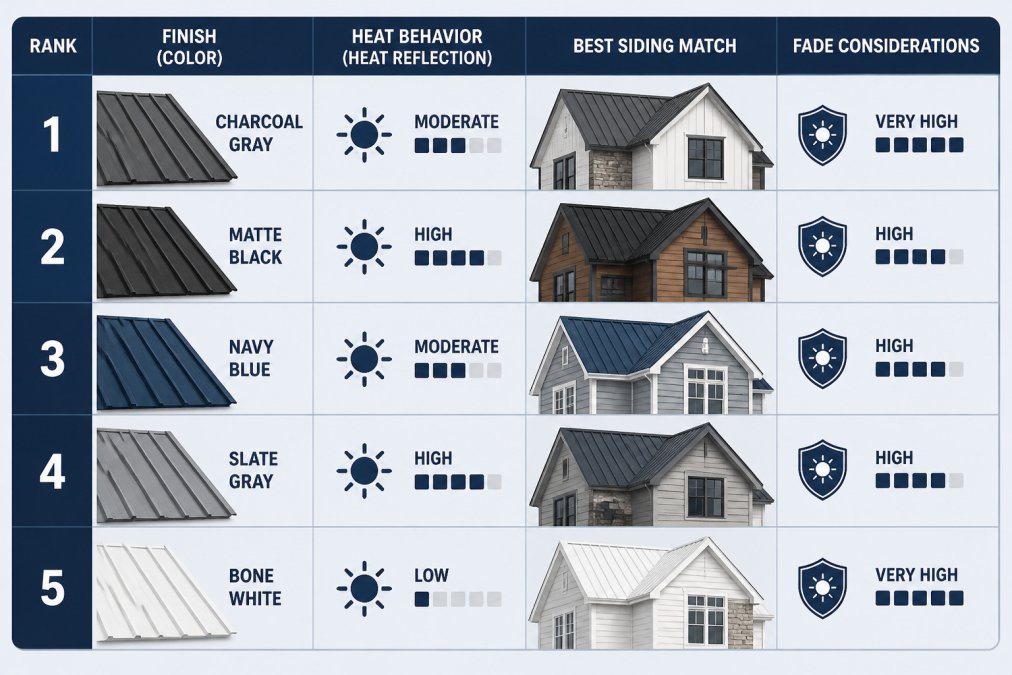
Top 5 Metal Roofing Colors for Modern Homes: Comparison Table
Before the detailed breakdowns, here is how the five options compare at a glance. The table is built around the trade-offs that matter most on a modern home: how the finish reads at street level, how the color behaves under sun and heat, how it pairs with common siding and trim, and how likely it is to show fading or weathering over time. Use it as a starting point, then confirm finish and warranty details with your installer.
| Rank | Color | Typical Finish | Heat Behavior (Qualified) | Best Siding Match | Fade and Weathering Notes |
|---|---|---|---|---|---|
| 1 | Charcoal Gray | Matte or satin | Moderate absorption; warmer than white, cooler than black | White, gray, natural wood | Low visibility of fading; forgiving of dust and water spotting |
| 2 | Matte Black | Matte | Higher absorption; surface runs hotter in direct sun | White, light stone, cedar | Shows dust, pollen, and fading more readily than mid-tones |
| 3 | Slate Gray / Dark Bronze | Satin or matte | Moderate absorption; similar to charcoal | Warm neutrals, brick, stone | Generally stable; bronze undertone can shift under different light |
| 4 | Regal White | Gloss or satin | Lower absorption, higher reflectance | Dark or earth-tone siding | Can show weathering and staining; needs careful detailing |
| 5 | Warm Neutral (Sandstone) | Satin | Moderate to low absorption | Stone, wood, earth tones | Stable in most climates; can read dated on fully contemporary homes |
How to read the heat column: Color alone does not determine roof performance. Reflectance, coating type, roof pitch, attic ventilation, and climate all interact.
How to read the fade column: Fade resistance depends on the coating system and warranty terms, not just the pigment. Most manufacturers publish fade and chalk ratings for their finishes; ask for those documents before you commit.
Ranking rationale: The order reflects how often each color works on modern homes without requiring a highly specific facade or landscape to look intentional.
1. Charcoal Gray: The Versatile Modern Default
Charcoal gray is a popular choice for modern homes because it works with a wide range of siding. It reads as contemporary without feeling stark, and it hides dust and minor weathering better than darker finishes do.
Pros:
- Pairs well with white, gray, and natural wood siding
- Mutes the visual weight of a large roof plane
- Forgiving of dirt and water spotting
Cons:
- Can look flat on a home with little texture or contrast
- Light-filtering effects vary by finish, so sample it in person
2. Matte Black: Sharp Lines and Strong Contrast
Matte black delivers the sharpest modern look of the five. It suits homes with clean geometry and strong architectural lines, and it makes white or light stone siding stand out.
Pros:
- Strong graphic contrast with light-colored walls
- Matte finish reduces glare
- Suits minimalist and contemporary designs
Cons:
- Absorbs more heat than lighter colors, which affects attic temperatures
- Shows dust, pollen, and fading more readily than charcoal
Watch out: matte black on a south- or west-facing roof in a sunny climate will run hotter than the same color in shade, so plan ventilation accordingly.
3. Slate Gray and Dark Bronze: Quiet Neutrals
Slate gray and dark bronze are the quieter options. They bring depth without the starkness of black, and they sit comfortably beside brick, stone, and warm trim.
Pros:
- Blends into the landscape rather than competing with the facade
- Works well with earth-tone and brick exteriors
- Tends to look stable as it ages
Cons:
- Less dramatic than black or white on a home that wants a bold statement
- The bronze tones can shift noticeably under different light
4. Regal White: Bright Roofs and Cool Exteriors
Regal white is the choice for homeowners who want a light, cool roof. Its high reflectance can help limit heat gain, which matters in regions with strong summer sun. It also suits modern homes that use dark siding and want a crisp top edge.
Pros:
- Reflects more solar energy than darker finishes
- Creates strong contrast against dark or earth-tone walls
- Looks clean and bright on modern builds
Cons:
- Can show weathering and staining over time
- Demands a careful look at how it pairs with the rest of the exterior
5. Warm Neutral (Sandstone): The Adaptable Middle Ground
A warm neutral like sandstone bridges the cool palette and the earthy one. It suits homes that mix stone, wood, and natural materials, and it avoids the harsh contrast of black or white.
Pros:
- Stable appearance across seasons
- Complements stone, wood, and earth-tone siding
- Softens a modern design without losing its clean lines
Cons:
- Can read as dated on a home that leans fully contemporary
- Fewer modern-style pairings than charcoal or black
How to Choose a Metal Roof Color for Your Home
Most color guides stop at "order samples and look at them in different light." That is necessary but not sufficient. The selection process that actually holds up on a modern home has four stages: narrow by architecture, test against the facade, verify finish and warranty, and check the rules that govern what you can install.
Stage 1: Narrow by architecture and roof profile
Start with the style of the house, not the color swatch. A contemporary home with large flat roof planes and minimal trim rewards a restrained palette; a farmhouse or mixed-material home can carry warmer or bolder tones. The roof profile matters too: a standing-seam roof with tall vertical ribs reads differently from a low-profile shingle-style panel, and a color that looks crisp on one profile can look busy on another. Compare options for contemporary, minimalist, farmhouse, and mid-century homes, and note how the facade materials (siding, stone, wood, glass) affect the choice.
Stage 2: Test against the facade, not in isolation
Order full-size physical samples, not small chips. Place them on the roof or against the siding at street-level viewing distance, and check them at morning, midday, and evening. Metal finishes shift under changing light, and a color that looks right on a screen can read very differently on the house. Our guide to energy efficient roofing materials covers how materials and finishes affect cooling costs. Compare each sample against your siding, trim, and masonry, and eliminate any color that clashes with two or more of them.
Stage 3: Verify finish, coating, and warranty
Color selection and finish selection are the same decision. Ask your installer for the manufacturer's finish specification, including fade and chalk ratings, and read the warranty terms for color retention. Darker and more saturated colors can show fading more readily than mid-tones, and gloss finishes can show surface imperfections more than matte finishes. A color that looks stable in a showroom can behave differently after years of UV exposure, so the warranty document is part of the color decision, not an afterthought.
Stage 4: Check HOA rules, local requirements, and resale
Before you commit, confirm whether your homeowners association, local design review, or historic district rules restrict roof colors or finishes. Once your color is settled, you can learn how to hire a metal roofing contractor for the installation. These constraints can eliminate otherwise strong options, and they are easier to check before ordering panels than after. Resale is the other practical filter: a color that suits your taste but narrows the buyer pool can cost more at sale than it saves in curb appeal.
A simple decision sequence
- List your siding, trim, and masonry colors.
- Eliminate any roof color that clashes with two or more of them.
- Check how the remaining options handle your sun exposure, roof pitch, and local climate.
- View full-size samples on the house at street level, morning through evening.
- Confirm finish, fade rating, and warranty terms in writing.
- Verify HOA and local design rules before ordering.
A Metal Construction Association overview of metal roofing finishes can help you understand how coatings and finishes affect long-term appearance.
Metal Roof Color Combinations With Siding and Trim
Coordinating roof color with siding is where most modern exteriors succeed or fail. A few pairings work consistently:
- Charcoal gray roof with white siding and black window frames: a balanced, high-contrast modern look
- Matte black roof with light stone or white walls: dramatic and graphic
- Dark bronze roof with cedar or warm wood: an earthy, grounded style
- Regal white roof with dark gray siding: a crisp, cool exterior
Trim and masonry matter as much as the siding. Match the roof's undertone to the warmest or coolest element on the facade so the palette feels intentional rather than accidental.
Frequently Asked Questions
What are the most popular metal roof colors for modern homes?
Charcoal gray, matte black, slate gray, dark bronze, and regal white are among the most requested metal roof colors for modern homes. Charcoal gray and matte black are the most common choices for clean, angular architecture because they emphasize sharp lines. Lighter options like regal white suit homes that use lots of glass or light siding. Ask for physical samples to compare each color against your exterior before deciding.
Do dark metal roofs make a home hotter?
Dark roofs absorb more solar heat than light ones, which can raise attic temperatures in summer. Attic insulation and ventilation affect how much that heat reaches living space, so a dark roof does not automatically mean higher cooling costs. Compare SRI values when choosing between a dark and a light color.
Which metal roof colors work best with white or gray siding?
White and light gray siding pairs well with charcoal gray, slate gray, and matte black roofs for strong contrast. Warm siding tones often pair better with bronze or warm-toned neutrals. Keep the roof and siding in the same color family or choose a clear contrast, rather than two colors that are close but not matching.
Can I see a metal roof color sample before choosing?
Yes. Most roofing contractors and metal roofing manufacturers provide physical color chips or panel samples. Look at the samples outdoors in morning and afternoon light, since color can shift considerably under different conditions. Hold the sample against your siding, trim, and front door to check coordination before you commit. Sun Flex Home Improvement can help you review options; contact the company for a free estimate and current color availability.
Choosing the right metal roof color is easier with a professional who understands how finishes perform in Montana and Northern Wyoming weather. Sun Flex Home Improvement can help you compare color options against your home's style and your climate. Contact us for a free estimate and we will walk you through samples that suit your property.